

This post may contain affiliate links. Please read our disclosure policy. As an Amazon Associate, I earn from qualifying purchases.

If you’ve got sourdough discard piling up in the fridge, these sourdough blueberry scones are a great way to put it to work. The sourdough discard adds a subtle depth of flavor and helps keep the crumb soft and tender.
The edges bake up crisp, the centers stay moist, and every bite is studded with juicy blueberries. They freeze well, come together without much fuss, and give you something delicious to make with your discard that isn’t another loaf of bread.

Want another way to use your discard? These sourdough banana scones are a good one to keep on hand.
Here’s Why This Sourdough Blueberry Scone Recipe Works
Sourdough discard adds flavor and tenderness: It brings a subtle tang to the dough and helps give the scones a soft, tender crumb.
Cold butter creates flaky layers: As the butter melts in the oven, its moisture turns to steam, helping create those delicate layers instead of a dense, heavy scone.
Lemon zest brightens the blueberries: A little citrus balances the richness of the butter and cream and brings out the blueberry flavor.
A quick freeze helps prevent spreading: Chilling the shaped scones for 20 minutes firms up the butter and dough so they hold their shape as they bake.
Enjoy them for breakfast with a cup of coffee or lavender tea. They also taste great topped with thick lemon curd.

Ingredient Notes
A few ingredients are worth a closer look before you start mixing the dough.
Sourdough discard: Use unfed discard or active sourdough starter at 100% hydration (equal weights of flour and water). Both work well, so there’s no need to wait until feeding day. Older discard may have a stronger sourdough flavor, but I’ve found that the age of the discard makes little difference in the finished scones.
All-purpose flour: Weighing the flour gives you the most consistent results. Scone dough is relatively low in moisture, and too much flour can make it difficult to bring together.
Heavy cream: Adds moisture and a little richness to the dough. Buttermilk or regular milk also work well, so use whichever you have on hand.
Butter: Use cold, unsalted butter. Keeping small pieces of butter in the dough helps create flaky layers as the scones bake.
Blueberries: Fresh or frozen berries work. If using frozen blueberries, add them without thawing to minimize bleeding into the dough.
Lemon zest: Adds a fresh citrus flavor without introducing extra liquid. Use just the yellow outer layer of the peel, avoiding the bitter white pith.

Recipe Tips
Keep the butter cold: Cut it into cubes straight from the fridge and work quickly. Small pieces of cold butter throughout the dough help create flaky layers.
Don’t overmix: Stir just until the ingredients are combined. The dough should look a little shaggy. Overworking it can make the scones tough.
Handle the blueberries gently: Fold them in carefully to avoid crushing them. Fresh or frozen blueberries both work, but don’t thaw frozen berries before adding them to the dough.
Weigh the flour: Scone dough doesn’t have much extra moisture to spare. Scooping flour directly from the container can pack too much into the measuring cup, leaving the dough dry and crumbly.
About the age of your discard: Older sourdough discard often becomes thinner and more pourable as it sits in the fridge, but that won’t prevent these scones from turning out well. I’ve made them with both fresh and older discard with good results.
Shape with a light touch: Gently press the dough into disks without kneading or packing it down. Overhandling can make the finished scones dense.
Don’t skip the freezer: Freeze the shaped scones for 20 minutes before baking. This firms up the butter and helps the scones hold their shape in the oven.

Recipe Testing Notes
Starting with a traditional scone recipe: I adapted this recipe from my lemon poppy seed scones, adjusting the flour and liquid to accommodate sourdough discard. I wanted to keep the tender, buttery texture of the original while putting some of my discard to good use.
Balancing the flour and moisture: At 100% hydration, 120 grams of sourdough discard contributes approximately 60 grams of flour and 60 grams of water. That’s my starting point for adjusting the recipe, but I’ve found that a strict gram-for-gram replacement doesn’t always give the best results. Sometimes the flour needs a little tweaking to get the texture right.
Comparing the finished scones: I recently made a traditional blueberry buttermilk version for comparison. Both versions had a similar texture, but once completely cooled, the sourdough scones were slightly more tender. It’s a subtle difference, but one I’ve noticed in other sourdough discard recipes, too.

Sourdough Discard Blueberry Scones
These scones have everything I love about a good blueberry scone: crisp edges, tender centers, and plenty of juicy berries. The sourdough discard adds a little extra flavor without making the recipe complicated. They’re especially good warm from the oven, with a little butter or a drizzle of lemon glaze.
Pin this now to find it later!
Pin It
Blueberry Sourdough Scones
If you make this recipe, please leave a star rating and comment.
Ingredients
- 2¼ cups all-purpose flour, 270 grams
- ½ cup granulated sugar, 100 grams
- 2½ teaspoons baking powder,
- ¼ teaspoon baking soda
- ½ teaspoon salt
- zest from 1 lemon
- ½ cup butter, cold; 113 grams
- ½ cup sourdough discard, 120 grams
- 3 tablespoons heavy cream , or buttermilk, chilled 43 grams
- 1 large egg
- 1 teaspoon vanilla extract
- 1¼ cups fresh or frozen blueberries
For the Topping
- 2 tablespoons heavy cream
- 2 tablespoons coarse sugar
Optional Icing
- ¾ cup powdered sugar, 120 grams
- 2 to 3 tablespoons fresh lemon juice
Instructions
Mix the Dough:
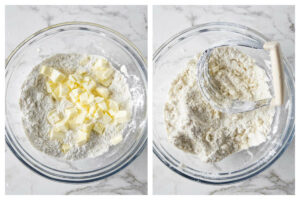
- In a large mixing bowl, whisk together the flour, sugar, baking powder, baking soda, salt, and lemon zest. Cut the cold butter into small cubes and add it to the bowl. Use a pastry blender or your fingers to work the butter into the flour until the mixture looks like coarse sand with some pea-sized lumps.
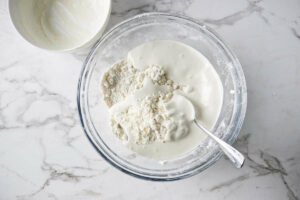
- Add the cream, sourdough discard, egg, and vanilla to the flour mixture, then mix until the flour is moistened (it should look a bit dry and crumbly).
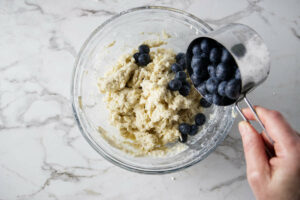
- Fold the blueberries into the dough, turning the dough in the bowl to fold in any dry crumbs (I use my hands so I can fold the dough gently without smashing the blueberries). If the dough seems too dry, you can add 1 to 2 tablespoons of cream. If it is wet and sticky, add a couple of tablespoons of flour.
Shape and Chill the Dough
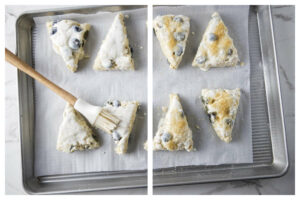
- Transfer the dough to a lightly floured counter and use your hands to push it into two 6-inch round disks. Use a knife or bench scraper to cut each disk into 8 wedges.
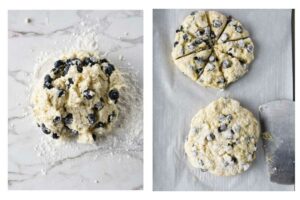
- Transfer to a baking sheet and place in the freezer for 20 to 30 minutes or in the fridge for 1 hour.
Bake:
- Preheat the oven to 400°F and line a baking sheet with parchment paper.
- Brush the scones with cream and sprinkle the tops with coarse sugar. Bake for 20 to 25 minutes or until golden brown. Transfer the scones to a cooling rack.
For the Icing:
- Whisk the powdered sugar and lemon juice in a small dish, then drizzle over the top of the scones.
Notes
Nutrition
Nutrition information is automatically calculated, so should only be used as an approximation.
 Like this recipe? Rate & comment below!












Yummy!!!
So glad you liked it. Thanks for the comment.
These are a hit every time I make them.
I’m so glad you like them. Thanks for the comment.
Absolutely delicious! People tell me I should sell them they are so good! Thank you for sharing!
That’s the best compliment! I’m so glad you loved them. Thank you for taking the time to share.
Yum!! I’ll be making these again and again!
Yay! I’m so glad you loved them. Thanks for the sweet comment!
I made these for the second time. This time I baked them on convection bake setting and they are even better than my first try ! Delicious! I did have the oven do the conversion. Just in case anyone wants to try it!
That’s awesome to hear. Thank you for sharing! Great tip about the convection setting, too.
Delicious and fantastic texture!
Thank you! I’m thrilled you enjoyed the texture.
Can you use cake flour instead of AP?
Yes, cake flour will give the scones a lighter, more delicate texture. They won’t rise as tall and they sometimes spread a bit more than scones made with all-purpose flour. Cake flour also does not absorb as much liquid, so you may want to start by only using 1 to 2 tablespoons of buttermilk and then add more if needed.