

This post may contain affiliate links. Please read our disclosure policy. As an Amazon Associate, I earn from qualifying purchases.
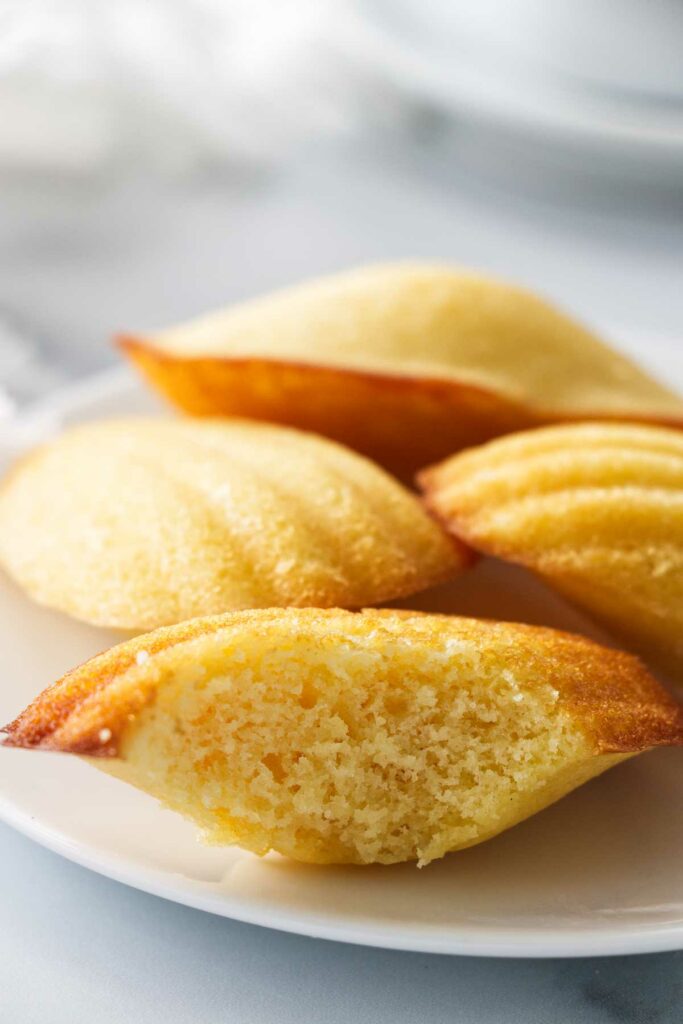
These classic madeleine cookies are buttery, tender, and lightly crisp around the edges. They have the shell shape and golden hump that make them look bakery-worthy, without a fussy process. The batter comes together with basic ingredients, then chills before baking so the madeleines rise properly and hold their delicate texture.
They’re best served the day they’re baked, with a dusting of powdered sugar or a dip in chocolate.
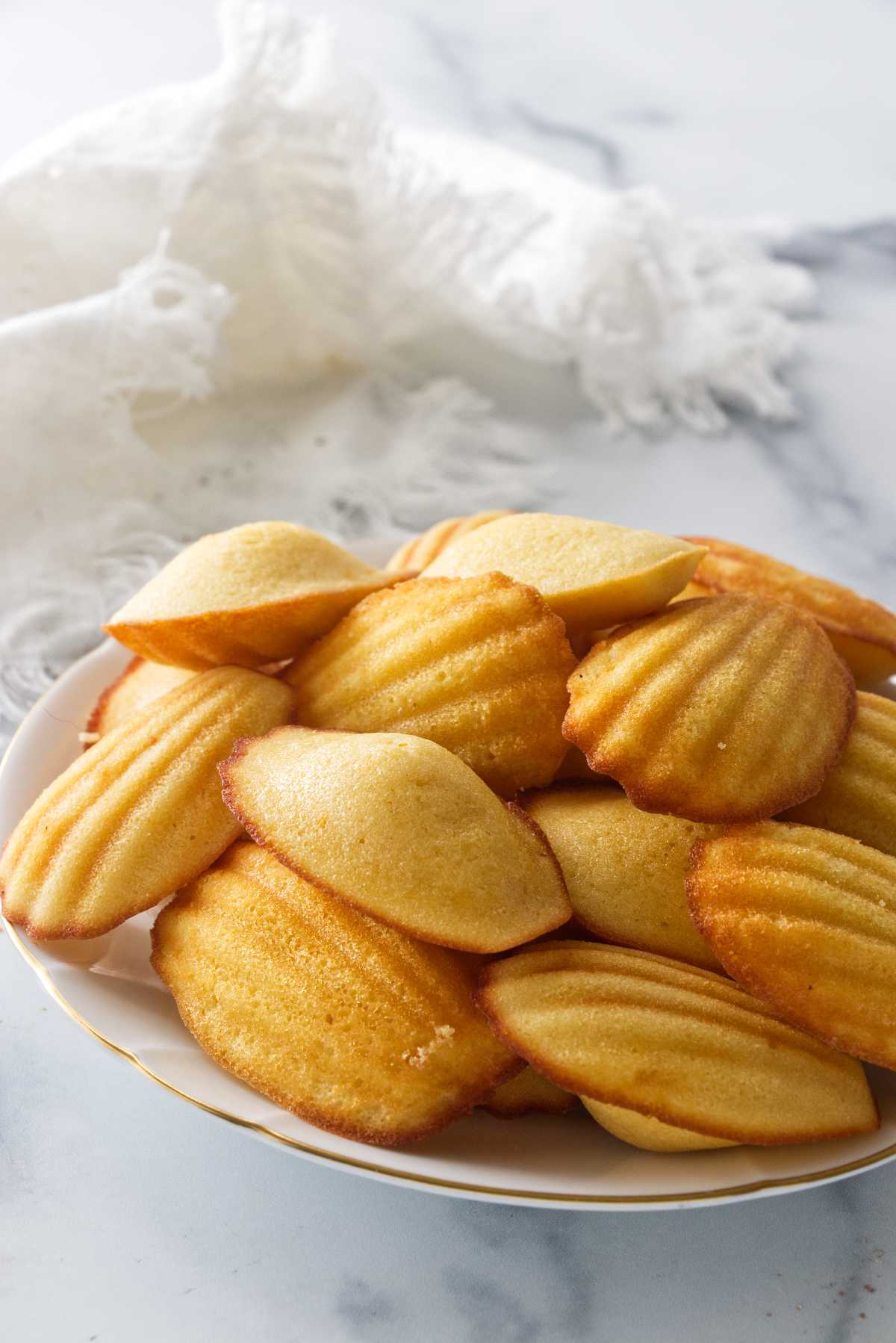
How to Make Madeleine Cookies
I tested this recipe to keep the process simple while still getting the texture madeleines are known for: tender centers, lightly crisp edges, and that classic little hump.
The chill time does the heavy lifting. It helps the batter firm up so the madeleines rise properly instead of spreading flat in the pan.
I also chill the prepared pan before filling it. That cold pan gives the batter a stronger temperature contrast when it hits the oven, which helps with the rise. The vanilla base keeps the flavor simple, but it also works well with other flavors. Try my almond madeleines or glazed lemon madeleines for some flavor variations.
Choosing a Madeleine Pan
A madeleine pan gives these cookies their classic shell shape. A standard pan usually holds 12 madeleines, while mini pans make smaller ones that bake a little faster.
For the best texture, use a metal pan instead of silicone. Metal gives you crisper edges, better browning, and sharper shell ridges. Silicone works, but the madeleines bake softer and lose some definition.

Even with a nonstick pan, grease and lightly flour the molds. It helps the madeleines release cleanly and gives the outside a slightly crisp finish.I use the pan a little differently in my chocolate madeleines, where it helps create a smooth chocolate shell around each cake.

The Secret to the Perfect Madeleine Hump
The classic madeleine hump comes from cold batter hitting a hot oven. That temperature contrast helps the center rise quickly while the edges set.
After testing several batches, I found that a 2-hour chill gives the most reliable rise and texture. Overnight works too, but don’t skip the chill or the madeleines can bake up flatter.
I also chill the prepared pan before filling it. It’s a small step, but it helps reinforce that cold-to-hot contrast.

Quick Questions and Answers
Technically, they’re small French sponge cakes. Their texture is soft and cake-like rather than chewy like a cookie. But since they’re individually sized and served like cookies, most people still call them madeleine cookies.
Usually the batter wasn’t chilled long enough or the oven wasn’t fully preheated. The hump forms from cold batter hitting high heat quickly.
Traditional madeleines often skip it, but a small amount helps create a more reliable rise without changing the texture too much.
Yes. The batter can stay refrigerated overnight before baking.
You can, but the edges won’t brown as well and the shell pattern usually won’t be as defined.
A Simple Madeleine Cookie Recipe
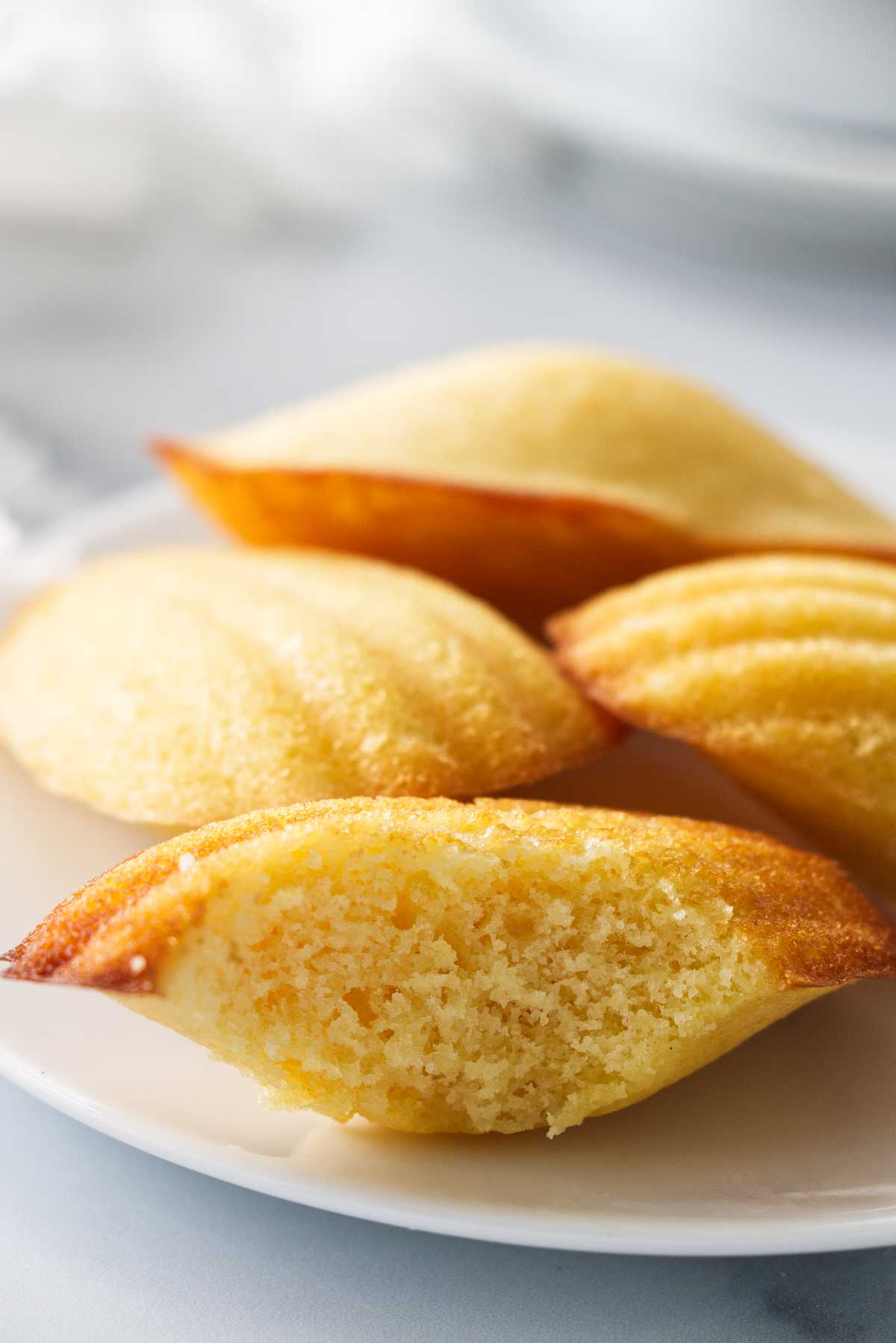
Madeleine cookies are simple once you know what matters: chill the batter, use a prepared pan, and don’t overmix once the butter goes in. Those small steps make the biggest difference in the texture and rise.
Serve them the day they’re baked, while the edges are still lightly crisp. For a softer, floral variation, try my lavender madeleines next.
Pin this now to find it later!
Pin It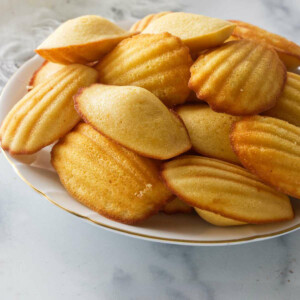
Madeliene Cookies
If you make this recipe, please leave a star rating and comment.
Ingredients
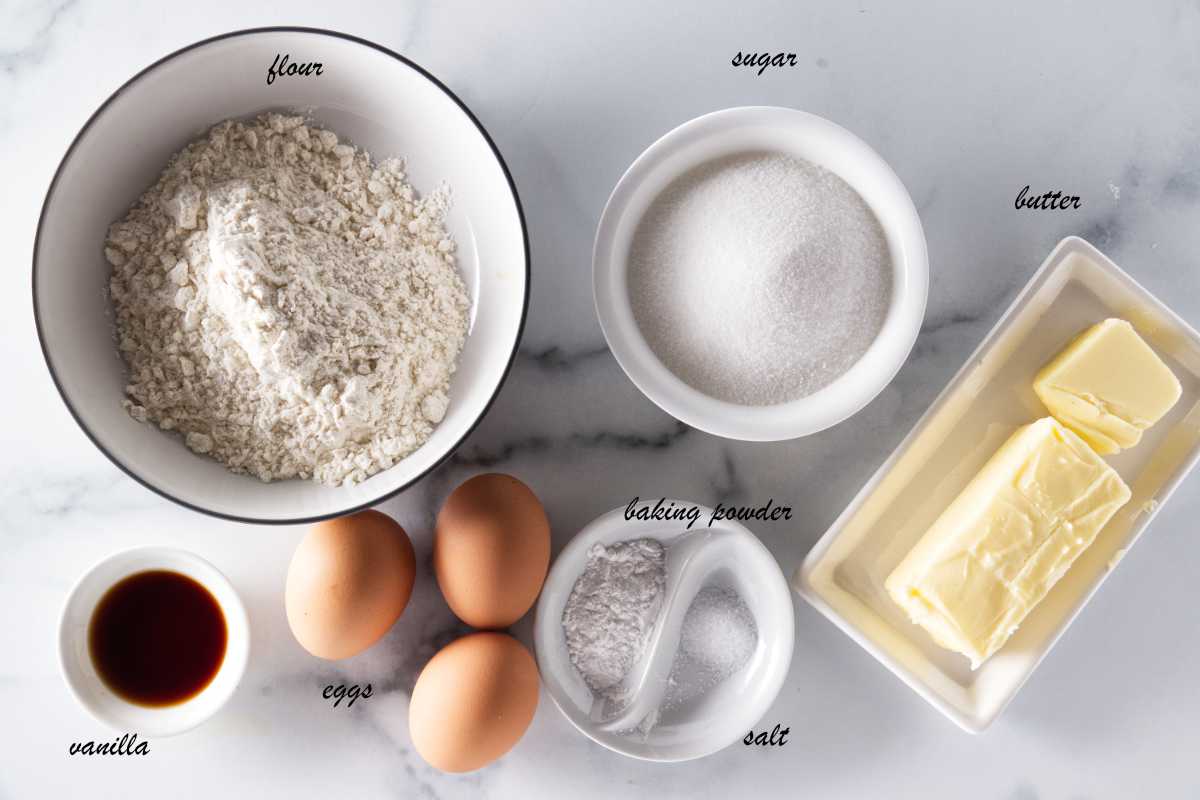
- 1⅓ cup all-purpose flour, 160 grams
- ⅔ cup granulated sugar, 130 grams
- 1 teaspoon baking powder
- ¼ teaspoon salt
- 3 large eggs, room temperature and well beaten
- 2 teaspoon vanilla extract
- 10 tablespoons butter, melted and cooled to room temperature
Instructions
- In a medium size bowl, combine the flour, sugar, baking powder, and salt. Whisk well to blend the ingredients.

- Whisk the eggs and vanilla together and stir into the flour mixture until well combined.

- Pour in the melted butter and gently fold until the batter is fully incorporated and shiny. Do not mix vigorously, or you can work too much air into the batter.

- Cover the bowl with plastic wrap and refrigerate for at least 2 hours or overnight to fully chill.

To Bake the Madeleines:
- Heat the oven to 375°F. Grease and flour the madeleine pan, or use baking spray with flour and brush it into the crevices. Place the prepared pan in the freezer for 10 minutes to chill.

- Using a tablespoon cookie scoop, fill each cavity of the chilled pan with a level scoop of batter.

- Transfer the pan to the center rack of the oven and bake for 7-8 minutes, or until the edges look golden and crisp and the cakes spring back when lightly touched.
- Remove from the oven and immediately flip them onto a kitchen towel for 10-15 minutes, then place on a wire rack, pattern side down to finish cooling.
Notes
Nutrition
Nutrition information is automatically calculated, so should only be used as an approximation.
 Like this recipe? Rate & comment below!










Sorry, they are never called cookies in France where they come from, just ‘madeleines’
You’re right, they’re called madeleines in France. I use “Madeleine cookies” because that’s a common search term in the U.S. Thanks for the comment!
do i need grease and flour a silicone pan?
If your madeleine pan is silicone, you usually won’t need to grease and flour it. That said, a very light coating of nonstick spray can help if your silicone molds tend to stick.
These were so good! Cannot believe I nailed it on the first try. Thanks for being so thorough and all the tips!
I’m so glad you enjoyed the cookies. Thanks for the comment.