

This post may contain affiliate links. Please read our disclosure policy. As an Amazon Associate, I earn from qualifying purchases.
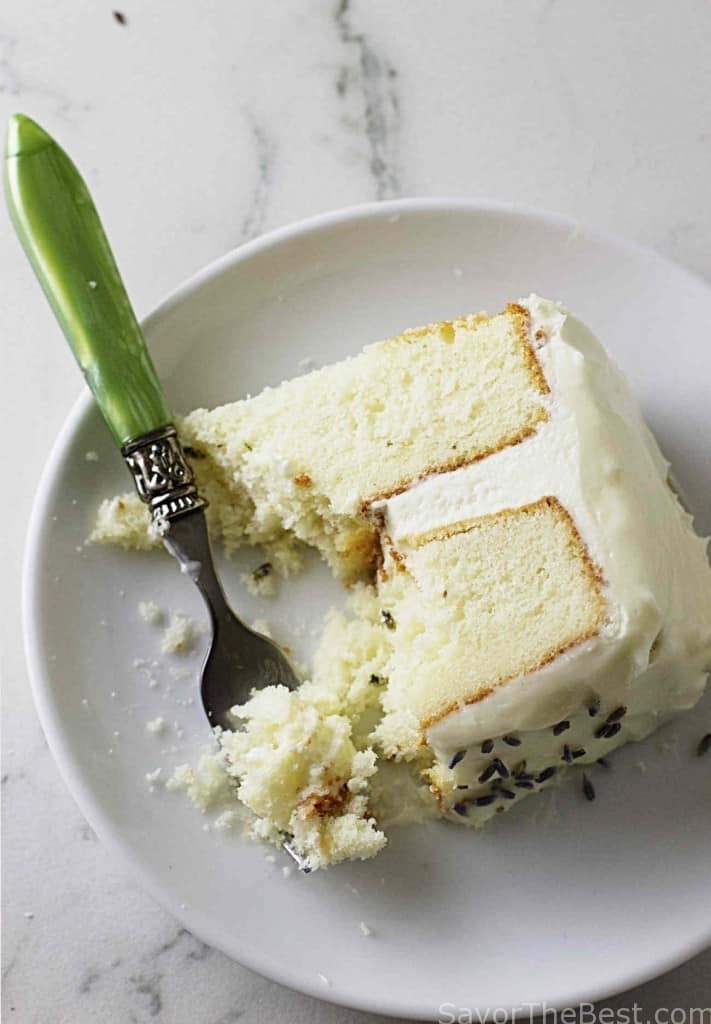
This lavender cake has a tender, buttery crumb with lavender baked into the layers and a little more in the cream cheese frosting. Vanilla rounds out the floral flavor, while the frosting adds a tangy contrast to the sweet cake. It’s a lovely choice when you want a layer cake with something a little different going on.
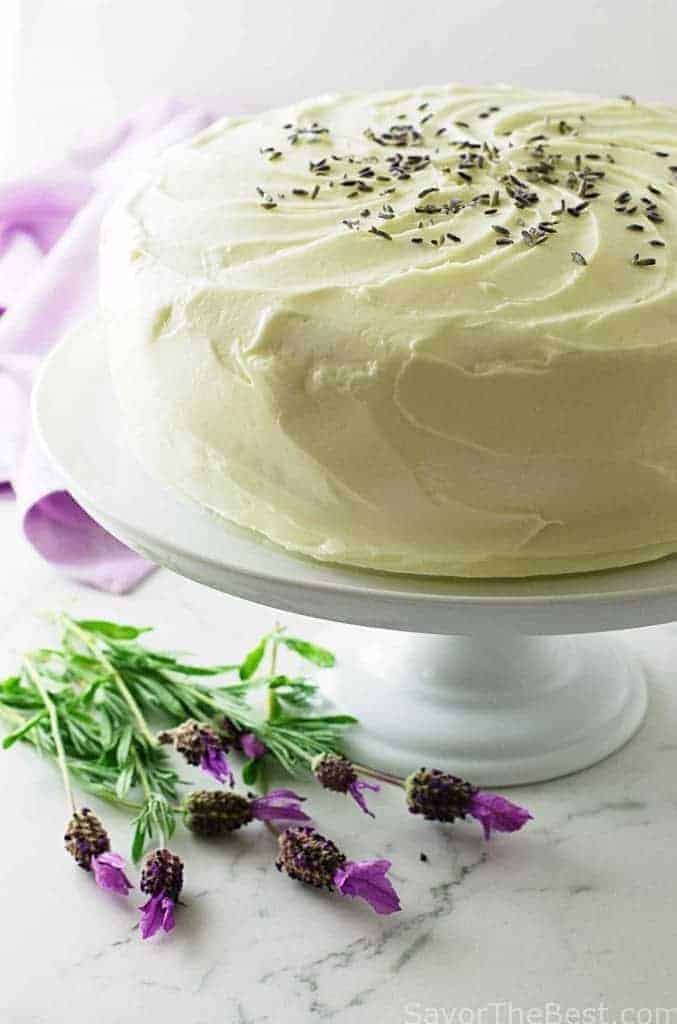
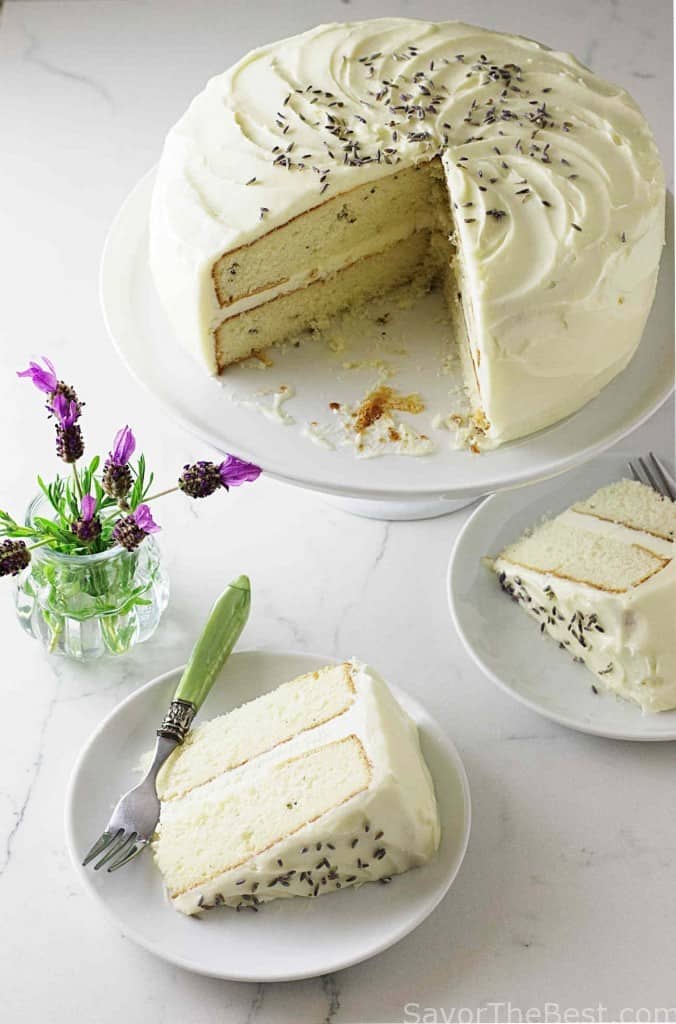
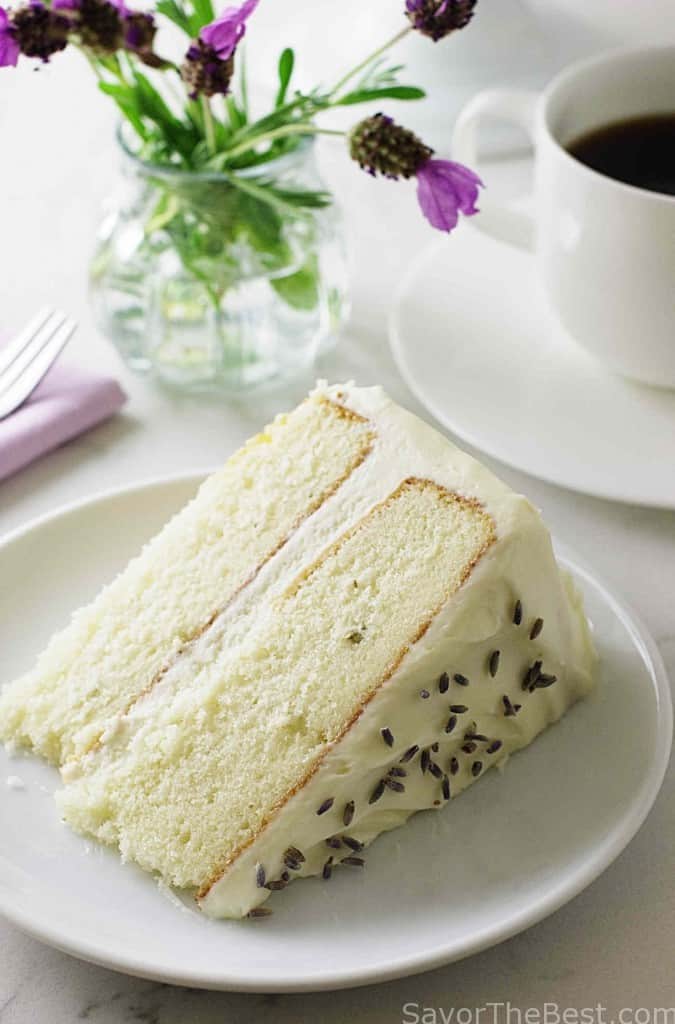
This cake is a simple, two-layer cake that comes together easily and has a wonderfully fragrant flavor. The cake layers are moist and fluffy, with a hint of lavender that is complemented by hints of vanilla. I topped the cake with some fresh lavender to make it extra special.
A Delicate Lavender Flavor in Every Layer
Soft, tender cake: The cake batter uses cake flour, butter, milk, egg whites, and one whole egg for a fine crumb that stays tender under the icing.
Lavender without the bitterness: Culinary lavender oil gives the cake and icing a clear lavender flavor, while the crushed lavender buds add another layer of fragrance and texture.
Tangy cream cheese icing: Cream cheese adds enough tang to balance the powdered sugar and keeps the lavender flavor fresh instead of overly sweet.
Good for a special dessert: The cake can be baked in two round pans, iced as a simple layer cake, and refrigerated until you are ready to serve it.
Ingredient Notes
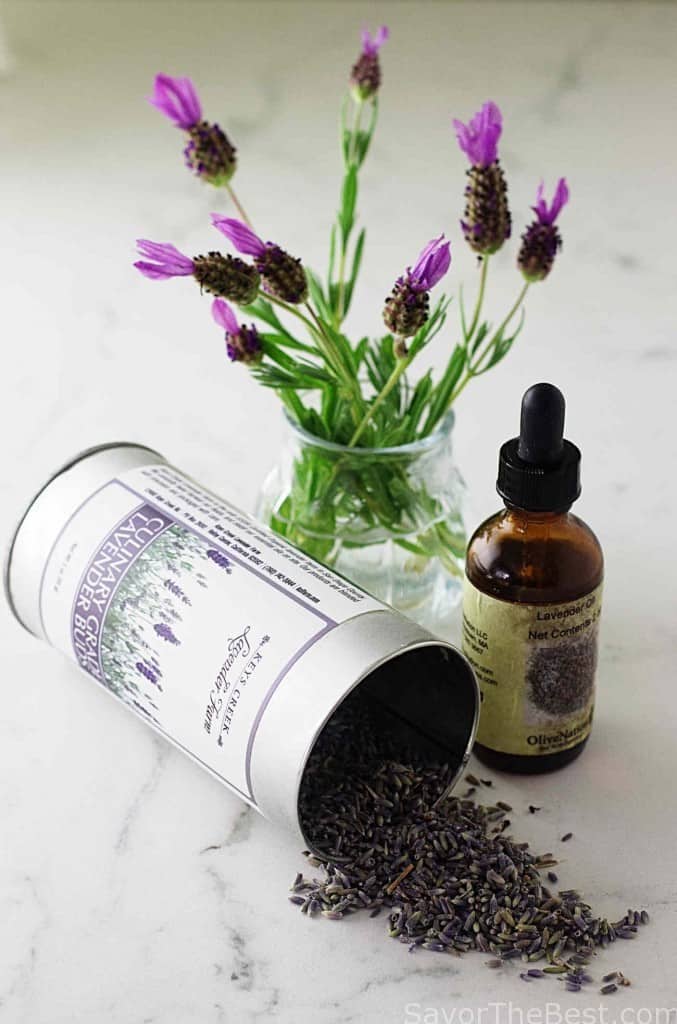
Culinary lavender oil: Use an oil specifically labeled for culinary use. Lavender oil is very concentrated, so add it a drop or two at a time, mix well, and taste before adding more.
Dried lavender buds: Grind the buds in a spice mill or crush them with a pestle so they blend into the batter instead of leaving large pieces throughout the cake.
Room-temperature ingredients: Bring the butter, egg whites, whole egg, and milk to room temperature so the batter mixes evenly and the cake bakes with a consistent texture.
Powdered sugar: Start with 5 cups for the icing and add more as needed until it reaches the sweetness and thickness you prefer.
Recipe Tips
Add the lavender oil slowly: It is easy to add more, but you cannot take it back out. Mix thoroughly and taste after each small addition, especially when making the icing.
Do not overbake the layers: Take the cakes out when a toothpick has just a few crumbs attached. A completely clean toothpick can mean the cake has baked a little too long.
Cool the cakes completely: Warm cake will soften the cream cheese icing and make the layers difficult to stack neatly.
Use the paddle attachment: The paddle mixes the butter and cream cheese smoothly without incorporating as much air as a whisk attachment.
Choose culinary lavender: Use dried lavender labeled for culinary use, since lavender sold for crafts or decoration may be treated with products that aren’t intended for food. For another way to use culinary lavender in your baking, try making lavender infused sugar.
For more lavender baking, try our lavender cupcakes for individual servings or lavender madeleines for a little something with your afternoon coffee. Our lavender cheesecake is another lovely option when you’re planning a celebration.
A Little Lavender for Your Next Celebration
You don’t need elaborate decorating skills to serve a pretty lavender cake. A simple swirl of cream cheese icing is plenty, whether you’re making it for a birthday, a shower, or an afternoon with friends. Leave time for a second slice.
Pin this now to find it later!
Pin It
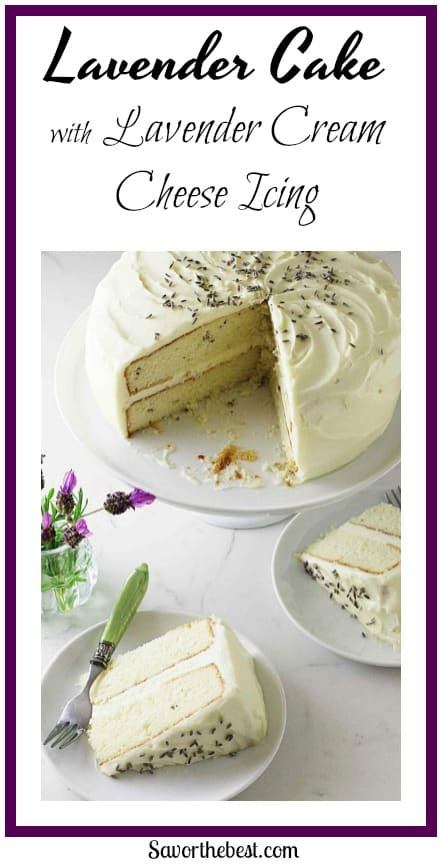
Lavender Cake with Lavender Cream Cheese Icing
If you make this recipe, please leave a star rating and comment.
Ingredients
Lavender Cake
- 2 ¾ cups cake flour, (300 grams)
- 1 ⅔ cups granulated sugar, superfine is best (330 grams)
- 1 Tablespoon baking powder
- ¾ teaspoon salt
- ¾ cup butter, (12 tablespoons) softened and room temperature
- 4 egg whites, room temperature
- 1 large egg, room temperature
- 1 cup whole milk, room temperature
- 2 teaspoons vanilla extract
- 8 to 10 drops culinary lavender oil, about ⅛ teaspoon (see Notes)
- 2 teaspoons dried culinary lavender buds, pulverized in a pestle or ground in a spice mill
Lavender Cream Cheese Icing:
- 1 cup butter, room temperature
- 4 cups powdered sugar, (452 grams)
- 1 teaspoon vanilla extract
- ½ teaspoon salt
- 2 drops culinary lavender oil, plus more to taste
- 16 ounces cream cheese, room temperature
Instructions
For the Cake
- Preheat the oven to 350°F
- Prepare two 9”x2” round pans by lining them with parchment paper and then spray the paper with non-stick spray.
- Mix the dry ingredients on slow speed for 2 minutes to blend. Add the soft butter and mix until evenly crumbly, it should resemble damp sand.
- Add the egg whites one at a time, then add the whole egg, beating well after each addition to begin building the structure of the cake. Scrape down the sides of the bowl with each egg addition.
- In a small bowl, whisk the milk with the vanilla and the lavender oil (see Notes). Add this mix ⅓ at a time, to the batter. Beat just until combined. Scrape down the sides and bottom of the bowl. Fold the crushed lavender buds into the batter.
- Pour the batter into the prepared pans and bake for 25 to 30 minutes or until a toothpick inserted into the center comes out with just a few crumbs stuck to the toothpick. Remove from the oven and cool completely on a wire rack.
For the Frosting
- Add the butter and powdered sugar to a mixing bowl. Start the mixer on low speed, then increase to medium-high and beat until smooth, light, and creamy.
- Add the vanilla, salt, and 2 drops of culinary lavender oil. Mix well.
- Add the softened cream cheese and beat until smooth and combined, scraping the bowl as needed. Taste and, if desired, briefly mix in more lavender oil, one drop at a time.
- Spread the frosting between the cooled cake layers and over the top and sides. Refrigerate the cake until serving.
Notes
Nutrition
Nutrition information is automatically calculated, so should only be used as an approximation.
 Like this recipe? Rate & comment below!
I enjoyed this cake so much, I asked Dahn to use this recipe for the cake at my 50th anniversary party. She filled the cake layers with lemon curd and covered it with fondant. It was absolutely beautiful.
If you haven’t seen our anniversary cake yet, take a look. While you’re at it, you should check out the wine barrel cake she made for Don’s 80th birthday party or any of her other cake designs.











Tried to read all the comments and learned a lot. Going to try this recipe for a Memorial Weekend event. Have the small “mini” 24 cup pans. Read to bake at 350 degrees for 22 – 24 minutes for standard cupcakes. What’s your estimate time for the mini’s and do you think the cakes will set right that small? Thank you!
Bake the mini cupcakes for 12 to 15 minutes. This recipe works great for mini cupcakes. Thanks for the question.
I was excited to try the lavender cake and the flavors was terrific! The problem with my cake, however, was that it was very dense. With the delicacy of lavender I was expecting a lighter, more tender cake. I was sure to follow the recipe exactly, but am wondering what I may have done wrong to have. It end up this way….
Butter cakes are heavier and denser than a sponge cake like this one. However, if you found that it was as heavy and dense as a pound cake then it may be due to over-beating the batter. Another thing that can make the cake too heavy and dense is if the measurements are not correct. If you use a scale to measure the ingredients like the flour and sugar, you will be more accurate.
My husband and I celebrated our 31st anniversary in Provence, France last week and brought back bottles of both lavandin and culinary lavender. I searched for a lavender cake recipe and since I have always been intrigued by the reverse cream method but never had the chance to try, I decided to do this recipe. I like how it turned out but here are my comments: 1) I have a sweet tooth but this cake is over the top sweet even without the frosting. The 330g fine sugar was a giveaway but I wanted to try the recipe as is.
2) 8-10 drops turned out too strong for me. 6 would have been good.
3) I read that the reverse cream method diminishes doming of the cake but my 2 had pretty pronounced domes.
This is good though. I can use this to compare other lavender cake recipes.
Thanks for the comment Eve. This recipe has a standard ratio of flour to sugar for a butter cake. It is a time-tested formula that results in the correct texture and gives that sturdy, yet tender texture that butter cakes should have. You can use less lavender in the recipe, however the proportions for flour, butter, sugar, and eggs have very little room for adjustment without compromising the integrity, texture, and structure of the cake.
If you want a less sweet cake, you might want to try our white chocolate cake. The sugar in the white chocolate replaces some of the granulated sugar but the tang of the white chocolate off-sets the sweetness. If you want to reduce the dome on your cakes, try insulating the outside of the cake pans with cake strips. You can also use professional cake pans that are more insulated but the cake strips are more affordable and more effective.
Hi there, so this recipe looks incredible, but I only want to bake it for two. In order to avoid being wasteful, is it possible to half all the ingredients to just use one 9in pan? And if so, do you think half-ing the whole egg would work out okay? lol
Also, do you think it would be okay to use lavender syrup instead of lavender oil?
Thanks!
Absolutely. That will work just fine if you cut the recipe in half and only bake one 9-inch cake. What I do to cut a whole egg in half is whisk it first, weigh it and remove half. If you don’t have a scale then use a teaspoon to measure the volume. Lavender syrup would change the ratio of sugar in the cake batter, however you could drizzle lavender syrup over the top and bottom of the cake after it finishes baking and cools down. Since this isn’t a sponge cake, you can’t use too much or the cake will get soggy. I usually add 3 to 4 tablespoons of simple syrup on both sides of the cake layer.
There are different varieties of lavender. Some are more suited for culinary use, such as English Lavender (Lavandula angustifolia). Others such as the French/Spanish Lavender here is more ornamental.
Thank you for the comment. We did mention that in the post above.
Hello!
I am planning to make a lemon blackberry cake with a lavender cream cheese frosting, and your frosting recipe looks perfect. Sadly, I’m having a hard time finding food grade lavender oil in my area, but I do have fresh lavender growing and i have culinary lavender in my local grocery store. Do you have any ideas on how I can incorporate lavender into the frosting in this case? Maybe I could put some lavender sprigs (maybe grind it with a mortar and pestle) into the butter and melt it down?
You would get flecks of lavender in the frosting if you incorporated the blossoms into the frosting but it should give you a lavender flavor. I don’t know how much you should use though so just start small and sprinkle it in as you go. I would expect that the flavor of the lavender will intensify if the buttercream sits for a couple of days with fresh lavender in it. With that in mind, you might want to under season it with lavender.
Hello ! I am so excited to try this lavender cake recipe ! I am wondering if I can use all purpose flour instead of cake flour?
thanks!
Yes, it will work with all-purpose flour but won’t be quite as light and soft. One thing you can do is make a substitute for cake flour … for every cup of all-purpose flour, remove 2 tablespoons of flour and replace that with 2 tablespoons of cornstarch…. that kind of works as a close substitute for cake flour.