

This post may contain affiliate links. Please read our disclosure policy. As an Amazon Associate, I earn from qualifying purchases.

This Ooni pizza dough recipe makes a crisp, flavorful crust that cooks beautifully in a high-temperature pizza oven. With just four ingredients and a straightforward method, you can make homemade pizza dough that’s easy to stretch, shape, and launch into a blazing-hot oven.

Outdoor Oven Pizza Dough
This dough is designed for the intense heat of outdoor pizza ovens, where pizzas can cook in just a minute or two. It has a manageable hydration level that makes the dough easier to stretch and launch, while producing a crisp crust with a tender interior.
Although we developed this recipe for an Ooni, it also works in other high-temperature pizza ovens, including the Gozney Roccbox, Solo Stove Pi, and wood-fired ovens.
Why This Ooni Pizza Dough Recipe Works
This recipe takes a different approach from our fast pizza dough, which is designed for a conventional home oven. Inspired by Neapolitan-style pizza dough, it uses a simple flour-and-water mixture and a method that works well for high-temperature baking.
Make-ahead friendly: The dough can be refrigerated or frozen, so you can have pizza dough ready when you need it.
Easy to handle: The moderate hydration makes the dough less sticky and easier to stretch and slide off the pizza peel.
Crisp, chewy crust: The dough bakes quickly, developing a lightly crisp exterior while staying tender and chewy inside.
Flexible timing: Make the dough the same day or refrigerate it for a longer fermentation to develop more flavor.
Since the dough isn’t as sticky as high hydration dough like my einkorn pizza dough, it is easier to work with and slides off the pizza peel easier.
Ingredients for Ooni Pizza Dough
You only need four ingredients for this pizza dough, but the flour you choose makes a difference.
- Flour: Tipo 00 pizza flour gives the dough a tender, chewy texture and makes it easy to stretch. All-purpose flour works well too, but you’ll need a slightly larger quantity. We’ve tested both options, and the recipe includes the correct measurements for each.
- Water: Hydrates the flour and helps develop the dough’s structure.
- Salt: Adds flavor and helps strengthen the gluten.
- Instant yeast: Gives the dough its rise, whether you’re making it the same day or letting it ferment overnight.
For more on choosing flour, see our guide to pizza flour vs. AP flour
Related: check out our pizza seasoning blend.
More Artisan Bread Recipes
- Greek Easter Bread (Tsoureki)
- Beer Pretzel Bites
- Navajo Fry Bread (Two Ways!)
- Einkorn Naan with Garlic and Onion
- 21 Artisan Bread Recipes
Recipe Tips
For better flavor, plan ahead. Refrigerate the dough for 24 to 72 hours during its first rise. The slow fermentation develops more complex flavor and gives you flexibility with your pizza-making schedule.
Use the correct flour measurement. Tipo 00 and all-purpose flour absorb water differently. Follow the measurements provided for whichever flour you’re using rather than substituting equal amounts.
Weigh your dough balls. A kitchen scale makes it easy to divide the dough evenly so your pizzas are consistent in size and bake at the same rate.
Keep the dough covered. A light coating of olive oil helps prevent a dry skin from forming while the dough rises. Keep the container covered as well.
Instant yeast makes things easier. We use instant yeast because it’s readily available and doesn’t require proofing. If you prefer fresh yeast, use approximately three times the weight of instant yeast.
Make launching easier. Lightly dust your pizza peel with flour or semolina and give it a gentle shake before launching to make sure the dough isn’t sticking.

Ready for Pizza Night?
Once your Ooni pizza dough is ready, the fun part begins. Use it to make our Buffalo Chicken Pizza or spread on some White Garlic Pizza Sauce and add your favorite toppings. Either way, you’ll have a homemade pizza with a crisp, chewy crust that’s hard to beat.
Pin this now to find it later!
Pin It
Ooni Pizza Dough
If you make this recipe, please leave a star rating and comment.
Ingredients
- 1⅔ cups water, warm (100°F); 394 grams
- 3 teaspoons salt, 18 grams
- 5⅓ cups Tipo 00 flour, 640 grams or 680 grams All-purpose flour
- 2 teaspoons instant dry yeast, 6 grams
Instructions
- Before you begin, if you want to do a slow ferment to develop more flavor in the dough, decrease the yeast to 0.75 grams or ¼ teaspoon. The smaller amount of yeast will allow you to ferment the dough for up to 72 hours and develop more flavor.
Mix the Dough
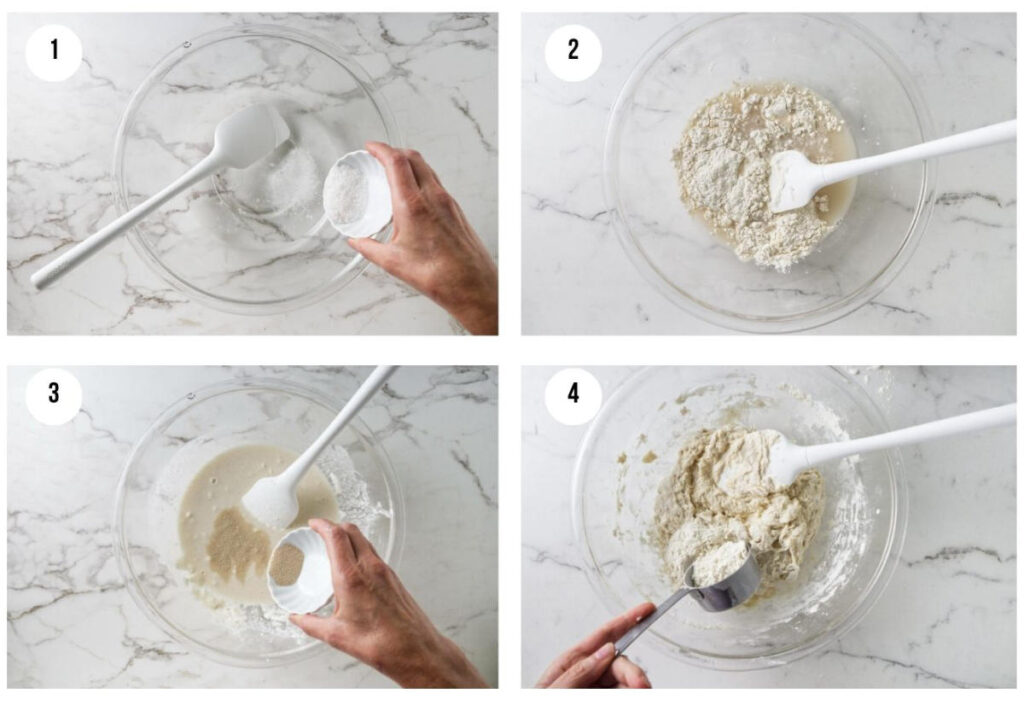
- Add the water to a large mixing bowl (or use the bowl of a stand mixer) and stir in the salt until it dissolves.
- Stir in approximately 1 to 1 ½ cups of flour. It will look like a thin crepe batter at this point. (The small amount of flour provides a buffer between the salt and the yeast).
- Stir in the yeast (if you plan to cold ferment the dough for 72 hours, reduce the yeast to ¼ teaspoon or 0.75 grams).
- Gradually add the rest of the flour in ½ to 1 cup increments. Stir well between additions. Adding the flour slowly gives it time to absorb the water. If there is any flour that does not get incorporated, you can knead it into the dough in the next step.
Knead the Dough:
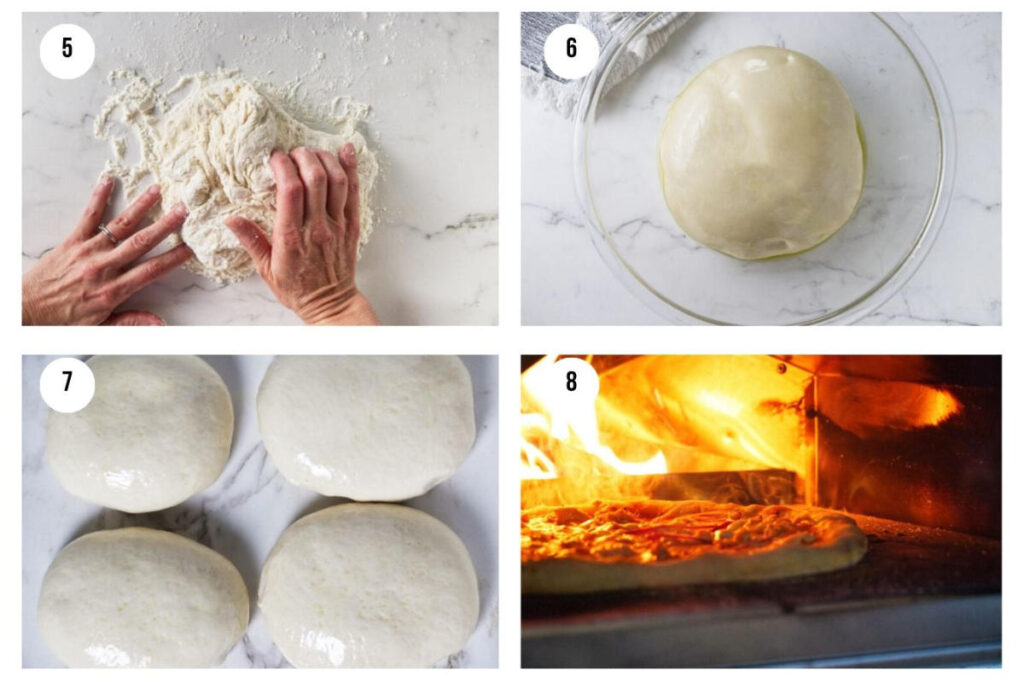
- Transfer the dough to the countertop and knead until smooth (or use a stand mixer). The dough will seem dry at first but it will start to come together as you knead it. It will take about 10 to 20 minutes to knead the dough until it gets to a smooth consistency. If the dough seems sticky, dust the countertop with some flour.
Bulk Ferment the Dough:
- Place the dough in an oiled bowl and cover it with a damp towel.
- Let the dough rest in a warm, dry area for 2 to 4 hours (or in the fridge for 24 to 72 hours if you want to do a slow ferment).
Divide and Proof the Dough:
- Divide the dough into 4 equal portions and shape each portion into a round ball.
- Place the dough balls on a tray. Coat them in a thin film of olive oil and cover them with plastic wrap. Let them sit at room temperature for 2 to 4 hours or until doubled in size.
- At this point, you can either make your pizzas, or freeze the dough balls for up to three months.
Make the Pizza:
- Place each dough ball on a lightly floured surface. Use your fingers to press and stretch the dough into a 12-inch pizza round.
- Add your favorite toppings, then transfer the pizza to a lightly floured pizza peel just before baking. This keeps the dough from sitting on the peel too long and sticking.
- Give the peel a gentle shake to make sure the pizza slides freely. If it sticks, lift an edge and dust a little flour underneath, or blow a puff of air under the dough to loosen it.
- Slide the pizza into the Ooni or another high-temperature outdoor pizza oven. Bake at 700°F to 900°F for 1 to 2 minutes, turning every 20 to 30 seconds for even cooking.
Notes
- Flour: Tipo 00 and all-purpose flour absorb water differently. Use the flour quantity listed for your chosen flour rather than substituting equal amounts.
- Proofing: Lightly coat the dough with olive oil and keep it covered to prevent a dry skin from forming.
- Freezing: Thaw frozen dough overnight in the refrigerator, then let it sit at room temperature for 2 to 3 hours before stretching and shaping.
- Yeast: Instant yeast is used in this recipe, but fresh yeast works too. Substitute approximately 3 times the amount of instant yeast by weight.
- Yield: Makes four 12-inch pizzas.
- I tested this dough with both Tipo 00 and all-purpose flour. The all-purpose version needed a little more flour to achieve the same workable consistency, so I’ve included separate measurements for each.
Nutrition
Nutrition information is automatically calculated, so should only be used as an approximation.
 Like this recipe? Rate & comment below!











Making for the first time. Wondering if I can put it in the fridge for just a few hours once it has doubled in size if I’m not quite ready to make it, or should I just leave it at room temp a while longer? Thanks!
Yes, if you are not ready to use it, you can place it in the fridge so it doesn’t over-proof. Let it sit for at least 30 minutes after you take it out of the fridge.
Hi, looks amazing I will be trying! Is bread flour ok to use or better still to all purpose if I don’t have the ‘00?
Either flour will work. It depends on how you want the crust to turn out. Bread flour will give the crust a heartier, chewier texture. No matter which flour you choose, keep in mind that the hydration level will vary slightly with each type of flour. Bread flour absorbs the most water, followed by 00 flour, and then all-purpose flour.
Best recipe for pizza dough! We made breakfast calzones two days later with the leftover dough. Wish I could send the picture.
That’s fantastic to hear! Breakfast calzones sound like a delicious way to use the leftover dough. Thanks for the comment.
I love this pizza dough recipe for our ooni! Huge fan of it. I’m going to be slow fermenting for the first time and was curious if I need to put olive oil in the bowl for that as well or is that only if it’s when you are fermenting on the countertop? Thank you!
Yes, I recommend adding the oil to the bowl as well as coating the dough ball during a slow ferment. That will protect the dough from drying out. Thanks for the comment! I’m so glad you like the recipe.
I’ve tried several pizza dough recipes and this is the best. It makes a nice shapable, tossable dough that yields delicious, crusty & chewy pizzas. I reduced the salt & modified to use sourdough discard:
227 g sourdough discard
1 t yeast (optional)
280 g water
2 t salt
≤ 527 g 00 flour, 1 cup at a time
Thank you, Dahn!
Thanks for the comment! I’m glad to hear it works well with your modifications for sourdough as well.
Although the dough did withstand the higher heat, I felt like 1 2/3 cup of water was not enough. After adding 1 cup to begin it was fine. By the time I added the second cup, the water was completely absorbed and the flour was not really incorporated into eh dough. Once cooked there was a lot of raw flour in the crust. Did I do something wrong?
Did you weigh your flour? What kind of flour did you use? This pizza dough has a 62% hydration level which is less hydrated than many pizza dough recipes. The lower hydration helps it cook quicker in the hot pizza oven but it may not be what you are used to working with if you have baked bread or made pizza before. It needs a bit of time to hydrate after you mix it but by the time you finish kneading the dough, it should feel much smoother and more hydrated. Resist the urge to add more water or it will not cook completely in a pizza oven.
I only had 4 1/2 hours until guests arrived, put the dough in a warmed room to rise for 2 hours, separated for 2.5, it was perfect. Great recipe I will use again!! Thanks
Thanks for the comment, I’m so glad it turned out.
Can this recipe be used in all outdoor pizza ovens with the same success?
Absolutely! Outdoor pizza ovens are designed to get very hot and cook super fast. We have played with a few of them and they vary slightly but work essentially the same. You may need to adjust the cook time based on your particular model and how hot you get the oven.
I just want to confirm that when doing a slow recent, that you are only using .75 grams (1/4 tsp. of yeast). Seems like such a small amount! ?
Yes, if you want to do a slow ferment for 72 hours, you only need to use 1/4 teaspoon of yeast or 0.75 grams. I know it doesn’t seem like a lot of yeast but it is all you need for a slow ferment. You can certainly use more yeast if you want.
That crust looks really impressive! So this can’t be done in conventional oven?
Thanks, Angie. Yes, you can use this pizza dough in a conventional oven. The low hydration works at low temperatures as well as high temperatures, but the high temps in an outdoor oven need the low hydration dough.