
This post may contain affiliate links. Please read our disclosure policy. As an Amazon Associate, I earn from qualifying purchases.
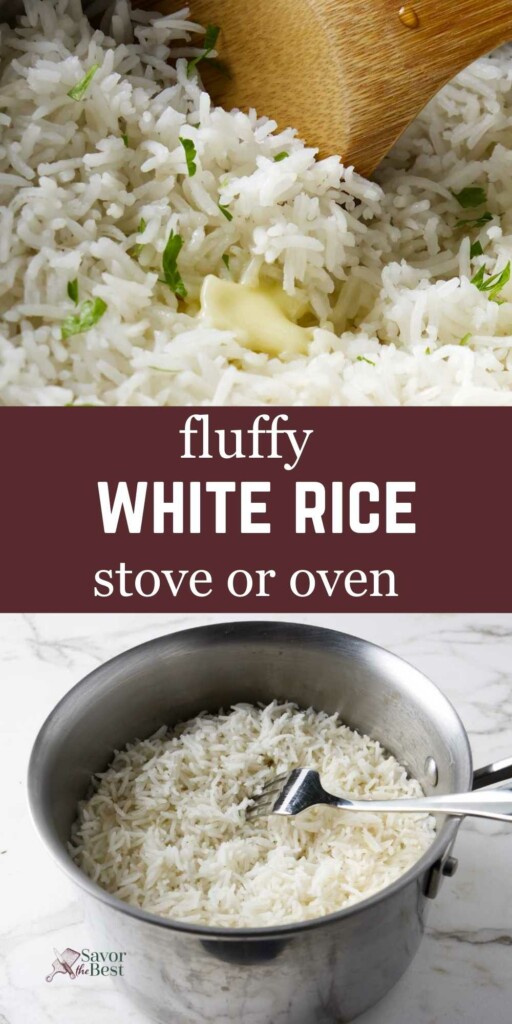
How to cook white rice sounds simple enough, until you end up with sticky, clumpy grains or rice that’s somehow dry and mushy at the same time. The right water ratio and a few small technique tweaks make all the difference.
This method gives you fluffy white rice with light, separate grains every time. Use the stovetop method for everyday cooking or the oven method when you want a hands-off batch. Serve it under a saucy stir-fry, pile it into burrito bowls, or keep it simple on the side.
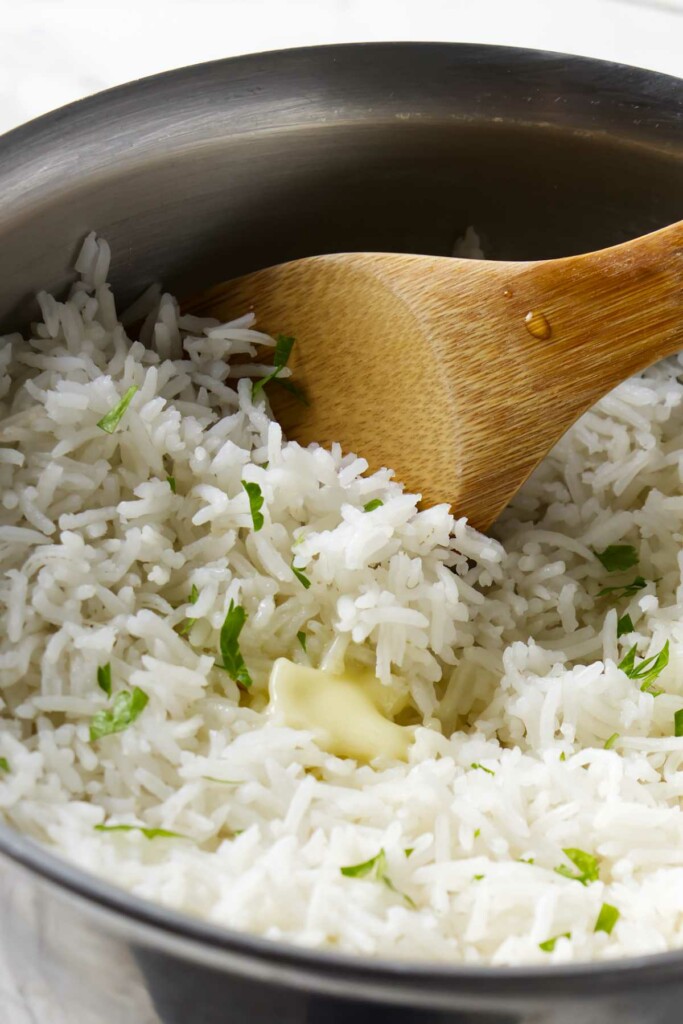
This recipe keeps things simple and versatile and perfect for pairing with just about anything. If you’re after something more flavorful, my garlic butter rice is a great upgrade. Need something stickier for sushi? Head over to my Instant Pot sushi rice for a different technique and texture.
Why This White Rice Recipe Works
I tested this recipe with the goal of getting rice that cooks up fluffy and separate without adding extra steps that don’t always matter.
The biggest factor is the water ratio. Too much water gives you soft, clumpy rice, while too little leaves the grains dry or undercooked. Once that ratio is dialed in, the rest of the method stays simple.
I included both a stovetop method and an oven method because they each have their place. The stovetop is what I use most often, but the oven method is handy when the burners are full or I want a more hands-off batch.
I also tested small adjustments for long-grain rice, jasmine rice, and basmati because they don’t all behave exactly the same. Jasmine needs a little less water, while basmati usually benefits from a quick rinse.
And because rice can be annoyingly particular for something so basic, I included troubleshooting tips for dry rice, wet rice, gummy rice, and scorched bottoms. Not glamorous, but very useful when dinner is already happening.
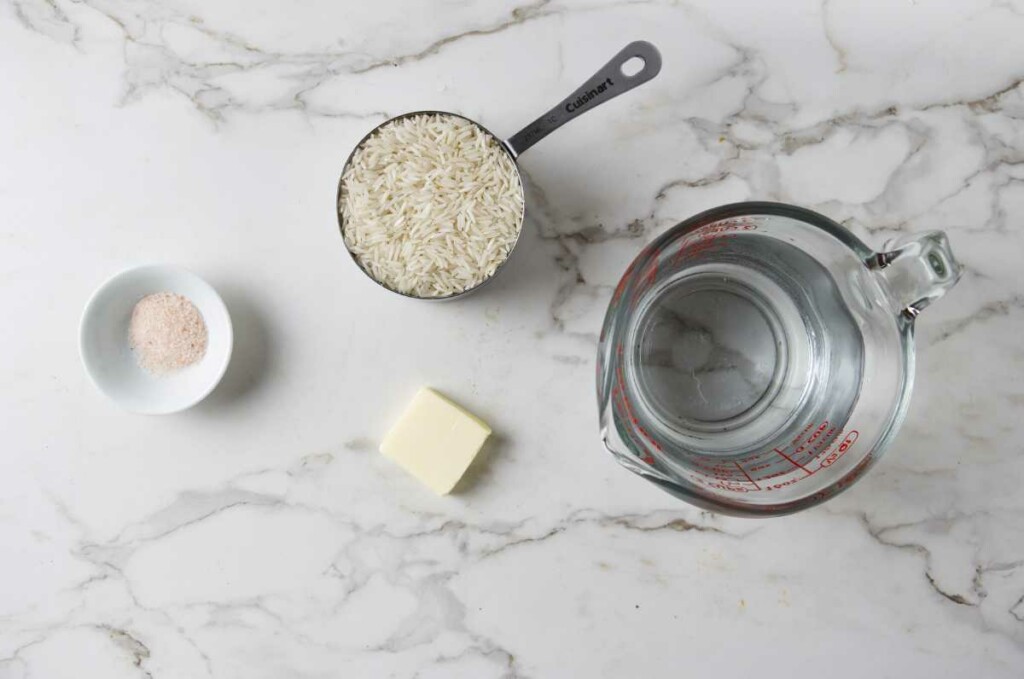
Rice-to-Water Ratio
Getting the water ratio right matters more than almost anything else when cooking white rice. Too much water and the rice turns soft and clumpy. Too little and you’ll end up with dry or undercooked grains.
For standard long-grain white rice, this ratio works well:
- 1 cup rice to 1½ cups water for stovetop cooking
- 1 cup rice to 1½ cups boiling water for oven baking
Some rice varieties need slight adjustments:
| Rice Type | Water Ratio | Notes |
|---|---|---|
| Long-grain white rice | 1:1½ | Standard ratio |
| Jasmine Rice | 1:1¼ | Softer rice that needs less water |
| Basmati Rice | 1:1½ | Rinsing recommended for best texture |
If you rinse the rice first, reduce the water slightly since the grains hold onto some moisture after rinsing.
Recipe Tips
Rinse… if it needs it. If the rice looks dusty or has debris, give it a quick rinse. Otherwise, if you’re using the right water ratio and long-grain rice, you can usually skip it. Just know that rinsing adds moisture, so you might want to slightly reduce the water in the pot if you rinse.
Use a tight-fitting lid. Steam is key. If it escapes, your rice could end up undercooked or uneven.
Don’t peek. Lifting the lid mid-cook might seem harmless, but it messes with the moisture and timing.
Let it rest. The steam finishes the job. This short step makes a big difference in texture.
Adjust as needed. If your rice turns out dry, try adding a couple tablespoons more water next time.
Use the right pot size. Too small and it’ll bubble over. Too wide and the water can evaporate too quickly.
Watch the heat. Once it boils, drop it to low and leave it alone. Too much heat and the bottom will scorch before the top is done.
Altitude matters. If you live at a higher elevation, you might need a bit more water and a slightly longer cook time. Rice can be picky like that.
Do You Need to Rinse White Rice?
That depends on the rice and the texture you want.
If the rice looks dusty or has excess starch coating the grains, a quick rinse is worth the extra minute. Short-grain rice and some brands of basmati also benefit from rinsing because it helps prevent excess clumping.
For standard long-grain white rice, you can usually skip rinsing if your water ratio is correct. The rice still cooks up fluffy without the extra step.
If you do rinse the rice, reduce the water by a couple tablespoons per cup so the final texture doesn’t turn overly soft.
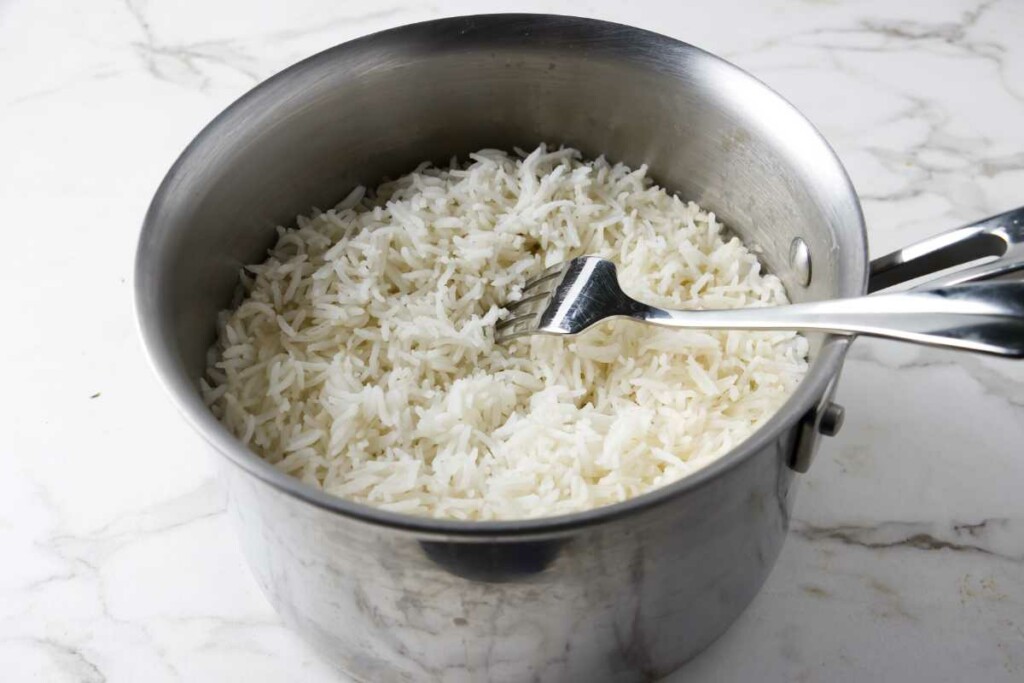
Troubleshooting Fixes for White Rice:
Add 2 to 4 tablespoons of water, cover the pot, and return it to low heat for 5 more minutes. Let it rest again before fluffing. Next time, bump up the water ratio by 2 to 4 tablespoons.
It either had too much water or didn’t cook long enough. You can uncover the pot and let it sit over low heat for a few minutes to let the extra moisture evaporate. If it’s really wet and cooked completely, go ahead and strain it through a fine-mesh sieve, then return it to the pot and let it sit uncovered for a few minutes to release steam before fluffing.
That usually means the heat was too high after it started boiling. Make sure to reduce the heat as soon as it hits a boil, and use a heavy-bottomed pan to help prevent scorching.
Too much water is often the main reason, especially if the ratio is off or the rice simmered too long. Keep your water ratio in check (no more than 1¾ cups per cup of rice) and don’t stir during cooking. That’s when things get sticky (literally).
Yes. The oven method works especially well for larger batches or when your stovetop is busy. Using boiling water helps the rice cook evenly.
Add a splash of water before reheating to help restore moisture. Cover the rice while reheating so it steams instead of drying out.
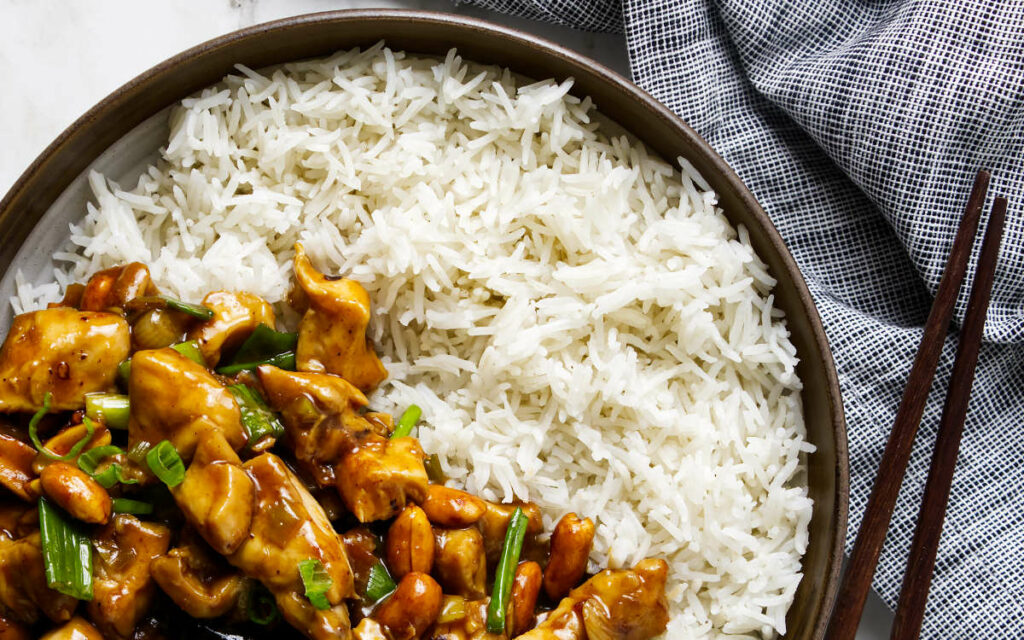
What to Serve with White Rice
White rice works with just about anything that has a sauce worth soaking up. Try it with:
It’s also great tucked into burrito bowls, paired with grilled meats, or used for quick lunches throughout the week.
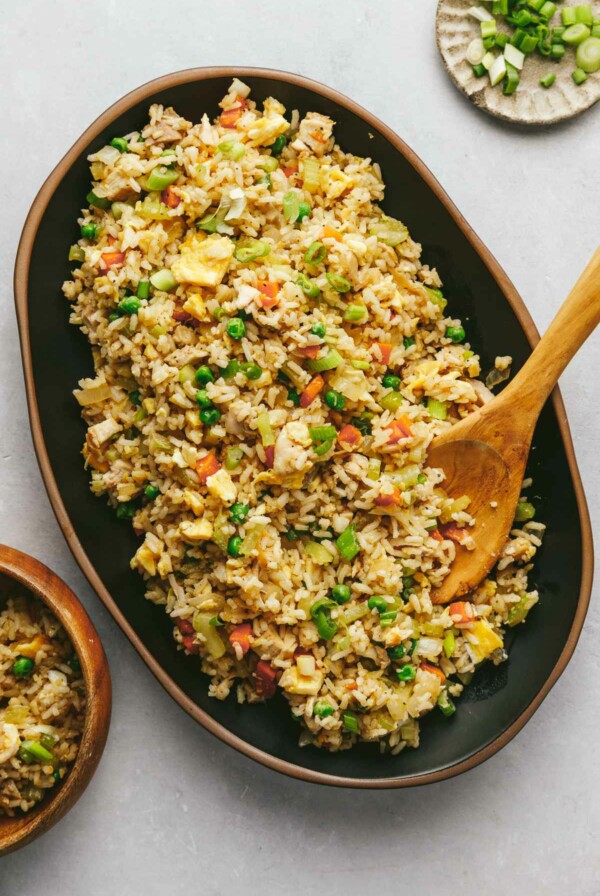
Got leftover white rice? Use it to make fried rice with this easy sauce for fried rice.
Pin this now to find it later!
Pin It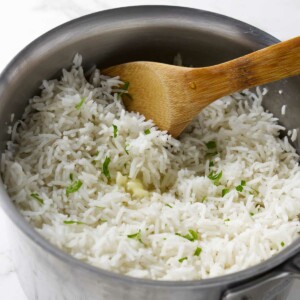
Fluffy White Rice
If you make this recipe, please leave a star rating and comment.
Ingredients
- 1 cup long-grain white rice, Jasmine, Basmati, or Texmati work great
- 1½ cups water, or 1¾ cups for slightly softer rice
- ¾ teaspoon salt
- 1 tablespoon butter, or olive oil; optional
Instructions
Stovetop Method:
- Rinse the rice under cold water in a fine-mesh strainer until the water runs mostly clear. This helps remove excess starch so the rice cooks up fluffy instead of gummy.
- In a medium saucepan, combine the rinsed rice, water, salt, and butter or oil if using. Bring it to a boil over medium-high heat.
- Once it starts to boil, give it a quick stir, reduce the heat to low, and cover the pot with a tight-fitting lid.
- Let it simmer undisturbed (no peeking!) for 18–20 minutes, or until all the water is absorbed.
- Remove from heat and let it sit, covered, for 5–10 minutes. This resting step lets the steam finish the cooking and evens out the texture. Fluff gently with a fork before serving.
Oven Method:
- Preheat your oven to 375°F and bring your water to a boil.
- Place 1 cup of rinsed long-grain white rice in a 2-quart oven-safe baking dish (like a glass or ceramic dish with a lid, or cover tightly with foil).
- Add 1½ cups of boiling water, ½ teaspoon salt, and 1 tablespoon butter or oil, if using. Stir gently to combine. Cover the dish tightly with a lid or foil.
- Bake for 25 minutes, then check to see if the water has been fully absorbed. If needed, bake for another 5 minutes.
- Remove from the oven and let it sit, still covered, for 5–10 minutes. Fluff with a fork before serving.
Notes
- Rinse… if it needs it. If the rice looks dusty or has debris, give it a quick rinse. Otherwise, if you’re using the right water ratio and long-grain rice, you can usually skip it. Just know that rinsing adds moisture, so you might want to slightly reduce the water in the pot if you rinse.
- Jasmine rice cooks softer. Of all the long-grain options, jasmine rice tends to turn out a bit softer and stickier. If you want it fluffier, use 1¼ cups water per cup of rice instead of 1½
- Use a tight-fitting lid. Steam is key. If it escapes, your rice could end up undercooked or uneven.
- Don’t peek. Lifting the lid mid-cook might seem harmless, but it messes with the moisture and timing.
- Let it rest. The steam finishes the job—this short step makes a big difference in texture.
- Adjust as needed. If your rice turns out dry, try adding a couple tablespoons more water next time.
- Use the right pot size. Too small and it’ll bubble over. Too wide and the water can evaporate too quickly.
- Watch the heat. Once it boils, drop it to low and leave it alone. Too much heat and the bottom will scorch before the top is done.
- Altitude matters. If you live at a higher elevation, you might need a bit more water and a slightly longer cook time.
- Using the oven method? Make sure to bring the water to a boil first.
Troubleshooting Tips
- Too dry or undercooked? Add 2–4 tablespoons water, cover, and cook on low 5 more minutes. Let it rest again.
- Too wet? Uncover and cook on low to evaporate moisture. If very wet, strain and return to pot to steam off excess.
- Rice stuck to the bottom? Heat was likely too high. Lower the heat after it boils and use a heavy-bottomed pot.
- Clumpy or gummy? Usually due to too much water or overcooking. Use no more than 1¾ cups water per cup of rice and avoid stirring.
- Do I have to rinse? Not if you’re using long-grain rice and the right water ratio. Rinse only if it looks dusty or dirty.
Storing Leftovers
Let the rice cool completely, then transfer it to an airtight container and refrigerate for up to 4 days. Leftovers are perfect for shrimp fried rice. To freeze, spread the rice in a thin layer on a parchment-lined baking sheet and freeze until firm. Then transfer it to a freezer-safe container. Reheat with a splash of water in the microwave (covered loosely) or in a saucepan over low heat.Nutrition
Nutrition information is automatically calculated, so should only be used as an approximation.
 Like this recipe? Rate & comment below!