

This post may contain affiliate links. Please read our disclosure policy. As an Amazon Associate, I earn from qualifying purchases.

This whole wheat einkorn pizza dough makes a soft, tender crust with rich flavor and a chewy bite. It handles a little differently than standard pizza dough, but the method is simple and the results are worth it. Bake it right away or store it for later pizza night.
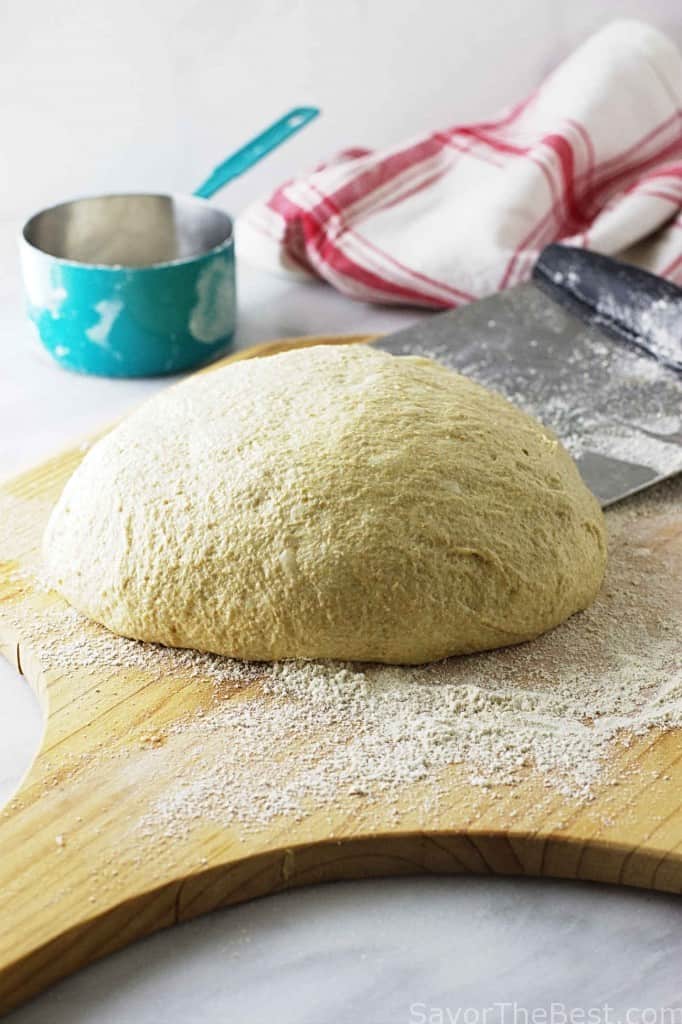
Here’s Why This Einkorn Pizza Dough Recipe Works
The dough stays soft: A higher hydration helps balance whole wheat einkorn so the crust bakes up tender instead of heavy or dry.
No long kneading session: Einkorn’s gluten structure is more delicate than modern wheat, so a few stretch-and-folds do the job without overworking the dough.
The method works with einkorn, not against it: The dough starts out sticky, but the rest periods give the flour time to absorb moisture, and each round of folds makes it easier to handle.
The crust has real flavor: Whole wheat einkorn gives the dough a richer flavor than standard pizza crust, so it brings more to the table than just holding the toppings.
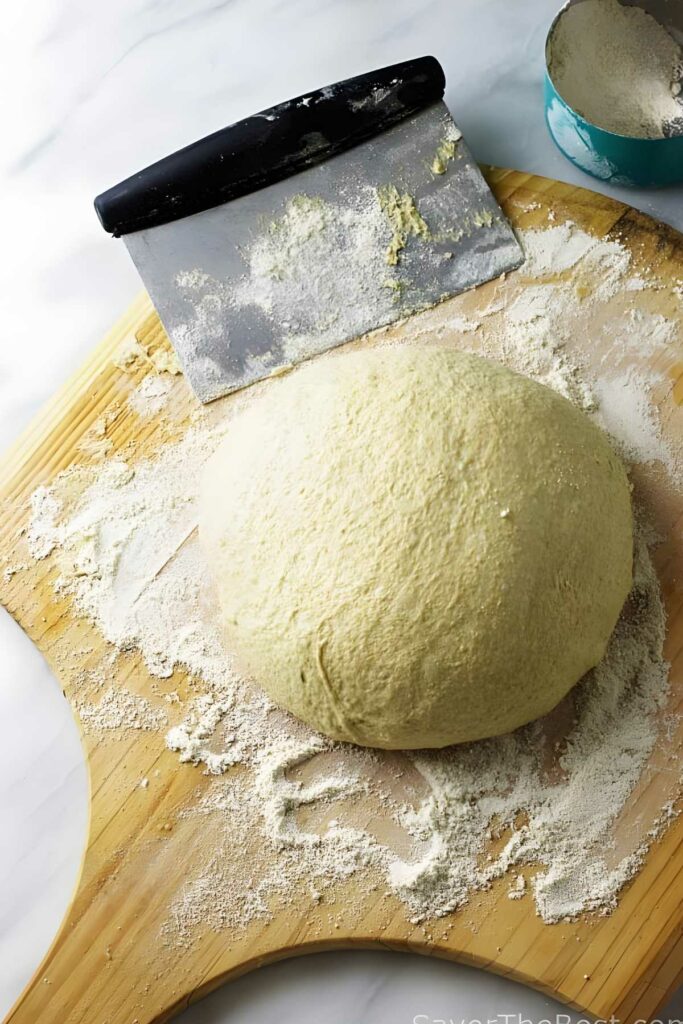
If you like baking with einkorn, take a look at my whole wheat einkorn bread recipe or my einkorn focaccia recipe.
Recipe Tips
Weigh the flour: A kitchen scale will give you much better results, especially since whole wheat and all-purpose einkorn do not weigh the same.
Do not rush to add more flour: Einkorn takes its sweet time absorbing liquid. Let the dough rest before deciding it is too wet.
Keep your hands wet or oiled: This is a sticky dough, and tossing in extra flour will not do it any favors. Wet or oiled hands make it much easier to work with.
Use parchment paper: Shape the dough right on the parchment, then slide the whole thing onto your pan or stone.
Warm up chilled dough before shaping: Cold dough is harder to stretch. Let it rest at room temperature for 1 to 2 hours before you make the pizza.
If you are curious how other types of flour stack up when making pizza dough, see my post comparing pizza flour vs bread flour.
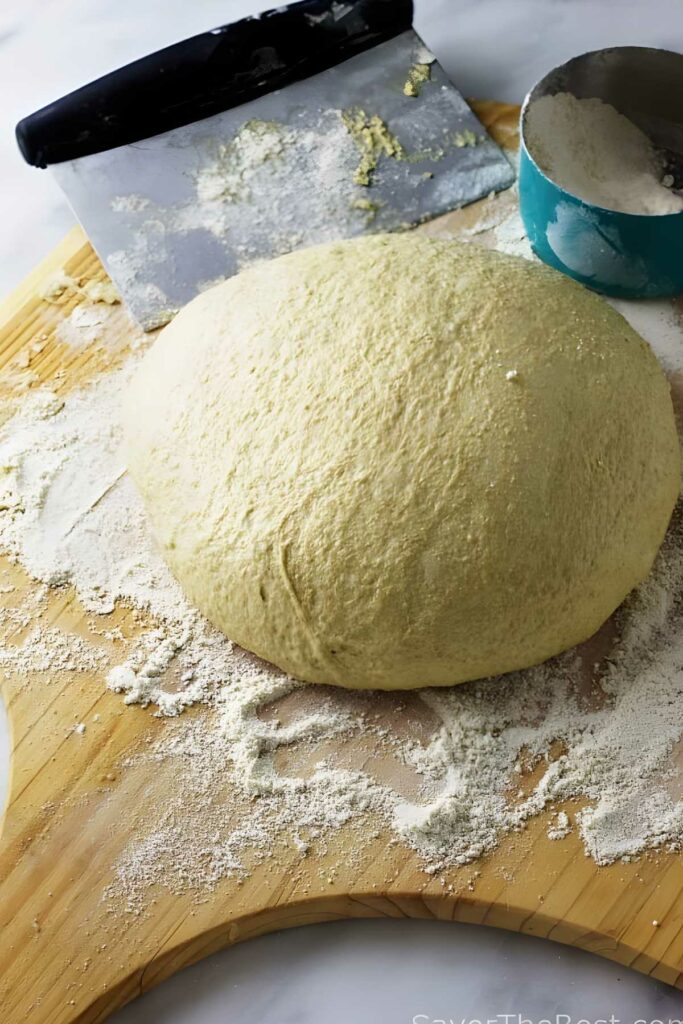
Whole Wheat Einkorn Pizza Dough
This whole wheat einkorn pizza dough makes a crust with great flavor, a tender chew, and crisp edges. It may feel a little different from regular pizza dough, but the method is simple and the results are worth it. Keep one batch for dinner and freeze the other for an easier pizza night later.
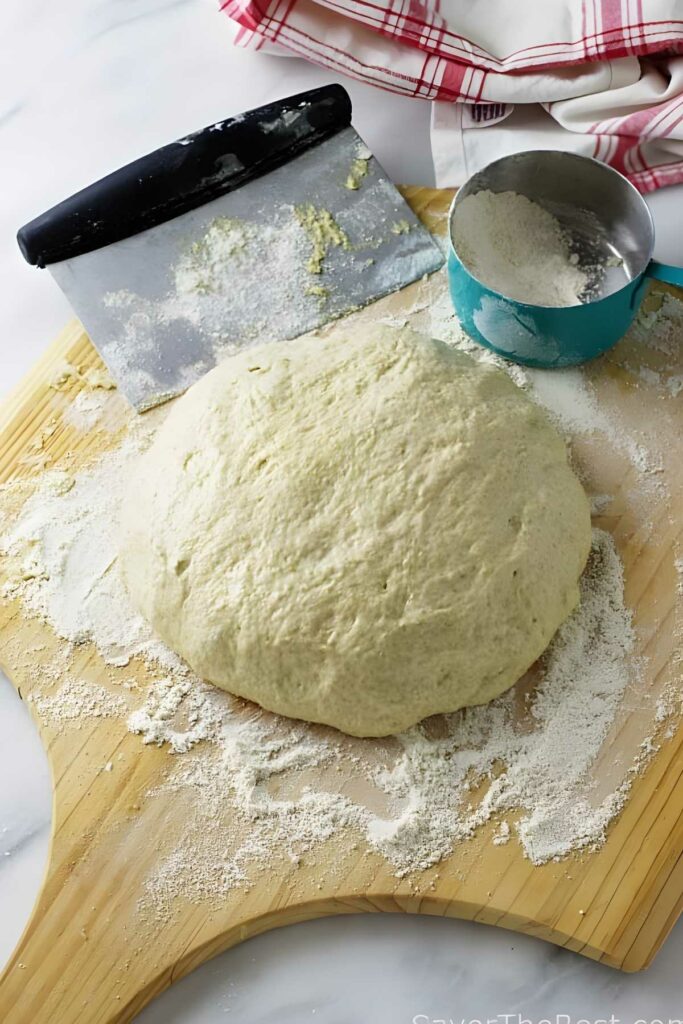
If you need a sauce, my fresh tomato pizza sauce is a great option and comes together quickly.
Pin this now to find it later!
Pin It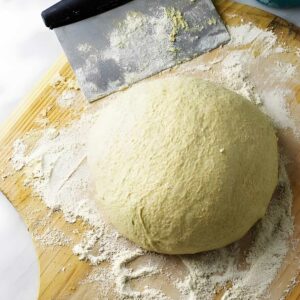
Einkorn Pizza Dough
If you make this recipe, please leave a star rating and comment.
Ingredients
- 3¾ cups whole wheat einkorn flour , 450 grams (or all-purpose einkorn flour)
- 2¼ teaspoons instant dry yeast, 7 grams or 1 packet
- 1½ teaspoons salt, 8.5 grams
- 1¼ cups water, warm; 295 grams, see notes
- 3 tablespoons extra virgin olive oil, 39 grams
- 1 tablespoon honey, 21 grams
Instructions
- Add the Einkorn flour, instant yeast and salt to a large bowl. Stir in the water, olive oil, and honey until well combined. The dough will be wet and sticky.
- Let the dough sit for 5 minutes to give it a chance to absorb moisture. (Einkorn flour needs extra time to absorb liquid.)
- Dip your hands in water or grease them with oil to stretch and fold the dough several times. Keep the dough in the bowl and stretch it up then fold it in half. Turn the bowl ¼ turn and repeat the stretch and fold. Continue pulling the dough up and over itself 4 to 6 more times then let it rest for 5 minutes. Repeat the same stretch and fold process three more times every 5 to 10 minutes.
- The dough will get firmer and easier to handle with each stretch and fold interval. It will still have a sticky texture but if you keep your hands wet, it won't stick to them.
- Coat the ball of dough with oil and cover it with plastic wrap. Let it sit at room temperature for 1½ to 2 hours.
- Divide in half with an oiled bench scraper. Use wet or oiled hands to form two balls of dough. Coat each ball with oil and cover with plastic wrap. Let them rise for 1 to 2 hours
To store the pizza dough
- At this point, you have two options: you can either store it in the fridge (or freezer), or you can proceed with baking.
- To store the dough, wrap it in plastic wrap and place it in ziplock bags. Keep it in the fridge for up to 3 days or in the freezer for up to 3 months. When you're ready to use it, thaw the frozen dough in the refrigerator overnight. Once thawed, remove it from the fridge and let it rest at room temperature for 1 to 2 hours before using it to make pizza.
To shape pizzas
- Preheat the oven to 450°F. Sprinkle some flour on a sheet of parchment paper and press the dough into a flat circle. If the dough is too sticky, dip your hands in water so it doesn't stick to them.
- Add your toppings and use the parchment paper to slide the pizza onto your baking pan. Bake for 8 to 10 minutes.
Notes
Nutrition
Nutrition information is automatically calculated, so should only be used as an approximation.
 Like this recipe? Rate & comment below!












I made this tonight, except with sourdough starter instead of yeast, and let it rise for 8 hours. Even though I’ve been baking with einkorn for years, this was incredibly challenging to work with because it was so wet. I didn’t read the comment about using parchment paper – that would have helped. However, it made the BEST pizza dough I’ve ever had with Einkorn! I think that next time, I will put it in the fridge for a few hours before shaping. Also, I used 400g fresh milled with only 50g all-purpose (einkorn).
Thanks so much for sharing your experience. Einkorn pizza dough can definitely feel a little wild, especially when it’s on the wetter side. Using sourdough starter instead of yeast will change how the dough behaves, and fresh-milled einkorn adds another variable since it tends to absorb liquid differently than store-bought flour.
Your idea of refrigerating the dough before shaping is a good one. I’m so glad it turned out. Thanks for taking the time to leave a comment.
Would the recipe need something extra if I were using sprouted einkorn flour?
You can definitely swap the flour for sprouted einkorn flour. I would add 50 to 100 grams more water.
hi
what size round in inches does 1 ball of dough make?
like this i will know how thin to roll it.
do you roll it with hands or a rolling pin?
I generally stretch and push the dough with my hands, but it is fine if you want to use a rolling pin. Use what works best for you. One ball of dough will stretch to 12 inches in diameter but it you want a thinner pizza go ahead and stretch or roll it larger (or make it smaller if you want a thicker pizza). There are really no hard and fast rules. You can make the crust thinner or thicker as long as you adjust the baking time.
Hi there, if I want to do a cold ferment on this dough for a couple days, can I cut down on the amount of yeast? I’m new to pizza dough but so far my favorite recipe calls for a 72 hour ferment which I loved. Just curious if that would work ok for einkorn. Thanks!
That works great with this recipe. If you want to do a 72-hour ferment, I would suggest decreasing the yeast to 1 teaspoon or about 3 grams.
I had printed this recipe a while back and just now have attempted it since Einkorn flour isn’t something I bake with regularly. Since the top of my recipe says total time 2 hours and 20 minutes I thought I had plenty of time starting around 6 pm. I see now where the total time has been changed. I am making for tonight and will give one rising since I thought the second might have been in error. Hopefully it will turn out.
Thanks for the comment Mari. Yes, I updated the total time so it includes the rise time as well. If you run out of time tonight, you can put the dough in the fridge and let it ‘hibernate’ until the morning or whenever you have a chance to get back to it. If you do place it in the fridge, give it about 1-1/2 to 2 hours to come to room temperature when you take it out of the fridge. If your house is on the cool side, it can take longer.
I actually utilized einkorn plus organic baking flour. Your ” stretch” method of kneading produced amazing results. Thanks
I’m so glad it turned out well. Thanks for the comment.
There is no way your water to flour ratio is correct. I tried your recipe and I needed to add tons of water to it because it was just crumbly flour, not even a dough. And then I had no idea what I was doing.
The ratio is correct. Did you weigh your flour? Are you using einkorn flour? There can be variables in how much water you need depending on the weather and humidity or how old your flour is but it shouldn’t vary by much.
@Dahn Boquist, thanks for your reply. I weighed the flour this time and 216g was exactly 1.5 cups, not 2.25 as expected, so that is the issue. I otherwise followed the recipe, dusting with a bit extra flour to make it moist but kneadable, and it turned out great. Now I can see how lovely einkorn can be.
I’m glad it worked for you. You sure do have some heavy flour. Your flour is 144g/ cup. Are you lightly spooning the flour into the cup when you measure it? If you dip the cup into the flour and scoop it out then it will pack the flour down and you will get much more flour than you should. Store-bought whole grain einkorn flour, when properly measured will weigh between 95 to 115g per cup.