
This post may contain affiliate links. Please read our disclosure policy. As an Amazon Associate, I earn from qualifying purchases.
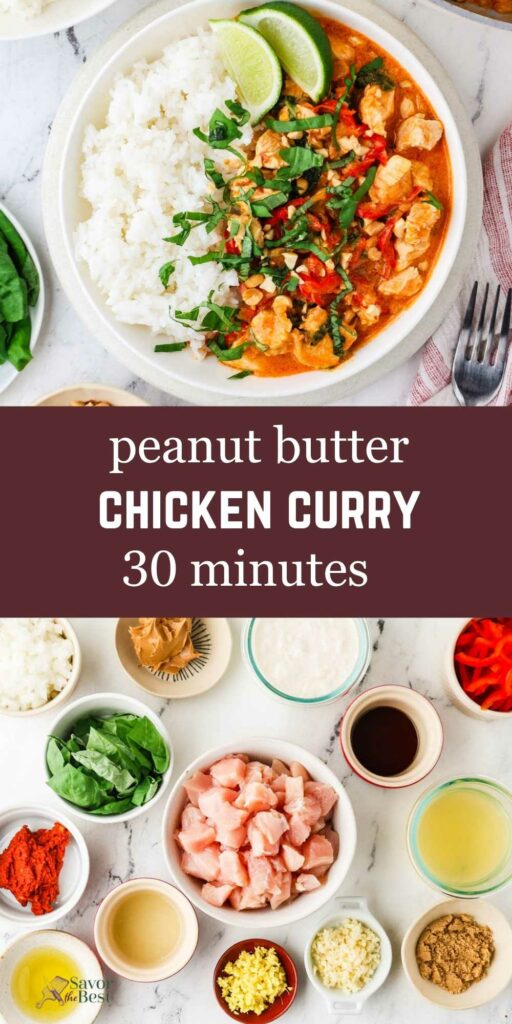
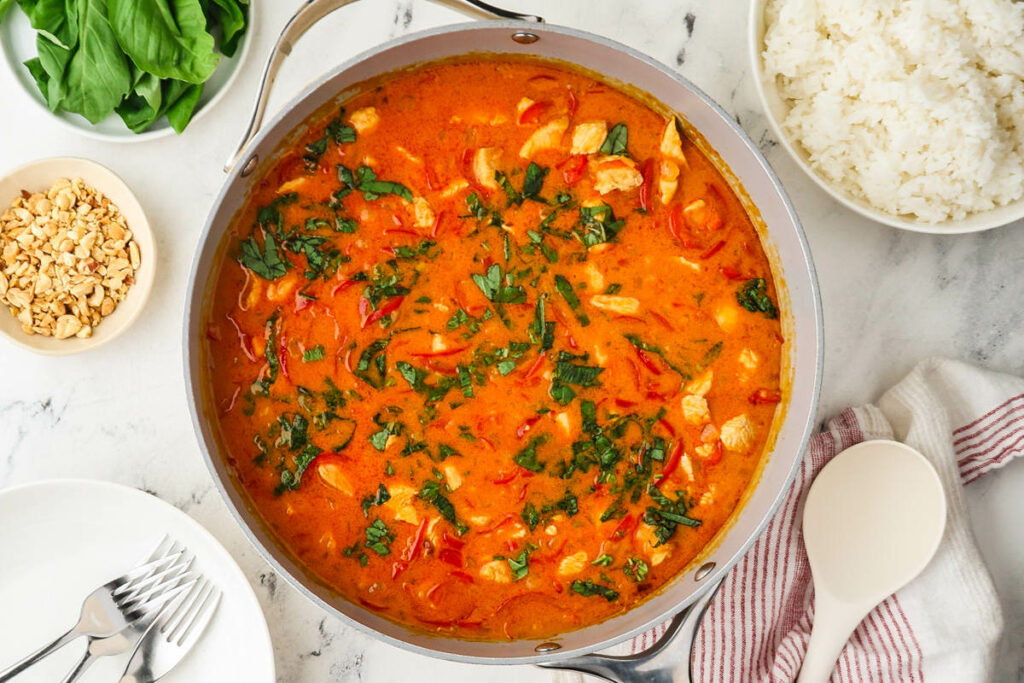
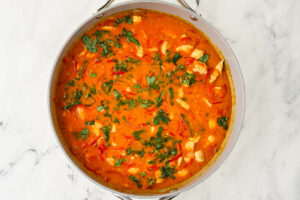
Some recipes are weekend projects. This is not one of them. This peanut butter chicken curry comes together in one pan in about 30 minutes.
It has a creamy coconut sauce, warm curry flavor, and nutty richness from a pantry staple. Everything melts together into a silky sauce, the chicken thighs stay tender, and nobody has to hover over the stove like dinner is a full-time job.
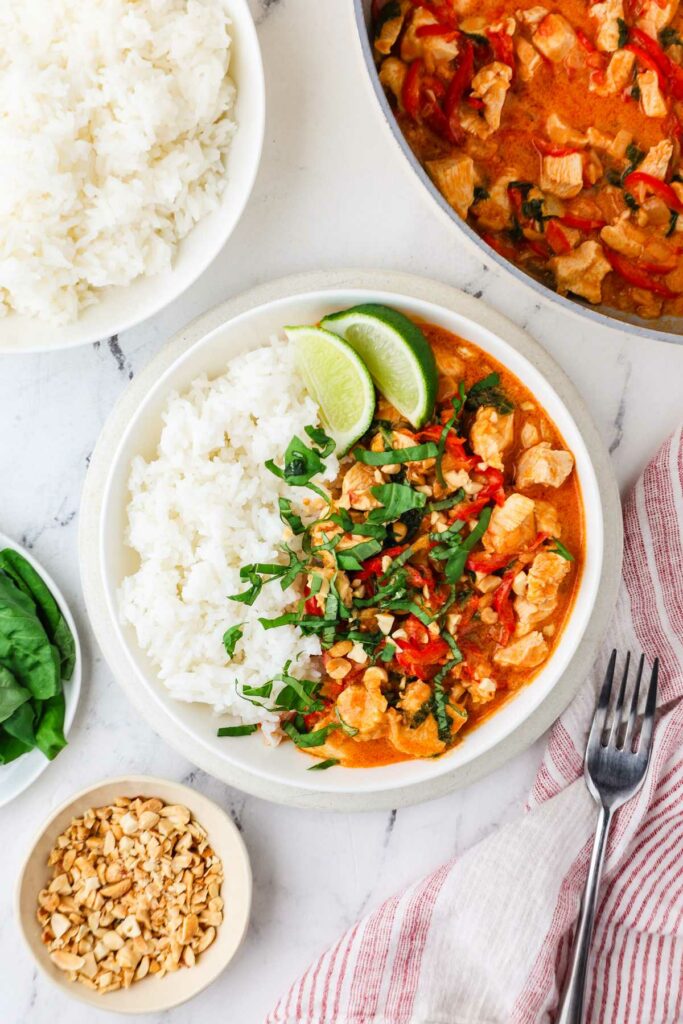
Think of it as the weeknight cousin of chicken panang curry. It has a similar rich, nutty sauce, but uses more familiar ingredients and it is much quicker. It’s not the same as traditional panang, but it lands in that same creamy, nutty direction with ingredients that are easier to keep on hand.
Why This Peanut Butter Chicken Curry Works
Pantry-friendly sauce. I wanted the sauce to taste rich without getting fussy. Peanut butter and coconut milk gave me the creamy, nutty base I wanted without sending anyone on a scavenger hunt for specialty ingredients.
Fast enough for a weeknight. Minimal prep, a short simmer, and no extra pans. Because a “quick dinner” should not come with a pile of dishes and a bad attitude.
Tender, flavorful chicken. Chicken thighs won during testing. They stayed tender, soaked up the sauce, and didn’t dry out. But chicken breasts work in this recipe as well.
Flexible and low-fuss. Adjust the heat, swap proteins, add vegetables, and still keep the whole thing in one pan.
Key Ingredients
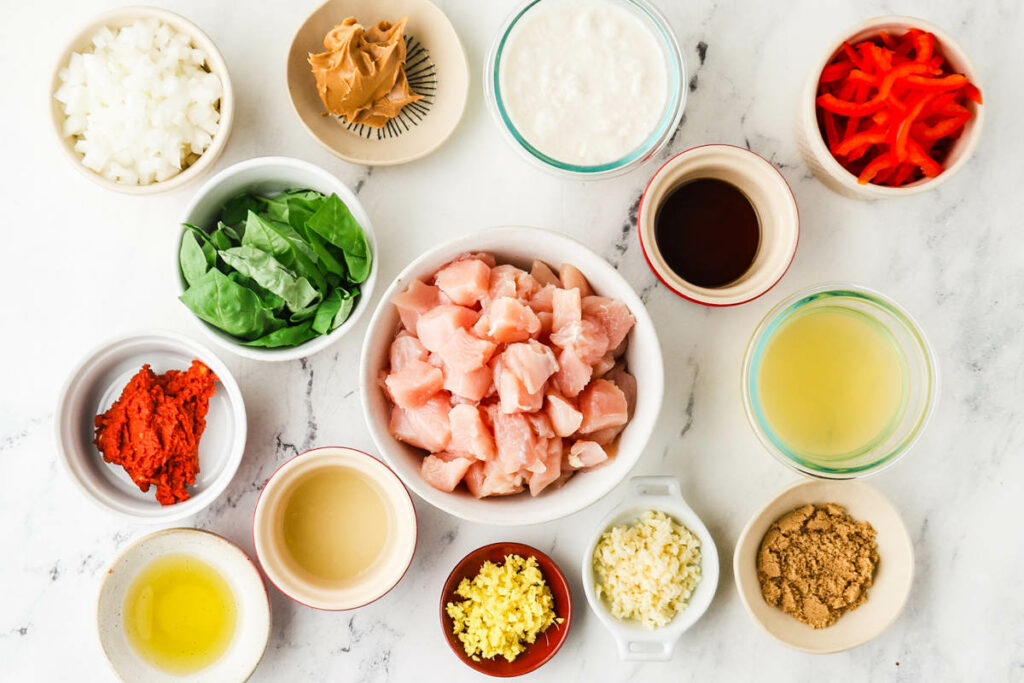
Peanut butter: Natural and regular peanut butter both work, but they behave differently. Natural peanut butter gives a stronger peanut flavor and less sweetness, while commercial brands blend more smoothly and make the sauce slightly sweeter. Skip low-fat peanut butter; it tends to make the sauce thin.
Red curry paste: Thai Kitchen is mild and easy to find, while Mae Ploy is hotter and more concentrated. Start with the recipe amount, then adjust from there.
Coconut milk: Full-fat coconut milk gives the sauce body and blends into a creamy sauce. Light coconut milk works, but the sauce will be thinner. If you have extra, use it to make my coconut rice.
Chicken: Boneless skinless thighs are my first choice because they stay tender and hold up well in the sauce. Chicken breasts work too, but cut them evenly and watch the cook time so they don’t dry out.
Garlic and ginger: Fresh is best here. Fresh ginger gives the curry a brighter flavor than ground ginger, though frozen ginger cubes are a solid shortcut.
Fish sauce: Optional, but a small splash adds savory depth without making the sauce taste fishy. Soy sauce plus a squeeze of lime works if you want a substitute.
If you like this type of curry, try my yellow curry chicken which has a slightly sweet, turmeric-forward flavor.
Recipe Tips
Fry the curry paste: Cooking the curry paste briefly wakes up the spices and gives the sauce more depth. It’s a small step, but it makes the curry taste less flat.
Brown the chicken: A quick sear builds flavor that simmering alone won’t create. You don’t need to cook it through at this stage; the sauce finishes the job.
Add peanut butter to warm liquid: Whisk the peanut butter into warm coconut milk so it blends smoothly instead of clumping.
Adjust the sauce thickness: The sauce thickens as it simmers. For a thicker curry, let it cook uncovered a little longer, or whisk a small amount of cornstarch into warm sauce and stir it back into the pan.
Fix a broken sauce: If the sauce looks oily or separated, lower the heat and whisk in a splash of warm water or coconut milk.
Season at the end: Peanut butter and curry paste both contain salt, so taste the finished sauce before adding more seasoning.
Frequently Asked Questions
Both natural and commercial peanut butter work well. Natural peanut butter gives the sauce a stronger peanut flavor and less sweetness, while commercial brands blend more smoothly and create a slightly sweeter sauce. Avoid low-fat peanut butter because it makes the sauce thin and flat.
The easiest method is simply simmering the curry uncovered a little longer. If you need a quicker fix, whisk a small amount of cornstarch into warm sauce and stir it back into the pan.
Yes. Freeze it in an airtight container for up to 3 months. Reheat gently and whisk if the sauce separates slightly.
Quick Chicken Peanut Butter Curry
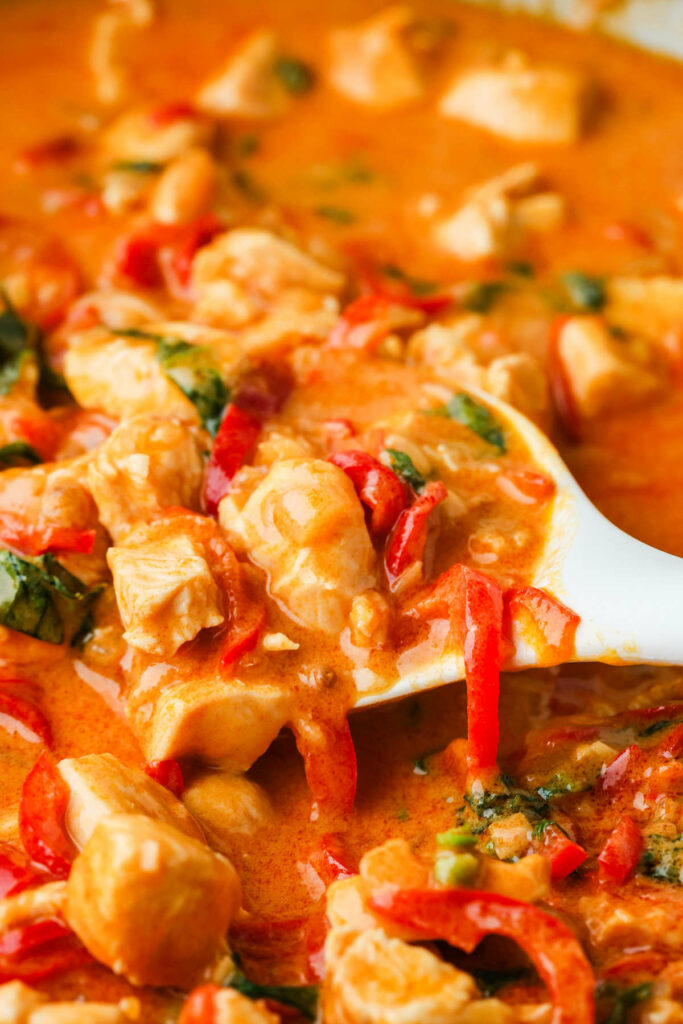
This recipe is a shortcut chicken curry that delivers big flavor without turning dinner into a project. The creamy coconut sauce, warm curry spices, and rich peanut flavor make it feel like something that took far more effort than it actually did.
Serve it over fluffy white rice to soak up the sauce, and add a crisp Korean cucumber salad on the side to balance the richness. Then try not to fight over the last spoonful of sauce in the pan.
Pin this now to find it later!
Pin It
Peanut Butter Chicken Curry
If you make this recipe, please leave a star rating and comment.
Ingredients
- 1 tablespoon vegetable oil
- 1 onion, chopped
- 2 bell peppers, thinly sliced (any color)
- 2 teaspoons grated fresh ginger
- 3 to 4 garlic cloves, minced
- 2 tablespoons red curry paste, or Panang curry paste
- 2 tablespoons creamy peanut butter
- 1 (14 ounce) can canned coconut milk, full fat
- ½ cup chicken broth
- 1½ tablespoons fish sauce, optional
- 1 to 2 teaspoons brown sugar, adjust to taste
- 1 tablespoon fresh lime juice
- 1 pound boneless skinless chicken thighs, or chicken breasts, cut into bite-sized pieces
- ½ cup fresh basil
Instructions
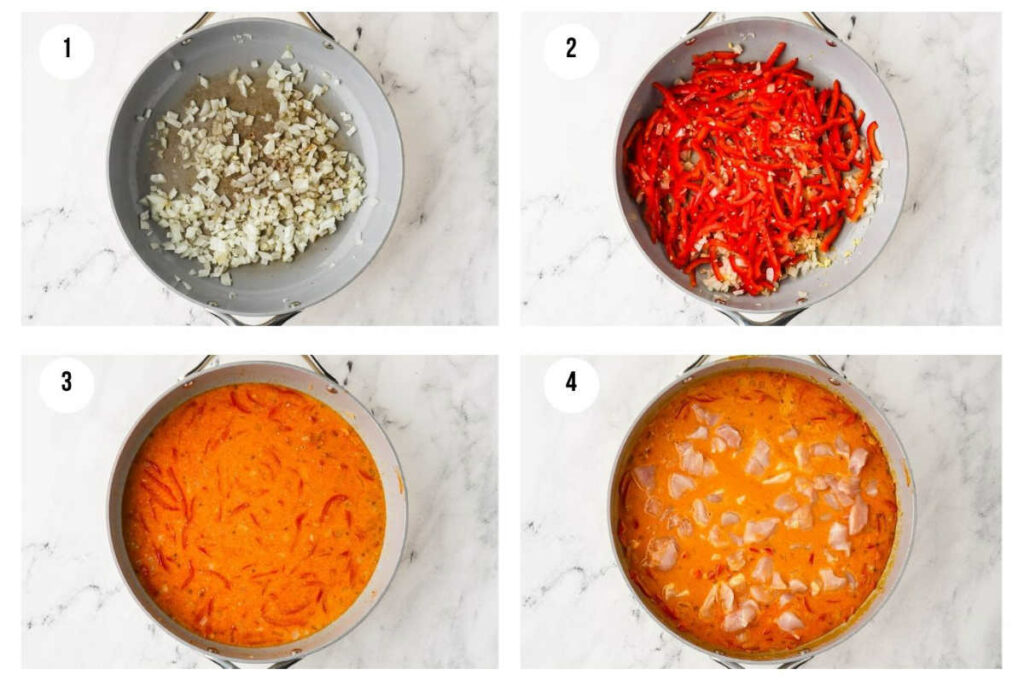
- Heat the oil in a large skillet over medium-high heat. Add the onion and cook for 2 to 3 minutes, until it starts to soften.
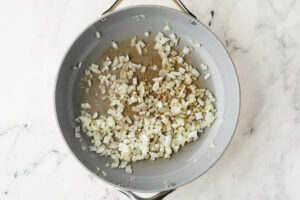
- Add the bell pepper, garlic, and ginger. Cook for 2 minutes, stirring often.
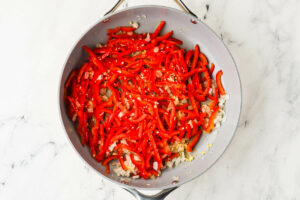
- Add the curry paste and cook for 1 to 2 minutes until fragrant, then stir in the peanut butter.
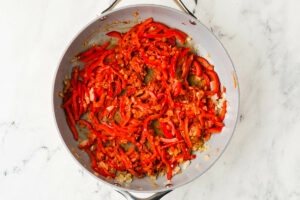
- Pour in the coconut milk and chicken broth. Stir until the sauce is smooth. Bring the sauce to a gentle simmer and cook for 3 to 4 minutes, until it reduces slightly.
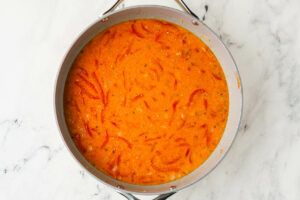
- Add the chicken and stir to coat it in the sauce. Simmer for 8 to 10 minutes, stirring occasionally, until the chicken is cooked through.
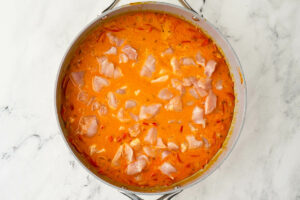
- Stir in the fish sauce, brown sugar, and lime juice. Taste and adjust as desired then stir in the basil.
Notes
Nutrition
Nutrition information is automatically calculated, so should only be used as an approximation.
 Like this recipe? Rate & comment below!