

This post may contain affiliate links. Please read our disclosure policy. As an Amazon Associate, I earn from qualifying purchases.
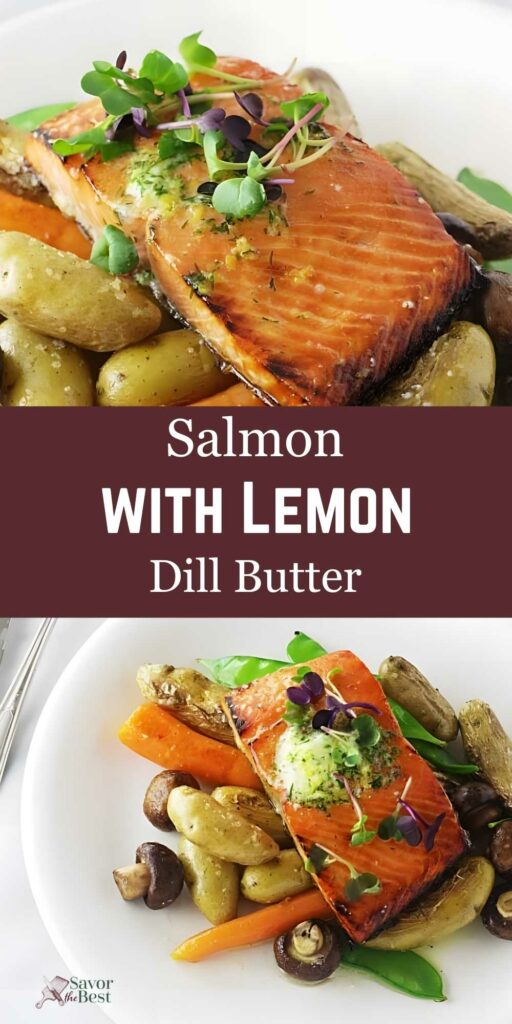
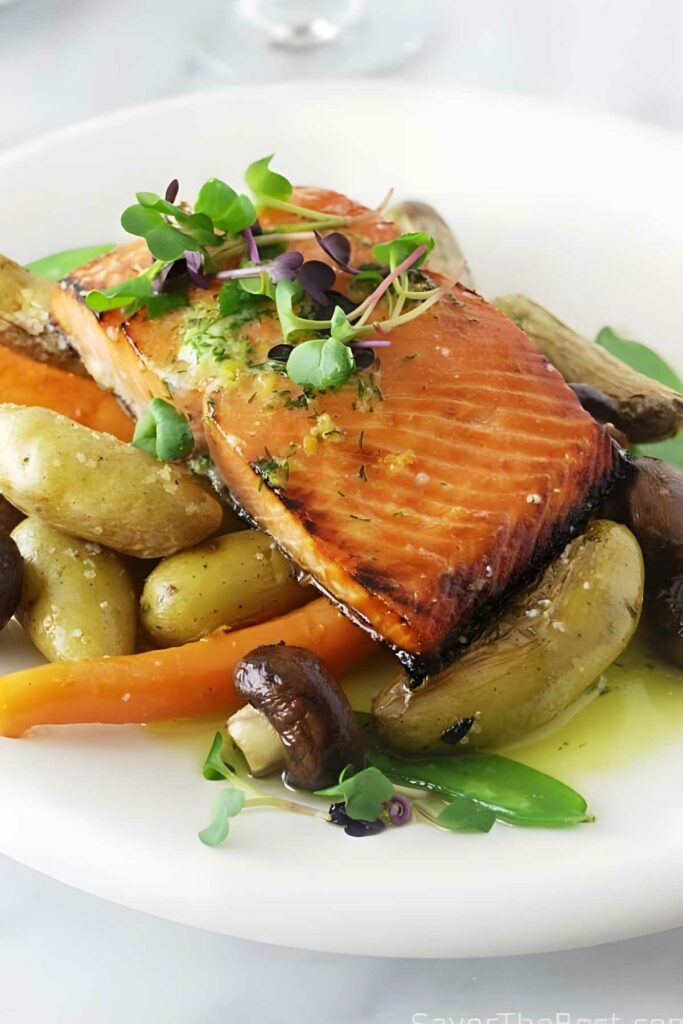
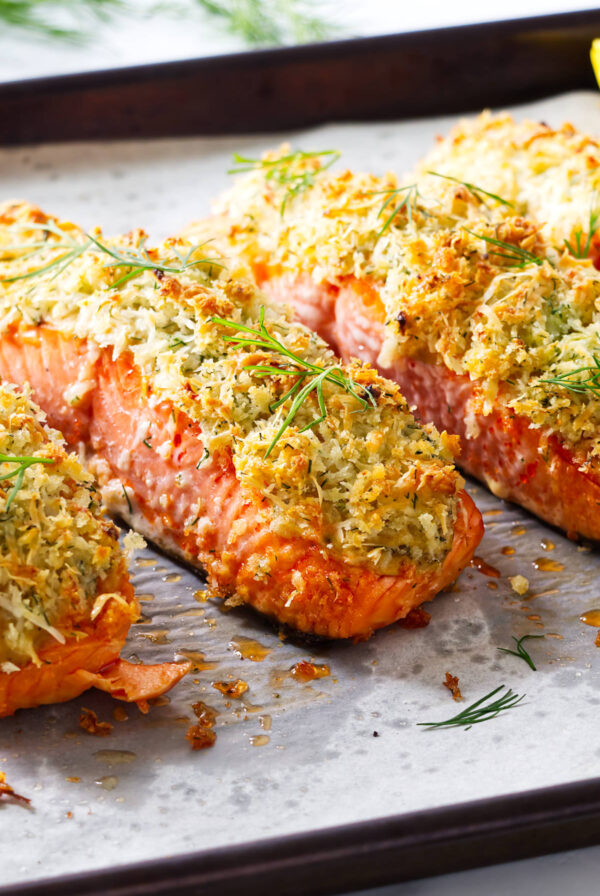
Honey lemon salmon with dill butter is broiled until lightly caramelized, then finished with a slice of lemon dill butter that slowly melts over the hot fish. The honey glaze adds just enough sweetness to balance the lemon while the butter keeps it rich without overpowering the salmon.
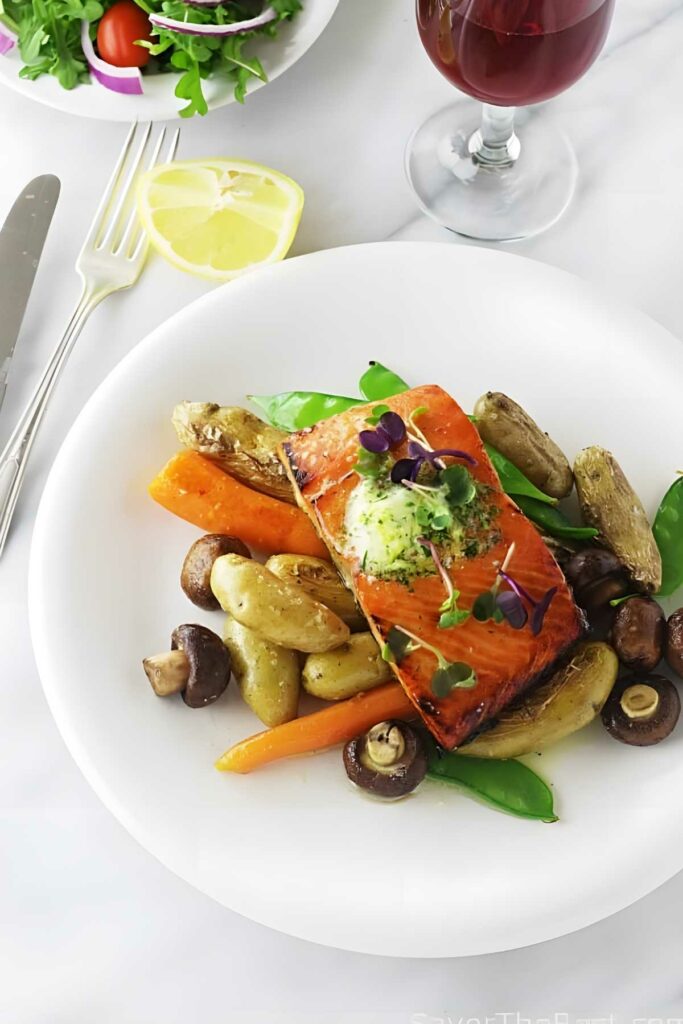
The honey lemon glaze caramelizes under the broiler in just a few minutes, creating lightly browned edges while the center stays moist and flaky. It’s an easy dinner that’s quick enough for a weeknight but elegant enough to serve to guests.
Here’s Why This Lemon Dill Salmon Recipe Works
The glaze caramelizes without becoming overly sweet: I use just enough honey to help the salmon brown under the broiler. It adds a light glaze that complements the fish instead of overpowering it.
The dill butter stays fresh and bright: In testing, I found the butter tasted better when it melted over the hot salmon instead of cooking under the broiler. The fresh dill keeps its flavor, and the lemon zest stays vibrant.
The broiler gives you crisp edges and a tender center: The intense heat lightly caramelizes the glaze while the salmon cooks quickly enough to stay moist.
The flavors complement the salmon instead of competing with it: Honey, lemon, dill, and butter all have bold personalities. Keeping each one in balance lets the salmon remain the star of the dish.
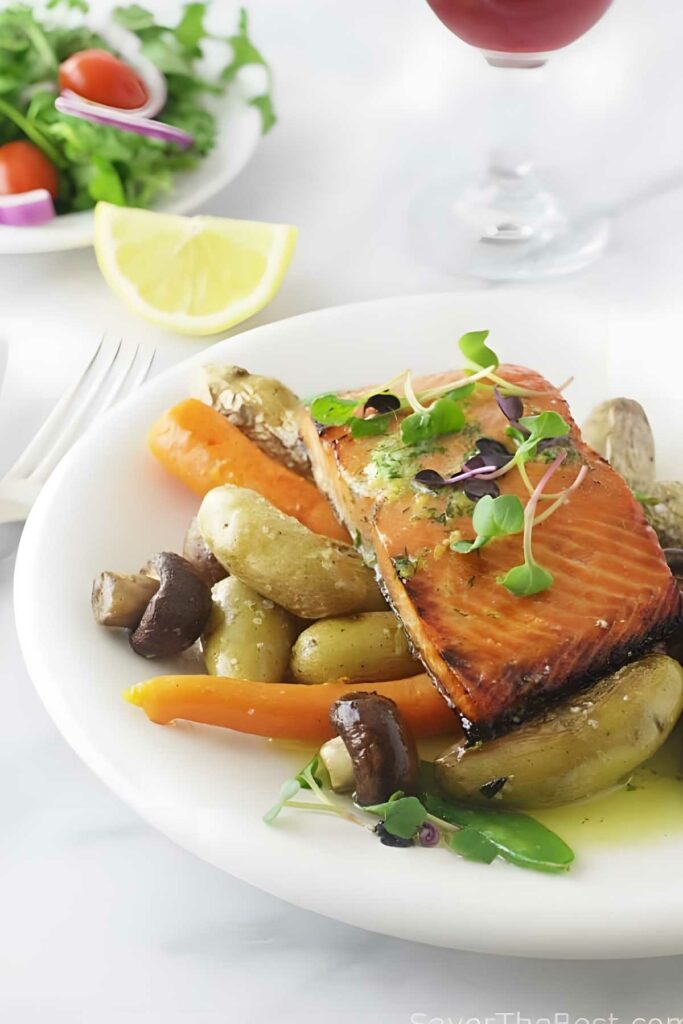
Ingredient Notes
Salmon fillets: Use fillets that are similar in thickness so they finish at the same time. Sockeye cooks faster than thicker Atlantic salmon, so watch the timing.
Honey: Honey helps the glaze brown under the broiler and balances the lemon. Use a light hand so it does not turn the dish overly sweet.
Lemon: Fresh lemon juice sharpens the glaze, and lemon zest gives the dill butter a clean citrus flavor.
Fresh dill: Fresh dill is best for the compound butter. Dried dill does not have the same soft, grassy flavor and can taste flat here.
Butter: Chill the lemon dill butter before slicing it so it melts slowly over the hot salmon instead of immediately running off the fillet.
If you’re looking for another salmon dinner, try my Creamy Salmon Piccata or Sheet Pan Salmon and Veggies for two completely different takes on salmon.
Recipe Tips
Preheat the broiler: Give the broiler at least 5 minutes to fully heat. A hot broiler helps the honey lemon glaze caramelize instead of sliding off the fish.
Pat the salmon dry: Blot the fillets with paper towels before glazing. A dry surface browns better and helps the glaze cling to the salmon.
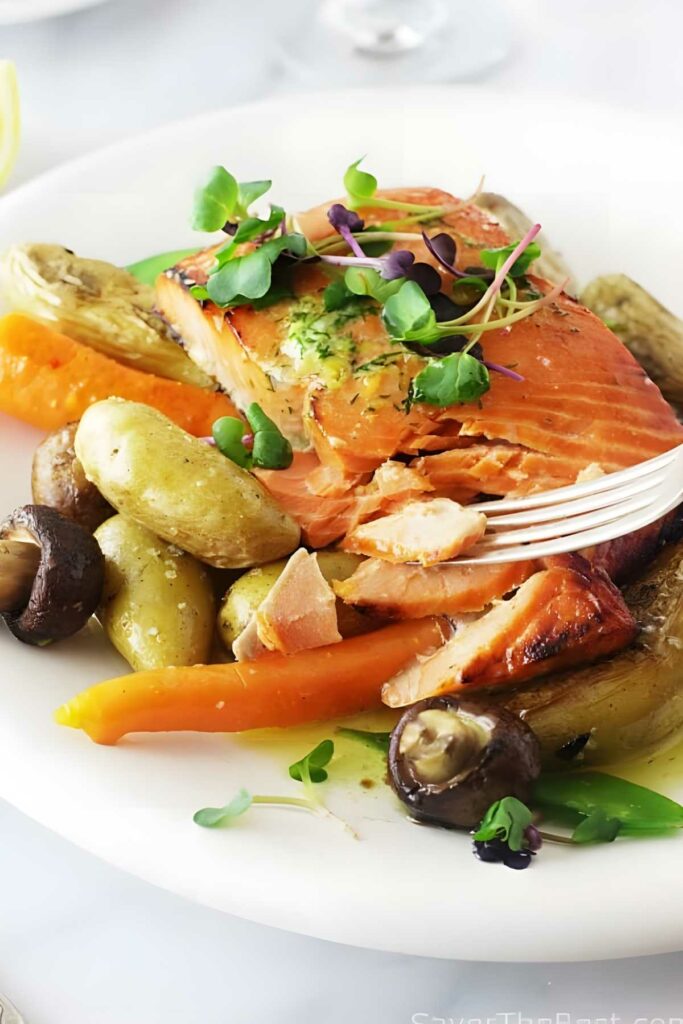
Watch the salmon closely: Broiled salmon cooks quickly and can go from perfectly flaky to overcooked in a minute or two. Start checking for doneness early.
Slice the butter thinly: Thin slices melt evenly over the hot salmon, coating each fillet without completely running off.
Use fresh dill: Fresh dill gives the butter its bright, clean flavor. Dried dill works in a pinch, but it won’t have the same fresh taste.
Round out the meal with a simple green salad dressed in my preserved lemon vinaigrette.
How to Tell When Salmon Is Done
The easiest way to check salmon is with an instant-read thermometer inserted into the thickest part. For moist salmon, I like to pull it before it gets too firm, then let carryover heat finish the job.
If you do not use a thermometer, look for flakes that separate with gentle pressure while the center still looks slightly glossy. If the fish is dry-looking all the way through, it has gone further than I like.
Frequently Asked Questions
Fresh dill is best for this recipe because the butter is a finishing element. Dried dill will work in a pinch, but use less and expect a softer, less fresh flavor.
Yes. Make the compound butter ahead, roll or shape it, and refrigerate it until firm. Slice it just before adding it to the hot salmon.
Yes, but the glaze will not caramelize quite the same way. Bake until the salmon reaches your preferred doneness, then top with the lemon dill butter after it comes out of the oven.
The USDA recommends 145°F. Many cooks prefer salmon a little lower for a moister texture, so use your preferred doneness and remember that carryover heat will continue cooking the fish after it leaves the broiler.
Dill Butter Salmon
This dill butter salmon proves that a few simple ingredients can make an impressive dinner. The honey lemon glaze lightly caramelizes under the broiler, and the finishing butter adds richness while letting the salmon remain the star.
Serve it with my roasted baby potatoes and roasted asparagus for an easy, well-rounded meal.
Pin this now to find it later!
Pin It
Honey Lemon Dill Salmon
If you make this recipe, please leave a star rating and comment.
Ingredients
For the Dill Butter:
- ½ cup butter, softened
- 2 tablespoons Fresh dill, finely chopped
- 3 tbsp lemon zest, from 1 lemon
For the Honey-Lemon Glaze
- 4 tablespoons honey
- 1 tablespoon fresh lemon juice
- 1 garlic clove, grated
- ½ teaspoon salt
- ¼ teaspoon ground black pepper, freshly ground
For the Salmon:
- 4 medium salmon fillets
- ½ teaspoon salt
- ground black pepper, Freshly ground, to taste
- 1 lemon, sliced into wedges for serving
Instructions
For the dill butter:
- In a small dish, add the butter, dill and lemon zest. Use a spatula to combine all of the ingredients well.
- Transfer the mixture onto a piece of parchment paper. Roll into a log and twist the ends shut. Place in the refrigerator for 2 hours, or until the butter is firm.
For the Honey Lemon Glaze:
- In a small dish, add the honey, lemon juice, grated garlic, salt, and pepper. Stir to combine.
For the Salmon Fillets:
- Preheat the broiler for at least 5 minutes, and coat a baking sheet or broiler pan with non-stick spray.
- Place the salmon skin side down on the baking sheet, and using a pastry brush apply a coating of the glaze to each fillet. Transfer the baking sheet with the salmon to the oven and broil 6-8 minutes, or until fish flakes easily when tested with a fork and is still a bit translucent when flaked. Do not overcook.
- To serve, transfer the salmon fillet to individual serving plates and place a thin slice of the lemon-dill butter on each serving. Garnish with snipped dill and lemon wedges.
Notes
Nutrition
Nutrition information is automatically calculated, so should only be used as an approximation.
 Like this recipe? Rate & comment below!










You show 6 tbs lemon juice for the salmon but don’t do anything with it.
Thank you for pointing that out! I believe there’s been some confusion. Here is what I am seeing:
Under the salmon heading, I originally had 3 tablespoons of lemon juice listed, but I’ve since updated it to read one whole lemon, sliced into wedges for serving.
For the honey lemon glaze, there’s 1 tablespoon of lemon juice listed.
For the lemon dill butter, it calls for 3 tablespoons of lemon zest, not juice.
I hope that clears things up! If you’re still seeing 6 tablespoons of lemon juice somewhere, it might be a typo I missed. Please let me know, and I’ll take another look.
That lemon-dill butter sounds like the perfect touch for this salmon 🙂
Thank you, Sabrina 🙂