

This post may contain affiliate links. Please read our disclosure policy. As an Amazon Associate, I earn from qualifying purchases.
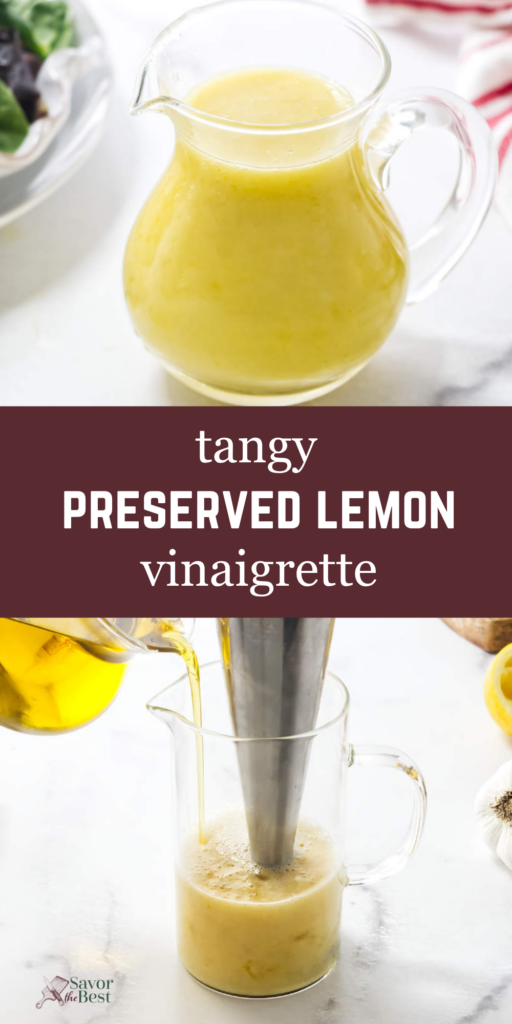
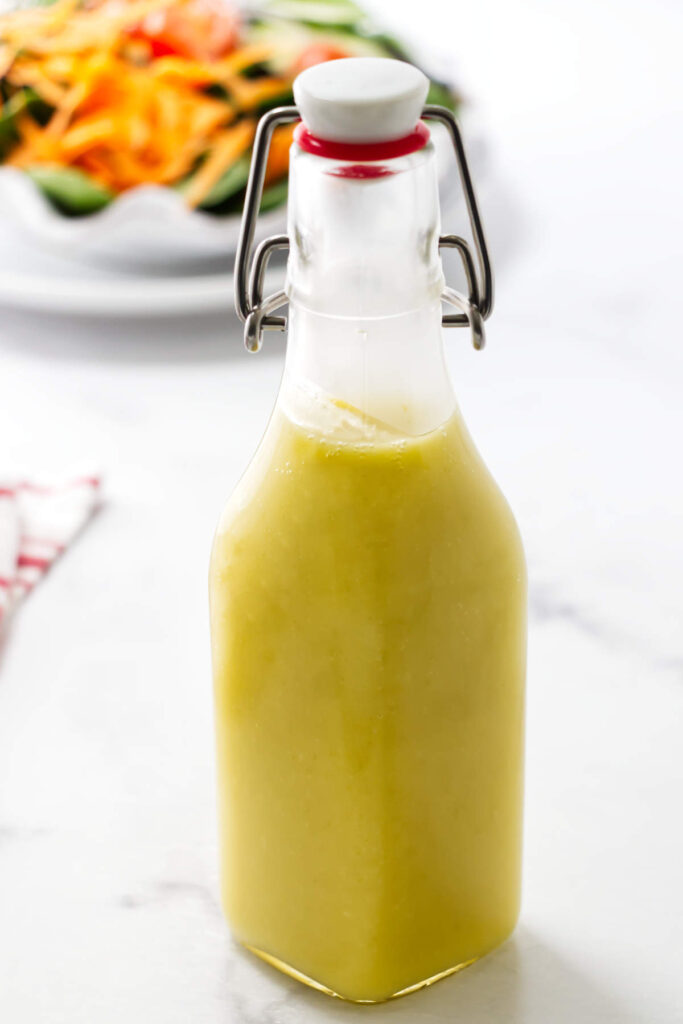
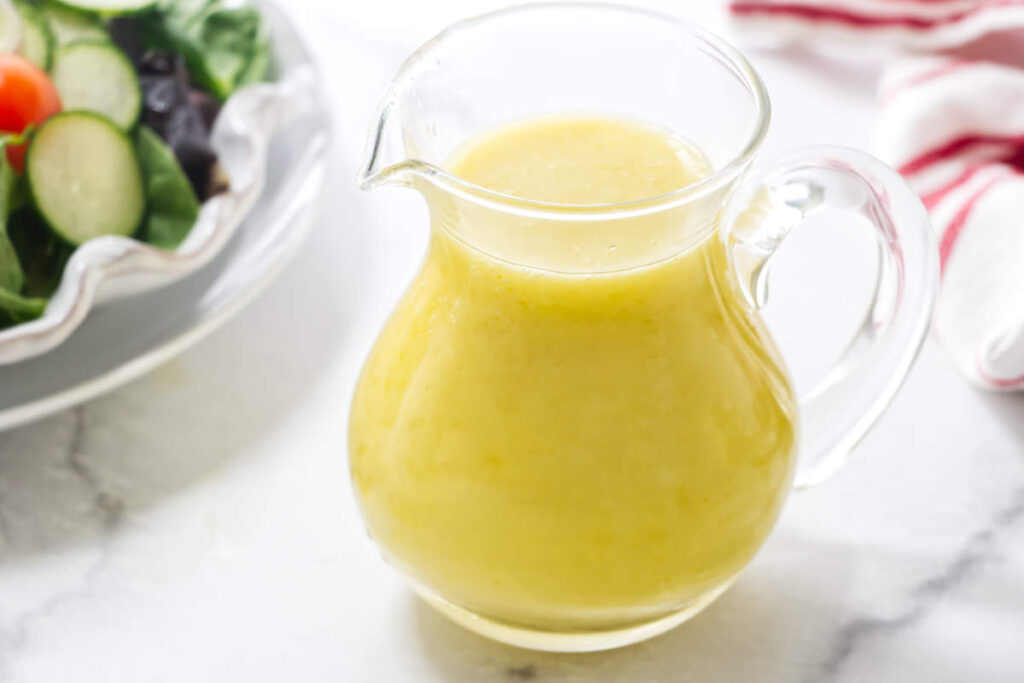
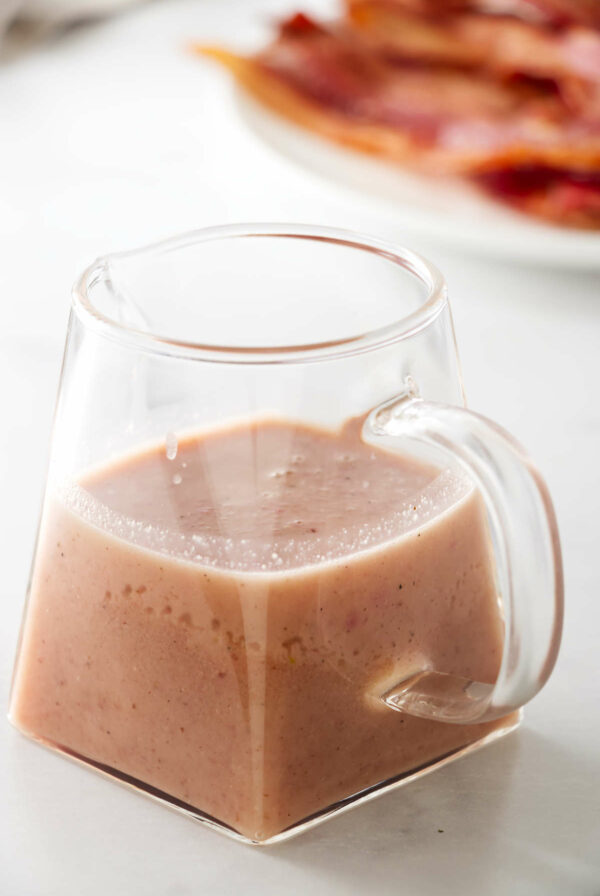
This preserved lemon vinaigrette is brighter, deeper, and more savory than a traditional lemon dressing. The preserved lemon rind adds a salty, mellow citrus flavor that fresh lemon juice alone can’t match, creating a creamy preserved lemon dressing that’s just as good on roasted vegetables as it is on salads.
If you’ve never cooked with preserved lemons, they’re simply lemons that have been cured in salt until the rind becomes soft and intensely flavorful.
Unlike fresh lemons, they add a mellow citrus flavor with a subtle briny note that works especially well in dressings, sauces, and marinades.
Here’s Why This Preserved Lemon Vinaigrette Works
More rounded flavor: I reach for preserved lemons when I want citrus that tastes more complex and savory than fresh lemon juice. The rind is mellow, salty, and almost floral after curing.
The rind gives the smoothest flavor: This recipe uses the rind and leaves the softer pulp behind. The pulp can be very salty, while the rind gives the dressing that clean preserved-lemon flavor without taking over.
White balsamic keeps it balanced: White balsamic vinegar has a little sweetness, so the dressing stays bright without turning harsh. Honey rounds it out just enough.
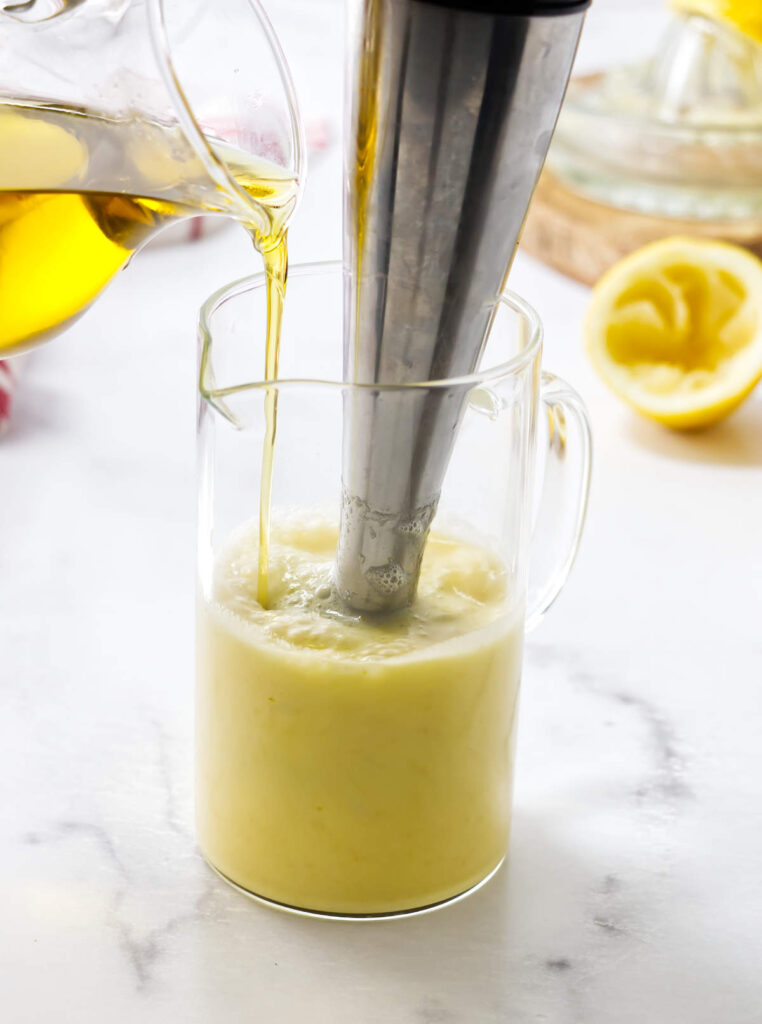
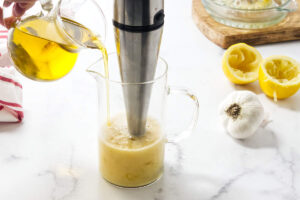
Slowly blended oil = stable emulsion: Drizzling in the olive oil while the blender runs creates a thick emulsion. It gives you a creamy lemon vinaigrette without mayonnaise, cream, or yogurt.
Ingredient Notes
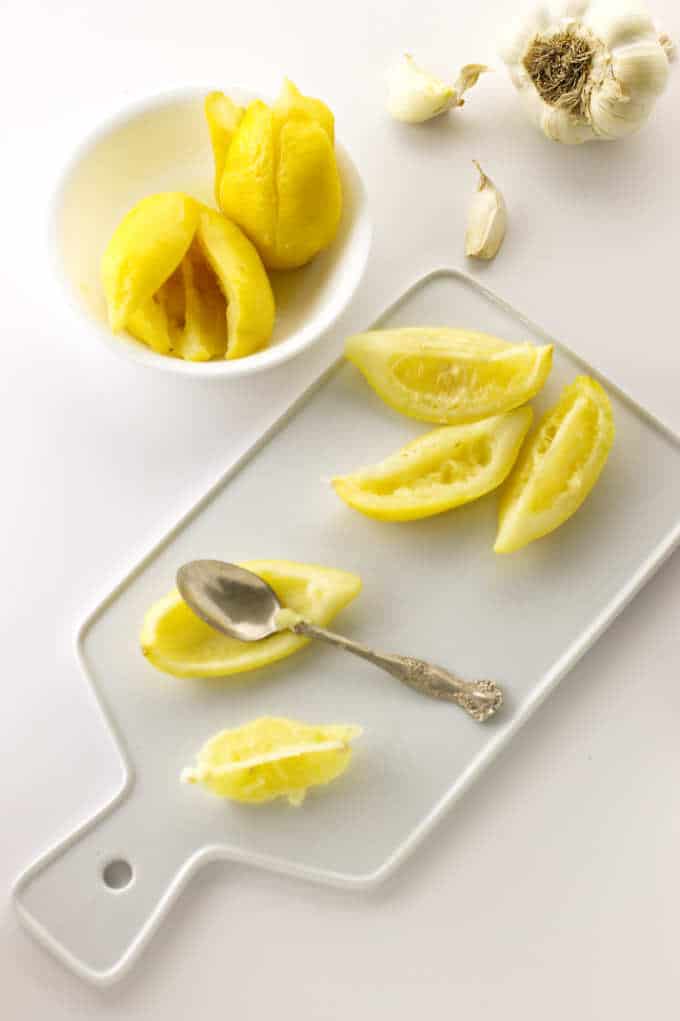
Preserved lemon rind: Rinse the lemon first, then scrape away the soft pulp and use the rind. The rind has the best texture and the most concentrated citrus flavor.
Garlic: Grating the garlic helps it blend evenly into the dressing. If your garlic cloves are large or sharp, start with one and taste before adding more.
Fresh lemon juice: Fresh juice keeps the vinaigrette lively and gives the preserved lemon a cleaner finish.
Honey: A small amount softens the vinegar and lemon without making the dressing taste sweet. Maple syrup also works if you don’t have honey.
White balsamic vinegar: White balsamic is gentle and slightly sweet. Apple cider vinegar or rice vinegar will work, but the dressing will taste sharper.
Light olive oil: A mild olive oil keeps the preserved lemon in the foreground. A strong extra-virgin olive oil can make the dressing taste bitter once blended.
Recipe Tips
Rinse before using: Preserved lemons vary a lot in saltiness. A quick rinse removes surface salt while keeping the cured lemon flavor.
Taste before salting: The preserved lemon usually brings enough salt on its own, so season at the end.
Add the oil slowly: Let the blender run while you drizzle in the oil. That is what gives the vinaigrette its creamy texture.
Adjust the thickness: If the dressing is thicker than you want, blend in a teaspoon or two of water or lemon juice.
Shake before serving: The vinaigrette may settle in the refrigerator. Give the jar a firm shake before using.
Olive oil may solidify: Refrigerated olive oil naturally thickens or solidifies. Let the dressing sit at room temperature for 15 to 20 minutes, then shake well before serving.
Use the right-size blender: This recipe makes a relatively small batch. A mini food processor or an immersion blender works best because the blades stay in contact with the ingredients. If using a full-size blender, you may need to stop and scrape down the sides a few times.
Ways to Use Preserved Lemon Vinaigrette
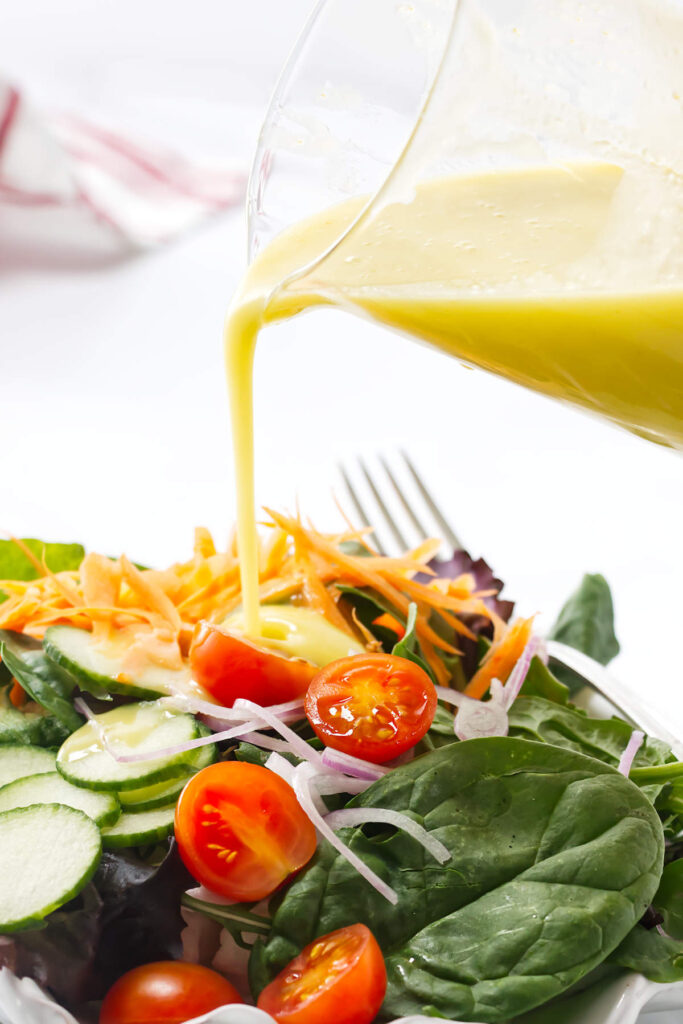
This preserved lemon dressing is delicious on sturdy greens, but I like it even more when it has something warm or rich to play against. Drizzle it over roasted carrots, potatoes, cauliflower, or asparagus, spoon it over grilled chicken, shrimp, or salmon, or toss it with farro and chickpeas for an easy grain bowl.
It also makes a flavorful dressing for my Moroccan Carrot Salad or try it anywhere you’d use a classic lemon vinaigrette when you want a deeper, more savory citrus flavor.
It doubles as a quick marinade for chicken or fish. Because it contains honey, keep an eye on anything cooked over high heat since the sugars can brown quickly.
Frequently Asked Questions
Use the rind for this vinaigrette. The rind has the smoothest texture and the best preserved-lemon flavor. The pulp is saltier, so save it for soups, stews, marinades, or another dressing where you can add it slowly and taste as you go.
Yes. Rinsing removes excess surface salt without washing away the cured lemon flavor. Preserved lemons vary by brand and batch, so always taste before adding extra salt to your recipes.
Yes. Store-bought preserved lemons work well in this recipe.
Preserved lemon vinaigrette has a richer, more complex flavor. The preserved lemon rind adds a mellow, slightly salty citrus flavor that fresh lemon juice alone can’t provide.
Homemade vinaigrettes can separate as they sit. For the creamiest texture, drizzle the oil in slowly while blending. If it separates in the refrigerator, shake or blend it again before serving.
Preserved Lemon Dressing
This preserved lemon dressing is bright, savory, and creamy enough to wake up an everyday salad, but it’s just as good drizzled over roasted vegetables, grilled seafood, or grain bowls.
Once you have a jar in the refrigerator, you’ll probably find yourself reaching for it more often than a standard lemon vinaigrette. Looking for more ways to use preserved lemons? Try my preserved lemon compound butter.
Pin this now to find it later!
Pin It
Preserved Lemon Vinaigrette
If you make this recipe, please leave a star rating and comment.
Ingredients
- 1 preserved lemon
- 2 garlic cloves, grated
- ⅓ cup fresh lemon juice
- 1 tablespoon honey
- ¼ cup white balsamic vinegar
- 1 cup light olive oil
- Pinch ground white pepper, or black pepper
Instructions
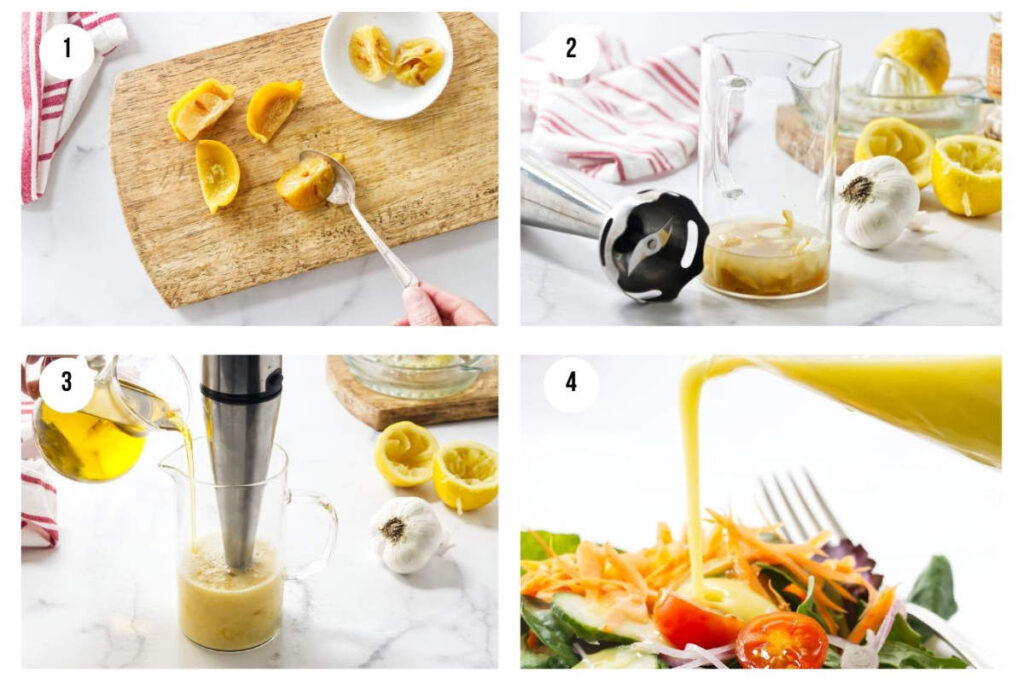
- Remove one preserved lemon from the jar and rinse it under cold water. Pat it dry with a paper towel.

- Cut the lemon into quarters. Use a spoon to scrape out the soft pulp, then return the pulp to the jar for another use.

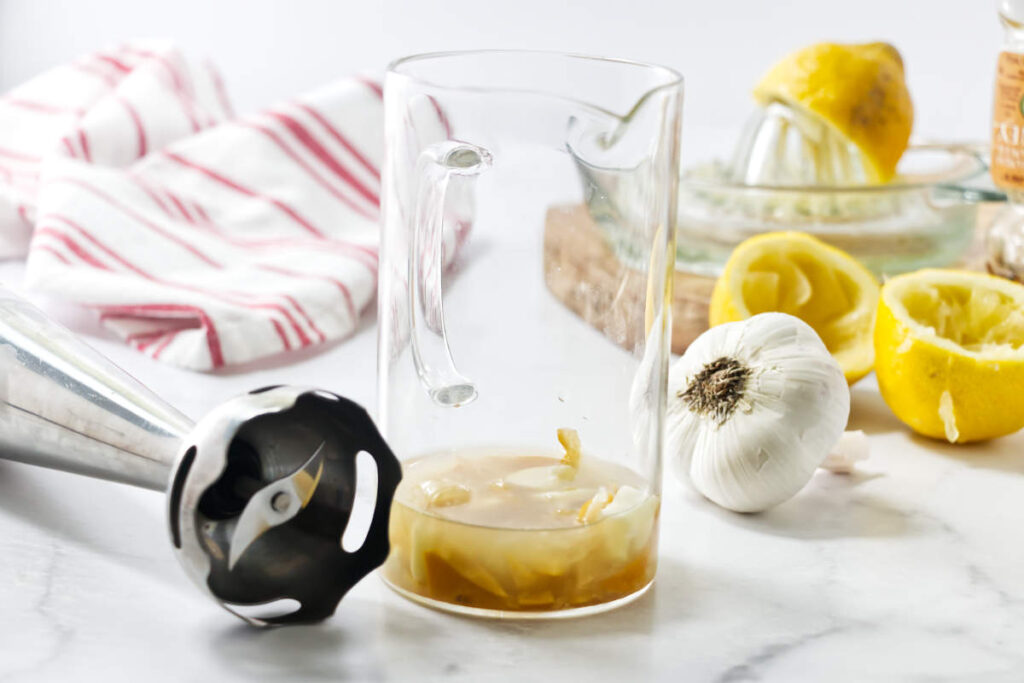
- Roughly chop the preserved lemon rind and place it in a mini food processor, a blender, or a tall container if using an immersion blender. Add the garlic, lemon juice, honey, and white balsamic vinegar. Blend for about 1 minute, or until the rind is finely chopped.
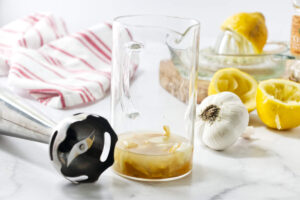
- With the motor running, slowly drizzle in the olive oil. Continue blending for 1 to 2 minutes, until the vinaigrette is smooth and creamy.
- Taste and season with a pinch of pepper, if desired. Transfer the vinaigrette to a glass jar or bottle with a lid and refrigerate until needed.
Notes
Nutrition
Nutrition information is automatically calculated, so should only be used as an approximation.
 Like this recipe? Rate & comment below!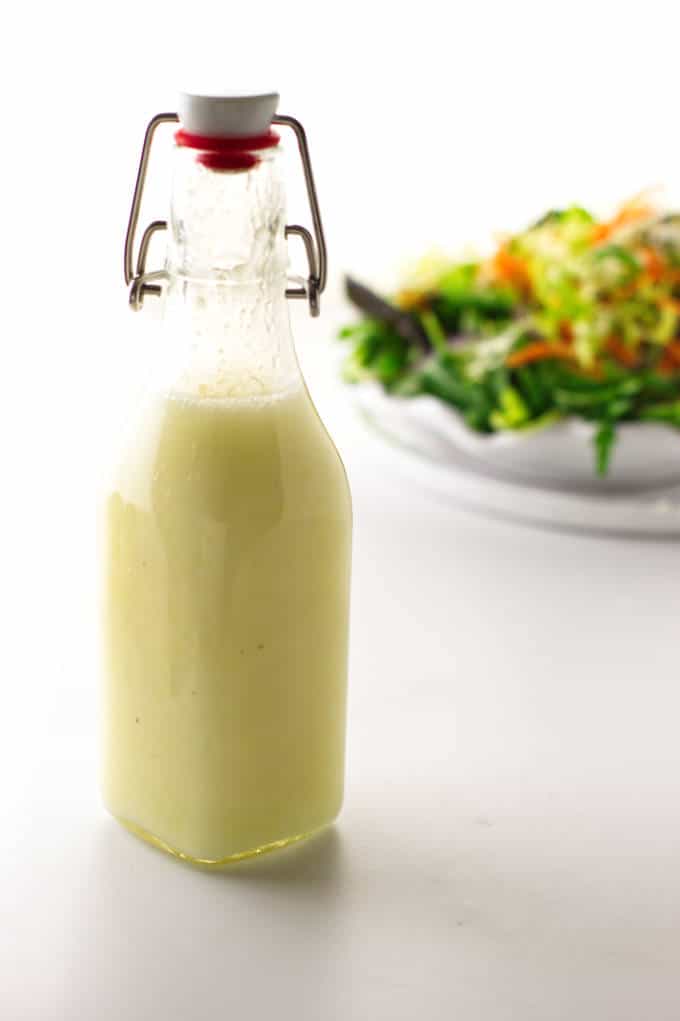











Cant wait to try this but I’m surprised your recipe suggests to put the flesh of the lemon back into the jar but then to use lemon juice in the recipe. Why not add the pulp and juices of the preserved lemon? Thanks!!
Hi, Daniella….Thanks for your question, you can use the flesh of the preserved lemon but the dressing will be a little thicker and more salty.
This is absolutely delicious! My husband loves it too! Will be making more of this for sure.
That’s wonderful to hear! I’m so glad that you and your husband are enjoying it. Thank you for taking the time to share your experience with us.