

This post may contain affiliate links. Please read our disclosure policy. As an Amazon Associate, I earn from qualifying purchases.
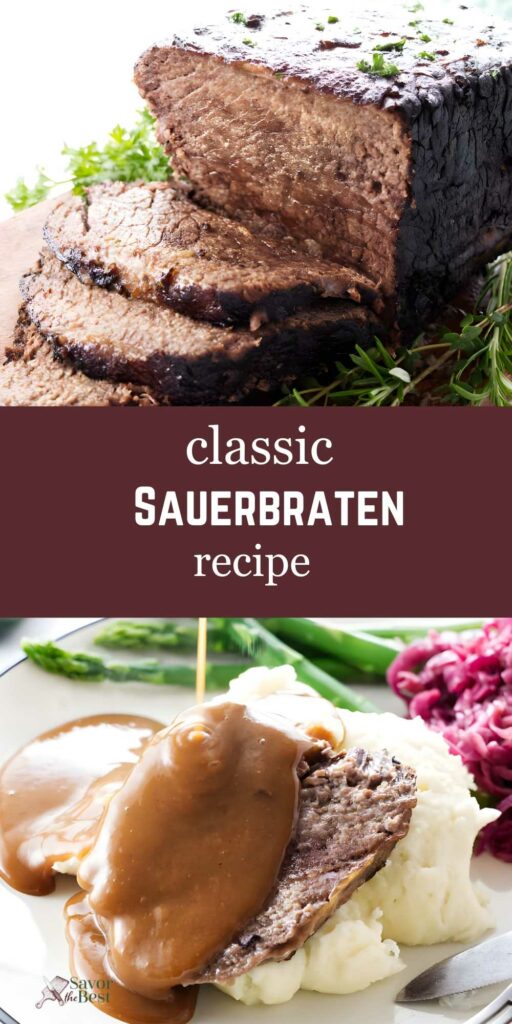
Sauerbraten is Germany’s take on pot roast, but it’s got a twist: the beef soaks for days in a tangy marinade of red wine, vinegar, and spices before it ever hits the oven. That long marinade tenderizes the meat and builds big flavor.
What really sets it apart, though, is the gravy. Crushed gingersnaps melt right in, thickening the sauce and adding a warm, spiced finish.

Here’s Why This Recipe Works
Extended marinade = deep flavor: Five days in wine and vinegar transforms the roast from tough to tender and infuses it with subtle spice and herbaceous depth.
Gingersnap thickened gravy: Crushed cookies might sound odd, but they dissolve into the sauce, adding body, warmth, and a hint of sweetness that balances the tang.
Make-ahead friendly: The flavor only gets better after a rest, so it’s ideal for prepping the day before a big meal or gathering.
Big payoff, low stress: Once the roast goes in the oven, you’re free. It cooks low and slow, and the gravy finishes easily in the same pot.
Want more slow-cooked comfort food? Our Dutch Oven Pot Roast has a classic American twist.
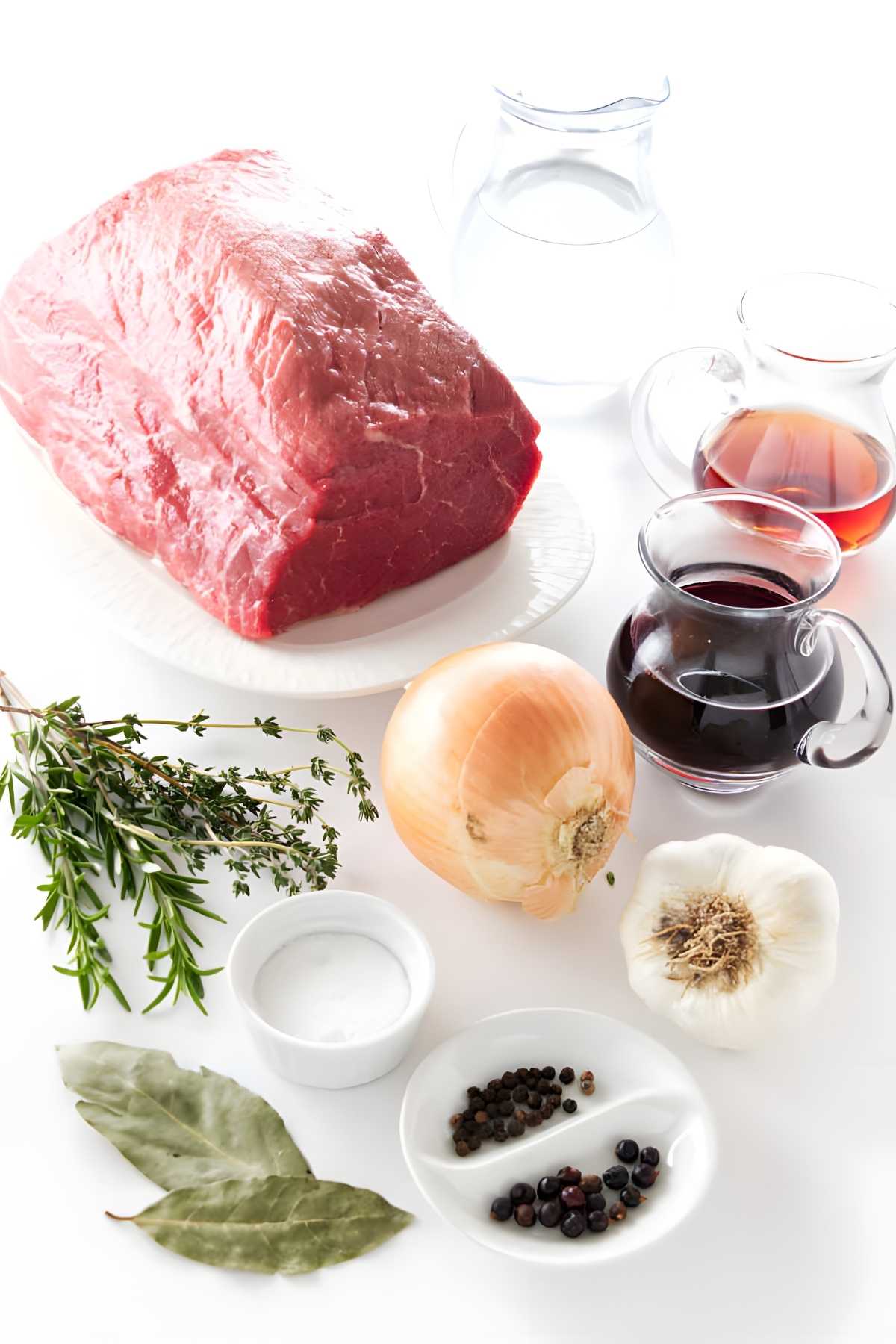
Ingredient Notes
Beef roast: Go for a boneless cut like bottom round, top round, or rump. These tougher cuts hold up well to the long marinade and slow braise, turning tender without falling apart.
Red wine + vinegar: This is the backbone of the marinade. Use a dry red wine (not sweet) and red wine vinegar. Skip balsamic or apple cider vinegar here; they throw off the balance.
Juniper berries: Traditional, but optional. They add a piney, slightly citrusy note. If you can’t find them, just leave them out, don’t stress.
Gingersnap cookies: Use old-fashioned, crisp gingersnaps. They dissolve into the sauce and thicken it with warm spice and a subtle sweetness. Traditionally, Lebkuchen or Pfeffernusse cookies get used, but gingersnap cookies are a common substitute.
Fresh herbs: Rosemary and thyme add earthy depth. If you’re subbing dried, use about one-third the amount.

Recipe Tips
Marinate in the right vessel: Always use glass, ceramic, or enameled cast iron when marinating the meat. The acidic marinade reacts with aluminum and stainless steel.
Turn the roast daily: This keeps the flavor even and ensures the entire cut tenderizes evenly during its five-day soak.
Dry the meat thoroughly: Before searing, pat it bone-dry. Moisture interferes with browning, and you want a deep crust.
Watch your flour: Toast the flour just until golden before adding liquid. It builds a better roux and avoids a raw flour taste.
Strain the sauce well: Press those veggies and crumbs through a fine sieve to get all their flavor and body into the final gravy.
Let it rest before slicing: Give the roast at least 15 minutes under foil after cooking. It helps the juices redistribute, so you don’t lose them all on the cutting board.
Use a sharp knife: The roast is tender, but it’s still a dense cut. Thin, even slices make for the best texture and presentation.
Taste the gravy last: The marinade brings salt, acid, and spice, but it mellows after cooking. Always give it a final taste before serving and adjust as needed.

If you like this recipe, you will enjoy our Instant Pot tri tip. It has a sweet and sour sauce that reminds people of the gravy in Sauerbraten.
For more German-inspired comfort food, try our Bratwurst with Apple Sauerkraut.

German Pot Roast
Sauerbraten isn’t a quick fix, it’s a slow build. But once you taste that tender roast and tangy, spiced gravy, it all makes sense. It’s the kind of dish that rewards a little planning with big comfort. Slice it thin, pour the sauce heavy, and don’t be surprised if it becomes a cold-weather tradition.
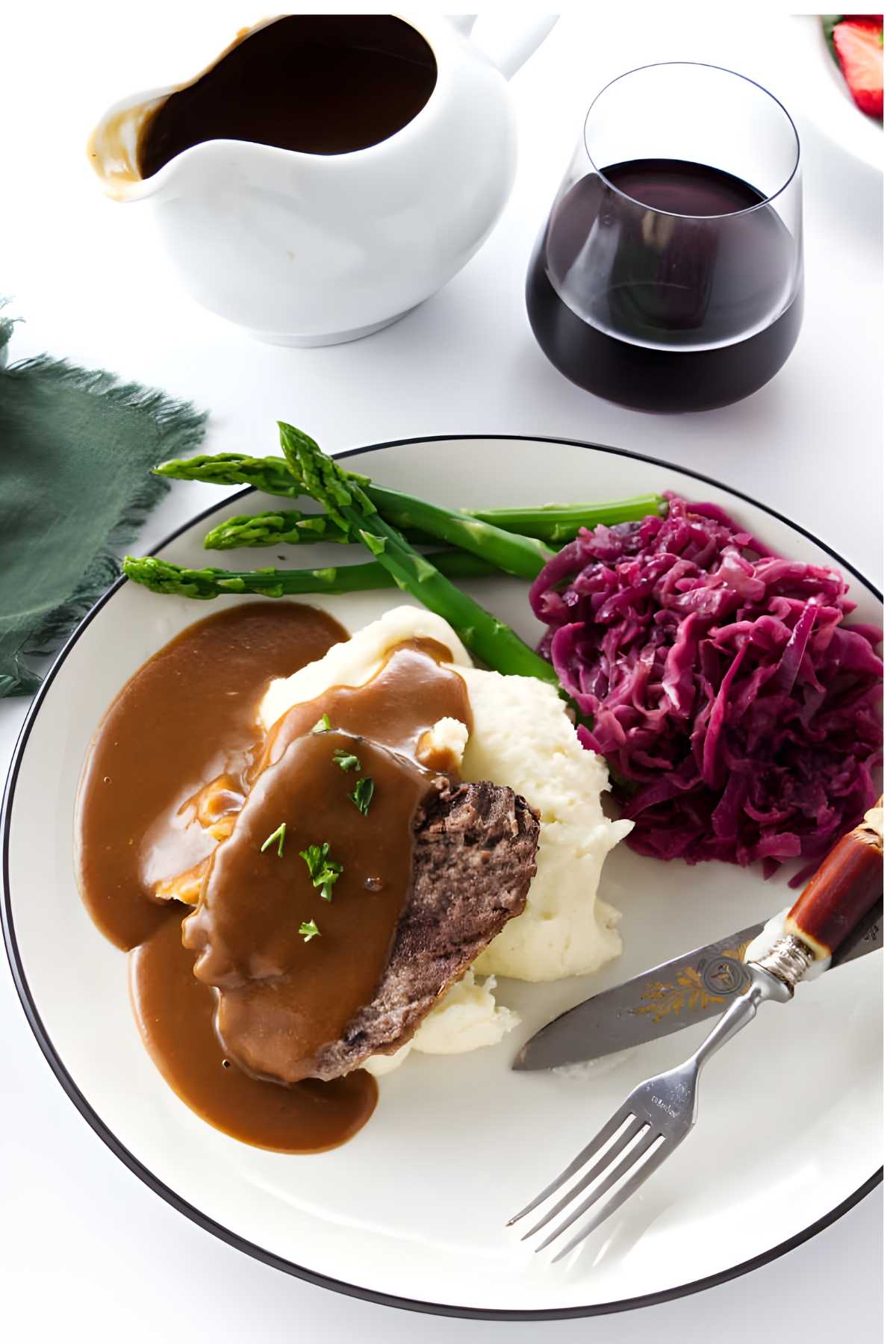
Sauerbraten is usually served with something starchy to soak up the gravy. Creamy mashed potatoes or sourdough bread both work, but I love serving it with warm German potato salad. Add a side of braised red cabbage or roasted beets to round it out.
Pin this now to find it later!
Pin It
Sauerbraten (German Style Pot Roast)
If you make this recipe, please leave a star rating and comment.
Ingredients
For the Marinade:
- ½ cup red wine
- ½ cup red wine vinegar
- 2 cups water, cold
- 1 onion, peeled and thinly sliced
- 6 garlic cloves, finely chopped
- ½ teaspoon whole peppercorns, coarsely crushed
- ½ teaspoon juniper berries, coarsely crushed, optional
- 2 sprigs fresh rosemary
- 3 sprigs Fresh thyme
- 2 teaspoons salt
- 3 bay leaves
- 4 pounds boneless beef roast, preferably top or bottom round or rump, trimmed of fat
To Cook the Roast:
- 3 tablespoons vegetable oil
- ½ onion, finely chopped
- 1 large carrot, chopped
- 1 to 2 stalks celery, chopped
- 2 tablespoons all-purpose flour
- 1 cup beef broth, or water
- ½ cup gingersnap cookie crumbs
Instructions
For the Sauerbraten Marinade
- In a 2 to 3 quart saucepan, combine the wine, vinegar, water, onion, garlic, crushed peppercorns, juniper berries, rosemary, thyme, salt, and the bay leaves.
- Bring the marinade to a boil over high heat, then remove it from the heat and let it cool to room temperature.
- Place the beef in a deep crockpot or stainless steel or enameled pot (avoid plastic, aluminum, and cast iron). The pot should be just large enough to hold it comfortably and pour the marinade over it. The marinade should come at least halfway up the sides of the meat. If necessary, add more wine.
- Turn the meat in the marinade to moisten it on all sides. Cover the pot tightly with plastic wrap and refrigerate for 5 days, turning the meat over at least twice a day.
To Cook the Roast:
- Preheat the oven to 350 degrees
- Remove the meat from the marinade and pat it completely dry with paper towels.
- Strain the marinade through a fine sieve set over a bowl and reserve the liquid. You will need at least 5 cups (add additional wine or broth if necessary). Remove and discard the herbs, spices, and onions.
- Heat the oil over moderate heat in a large Dutch oven or a heavy 5-quart pot. Add the meat and brown it on all sides, turning it frequently and regulating the heat so that it browns deeply and evenly without burning. This should take about 15-20 minutes.
- Transfer the meat to a platter and discard all but about 4 tablespoons of the fat from the pot.
- Add the chopped onions, carrots, and celery to the fat in the pot and cook over moderate heat. Stir frequently, for 5-8 minutes, or until the veggies are soft and light brown.
- Sprinkle the flour over the veggies. Cook, stirring constantly, for 2 or 3 minutes or until the flour begins to get light golden brown in color.
- While stirring, slowly pour in 2 cups of the reserved marinade and ½ cup of water. Bring to a boil over high heat. Cook for 2 minutes.
- Return the meat to the pot. Cover tightly and transfer to the oven. Cook in a preheated (350°F) oven for 2 to 2-1/2 hours, or until the meat shows no resistance when pierced with a sharp knife. Transfer the meat to a platter and cover with foil while you make the sauce.
To Make the Gravy
- Skim the fat off the surface of the braising liquid then measure how much liquid remains. You will need 3 cups of liquid for the sauce. If you have more, boil it briskly over high heat until it is reduced. If you have less, add some of the reserved marinade or some wine and beef broth.
- Combine the liquid and the gingersnap crumbs in a saucepan. Cook over moderate heat, stirring frequently, for 10 minutes. The crumbs will disintegrate in the sauce and thicken it slightly.
- Strain the sauce through a fine sieve, pressing down hard with a wooden spoon to force as much of the vegetables and cookie crumbs through as possible. Return the sauce to the pan. Taste, and add seasoning if needed. Let it simmer over low heat until ready to serve.
- To serve, carve the meat into ¼ inch slices and arrange the slices attractively in overlapping layers on a heated platter. Moisten the slices with a few tablespoons of the sauce and pass the remaining sauce separately in a sauceboat.
Notes
Nutrition
Nutrition information is automatically calculated, so should only be used as an approximation.
 Like this recipe? Rate & comment below!