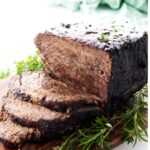
Sauerbraten (German Style Pot Roast)
Sauerbraten (German Pot Roast) is a traditional beef pot roast that has been marinated in wine and vinegar, onions, herbs and spices for several days and then roasted with a mix of vegetables.
Servings: 8 servings
Ingredients
For the Marinade:
- ½ cup red wine
- ½ cup red wine vinegar
- 2 cups water cold
- 1 onion peeled and thinly sliced
- 6 garlic cloves finely chopped
- ½ teaspoon whole peppercorns coarsely crushed
- ½ teaspoon juniper berries coarsely crushed, optional
- 2 sprigs fresh rosemary
- 3 sprigs Fresh thyme
- 2 teaspoons salt
- 3 bay leaves
- 4 pounds boneless beef roast preferably top or bottom round or rump, trimmed of fat
To Cook the Roast:
- 3 tablespoons vegetable oil
- ½ onion finely chopped
- 1 large carrot chopped
- 1 to 2 stalks celery chopped
- 2 tablespoons all-purpose flour
- 1 cup beef broth or water
- ½ cup gingersnap cookie crumbs
Instructions
For the Sauerbraten Marinade
- In a 2 to 3 quart saucepan, combine the wine, vinegar, water, onion, garlic, crushed peppercorns, juniper berries, rosemary, thyme, salt, and the bay leaves.
- Bring the marinade to a boil over high heat, then remove it from the heat and let it cool to room temperature.
- Place the beef in a deep crockpot or stainless steel or enameled pot (avoid plastic, aluminum, and cast iron). The pot should be just large enough to hold it comfortably and pour the marinade over it. The marinade should come at least halfway up the sides of the meat. If necessary, add more wine.
- Turn the meat in the marinade to moisten it on all sides. Cover the pot tightly with plastic wrap and refrigerate for 5 days, turning the meat over at least twice a day.
To Cook the Roast:
- Preheat the oven to 350 degrees
- Remove the meat from the marinade and pat it completely dry with paper towels.
- Strain the marinade through a fine sieve set over a bowl and reserve the liquid. You will need at least 5 cups (add additional wine or broth if necessary). Remove and discard the herbs, spices, and onions.
- Heat the oil over moderate heat in a large Dutch oven or a heavy 5-quart pot. Add the meat and brown it on all sides, turning it frequently and regulating the heat so that it browns deeply and evenly without burning. This should take about 15-20 minutes.
- Transfer the meat to a platter and discard all but about 4 tablespoons of the fat from the pot.
- Add the chopped onions, carrots, and celery to the fat in the pot and cook over moderate heat. Stir frequently, for 5-8 minutes, or until the veggies are soft and light brown.
- Sprinkle the flour over the veggies. Cook, stirring constantly, for 2 or 3 minutes or until the flour begins to get light golden brown in color.
- While stirring, slowly pour in 2 cups of the reserved marinade and ½ cup of water. Bring to a boil over high heat. Cook for 2 minutes.
- Return the meat to the pot. Cover tightly and transfer to the oven. Cook in a preheated (350°F) oven for 2 to 2-1/2 hours, or until the meat shows no resistance when pierced with a sharp knife. Transfer the meat to a platter and cover with foil while you make the sauce.
To Make the Gravy
- Skim the fat off the surface of the braising liquid then measure how much liquid remains. You will need 3 cups of liquid for the sauce. If you have more, boil it briskly over high heat until it is reduced. If you have less, add some of the reserved marinade or some wine and beef broth.
- Combine the liquid and the gingersnap crumbs in a saucepan. Cook over moderate heat, stirring frequently, for 10 minutes. The crumbs will disintegrate in the sauce and thicken it slightly.
- Strain the sauce through a fine sieve, pressing down hard with a wooden spoon to force as much of the vegetables and cookie crumbs through as possible. Return the sauce to the pan. Taste, and add seasoning if needed. Let it simmer over low heat until ready to serve.
- To serve, carve the meat into ¼ inch slices and arrange the slices attractively in overlapping layers on a heated platter. Moisten the slices with a few tablespoons of the sauce and pass the remaining sauce separately in a sauceboat.
Notes
Marinating vessel matters: Use glass, ceramic, or enameled cast iron. Avoid aluminum, stainless steel, or plastic. Acidic marinades can react with metal or leach into plastic.
Juniper berries: Traditional, but optional. They add a piney, slightly citrusy note. If you can’t find them, just leave them out.
Don’t skip the turn: Turn the roast in the marinade at least twice a day. This helps it marinate evenly and tenderize all over.
Dry the meat well: Pat the roast dry before browning. Excess moisture prevents a good sear.
Strain the marinade: Before cooking, strain the marinade and discard the solids. You'll use the liquid in stages throughout the recipe.
Rest before slicing: Let the roast rest, tented with foil, for at least 15 minutes before slicing. This keeps it juicy.
Make-ahead friendly: The flavor improves after resting, and the roast can be made a day ahead. Reheat gently in the sauce.
Nutrition
Serving: 1serving | Calories: 501kcal | Carbohydrates: 3g | Protein: 69g | Fat: 19g
