

This post may contain affiliate links. Please read our disclosure policy. As an Amazon Associate, I earn from qualifying purchases.
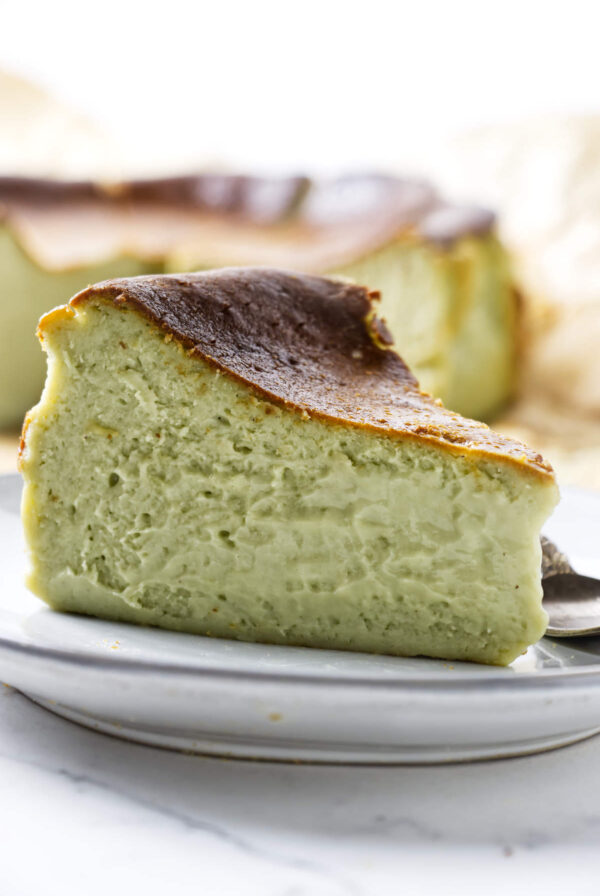
San Sebastian cheesecake is quite a bit different from a traditional cheesecake. There’s no crust, no water bath, and instead of trying to prevent the top from browning, you actually want it to get quite dark.
Baking at a high temperature gives it that deeply caramelized top while the center stays soft, creamy, and almost custard-like. Even the crumpled parchment and rustic edges are part of what makes this cheesecake so distinctive.
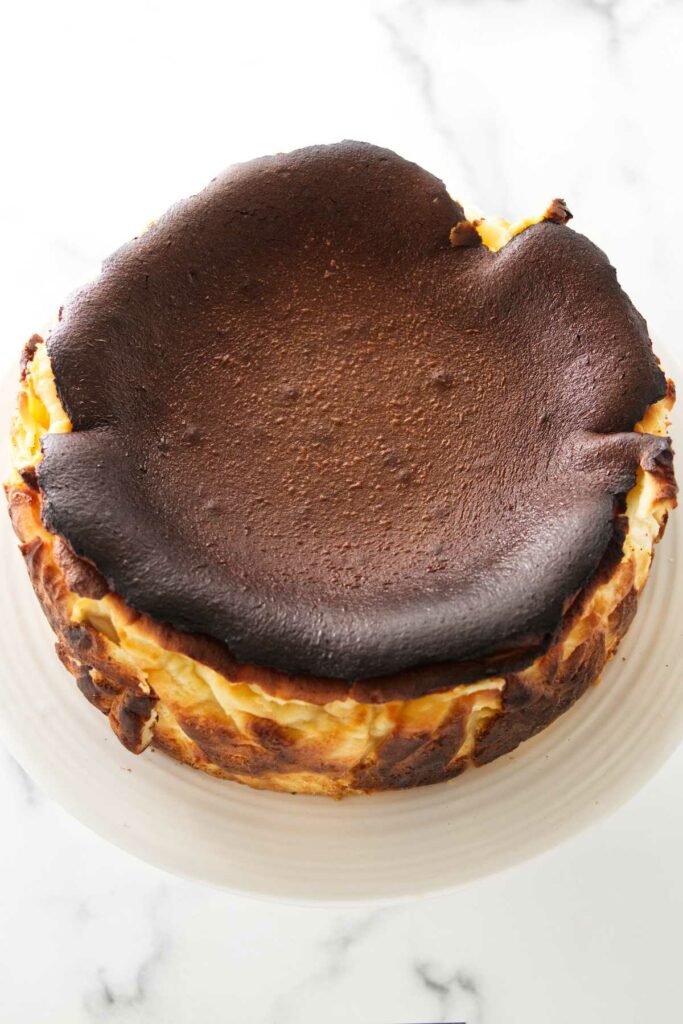
The cheesecake originated at La Viña restaurant in San Sebastián, Spain, where chef Santiago Rivera developed it in the 1990s. It’s also known as Basque cheesecake or Basque burnt cheesecake.
Here’s Why This San Sebastian Cheesecake Recipe Works
High heat creates the deeply browned top: San Sebastian cheesecake bakes at a higher temperature than a traditional cheesecake. This allows the top to caramelize and develop its characteristic dark color while the center stays soft and creamy.
A little flour adds structure: There is just enough flour to help the cheesecake set and hold its shape when sliced without taking away from the creamy, custard-like texture.
An extra egg yolk adds richness: Whole eggs provide the structure, while an extra yolk makes the filling richer and gives it a smoother texture.
Mixing the flour with the sugar helps prevent lumps: Combining the flour and sugar first helps distribute the flour evenly, so it blends smoothly into the cream cheese mixture without forming pockets of flour.
If you love this classic version, our Pistachio Basque Cheesecake adds rich pistachio flavor while keeping that signature creamy center.
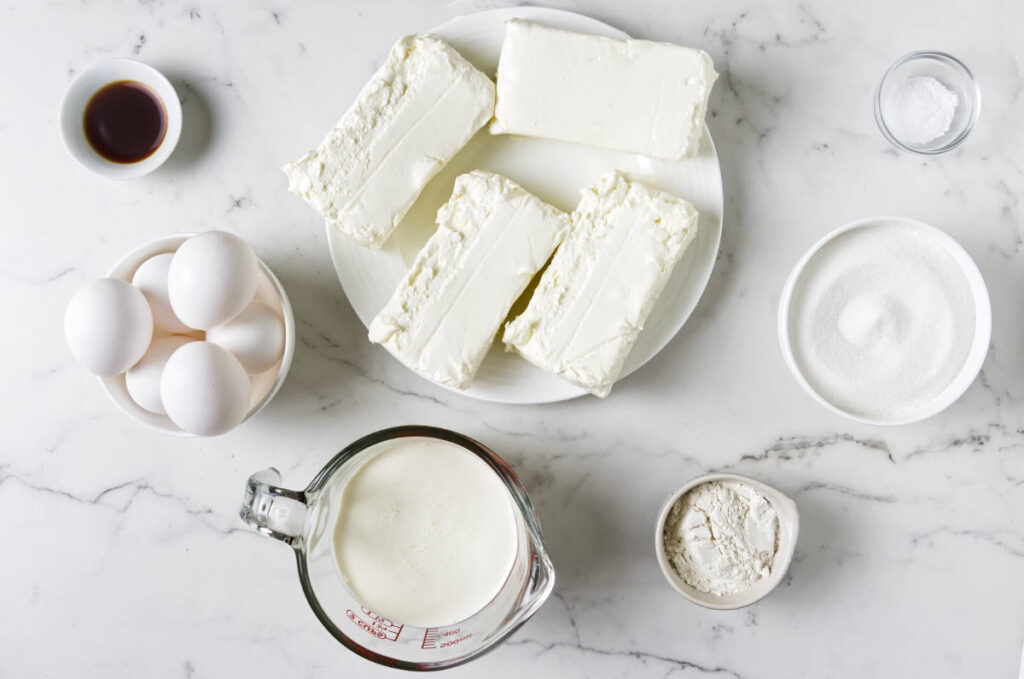
Ingredient Notes
Cream cheese: Use full-fat, block-style cream cheese and bring it to room temperature before mixing. Cold cream cheese is one of the main causes of lumpy cheesecake batter.
Granulated sugar: Regular granulated sugar works best here. It gets mixed with the flour before adding it to the cream cheese, which helps the flour incorporate smoothly.
All-purpose flour: You only need a small amount. Avoid packing it into the measuring cup, since too much flour can make the center firmer than intended.
Eggs and egg yolk: Bring the eggs to room temperature so they blend easily into the batter. Add them gradually and avoid overmixing once they go in.
Heavy cream: Use heavy cream or heavy whipping cream. The high fat content contributes to the rich, creamy texture of the filling.
Vanilla extract: Vanilla rounds out the cream cheese and gives the filling a little warmth.
If you prefer a more traditional baked cheesecake, my New York Cheesecake is denser and firmer, with the classic texture you expect from a New York-style cheesecake.
Recipe Tips
Use room-temperature ingredients: Soft cream cheese and room-temperature eggs blend more easily and help you get a smooth batter.
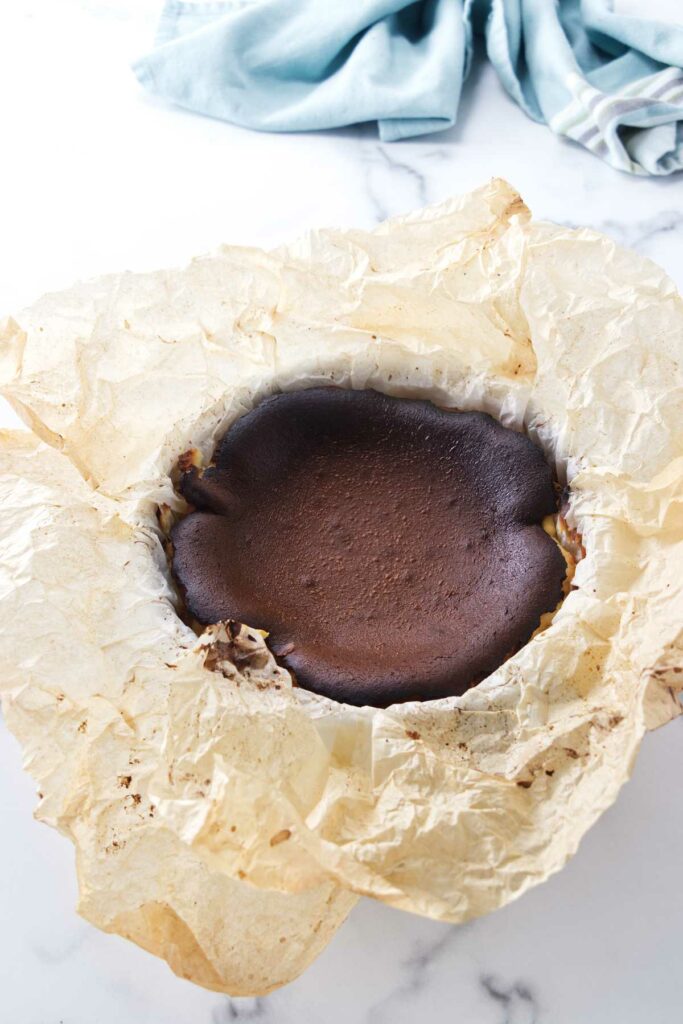
Crumple and dampen the parchment: Damp, crumpled parchment is much easier to fit into the pan. Fold the excess parchment over the rim so it stays out of the way when you pour in the batter.
Tap out the air bubbles: After pouring the batter into the pan, tap the pan on the counter to bring trapped air bubbles to the surface. Prick any large bubbles with a toothpick.
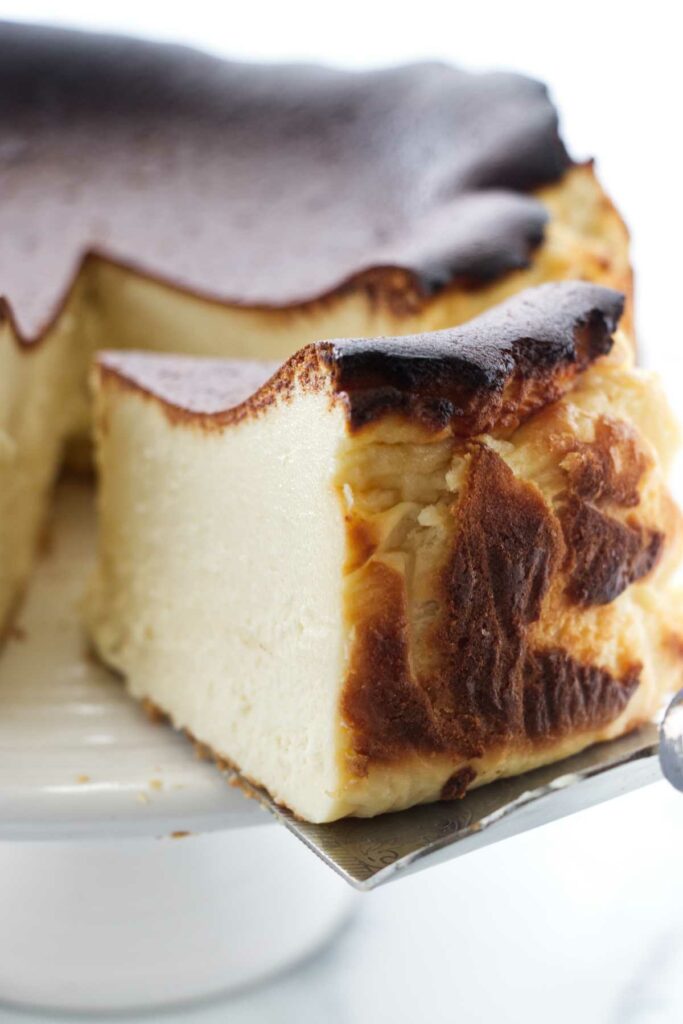
Chill before slicing: Let the cheesecake cool completely, then refrigerate it for several hours so the center has time to set before slicing.
Let it warm up before serving: Take the cheesecake out of the refrigerator about an hour before serving. The texture becomes softer and creamier as it comes closer to room temperature.
How to Know When Basque Cheesecake Is Done
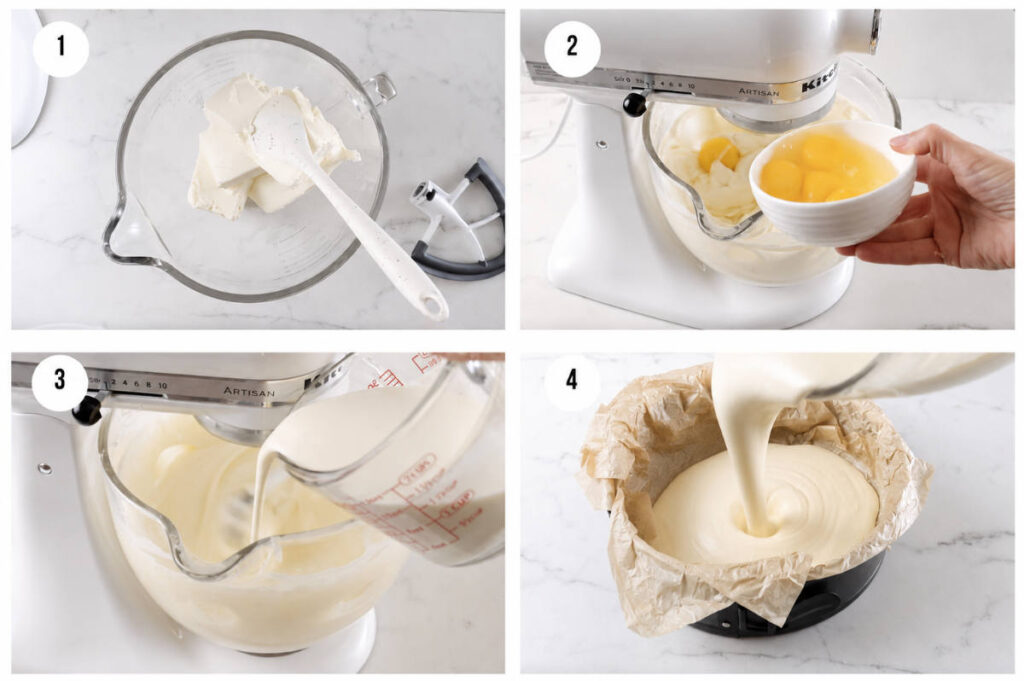
The top should be deeply browned, the edges should look puffed, and the center should still jiggle when you gently move the pan. It will look a little underdone compared with a classic cheesecake, but it continues to set as it cools and chills.
For a more precise check, insert an instant-read thermometer into the center. It should register about 152°F to 158°F. This gives the cheesecake enough structure to set while keeping the center soft and creamy.
Sauces and Toppings
San Sebastian cheesecake is excellent plain, but the caramelized top also pairs well with fruit sauces. Try strawberry topping, homemade blueberry sauce, or raspberry sauce for a bright contrast to the rich, creamy filling.
For something richer, try salted caramel sauce or rich chocolate sauce. The caramel is especially good with the deeply browned top of the cheesecake.
My triple lemon cheesecake is another creamy cheesecake, with lemon in the crust, filling, and topping.
Frequently Asked Questions
Yes. San Sebastian cheesecake is a style of Basque cheesecake known for its deeply browned top, crustless sides, and creamy center. You’ll also see it called Basque burnt cheesecake.
No. Unlike a traditional baked cheesecake, San Sebastian cheesecake goes directly into a hot oven without a water bath.
Yes. A few cracks are normal for Basque cheesecake. It puffs as it bakes at high heat and then settles as it cools, so the surface may crack along the way.
Some sinking is completely normal. Basque cheesecake puffs in the oven and then settles as it cools, leaving the center slightly sunken. If it rises dramatically and then collapses quite a bit, too much air may have been incorporated into the batter.
Basque Cheesecake
This is one of those cheesecakes where the imperfections are part of the appeal. Let the top get dark, don’t worry about the wrinkled sides, and pull it from the oven while the center still has plenty of jiggle.
Once it chills, you’ll have that contrast between the caramelized exterior and creamy center that makes Basque cheesecake so good.
Pin this now to find it later!
Pin It
San Sebastián Cheesecake
If you make this recipe, please leave a star rating and comment.
Video
Ingredients
- 32 ounces cream cheese, room temperature
- 1 ½ cups granulated sugar, 300 grams
- ¼ cup all-purpose flour, 30 grams
- 1 tablespoon vanilla extract
- ½ teaspoon salt
- 5 large eggs, room temperature
- 1 egg yolk
- 1 ½ cups heavy cream
Instructions
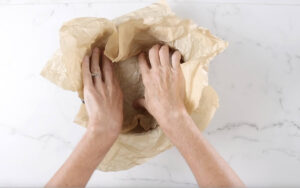
- Preheat the oven to 400°F. Line a 9-inch springform pan with two overlapping sheets of damp, crumpled parchment paper, arranging them in opposite directions so the bottom and sides are completely covered.
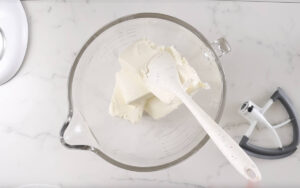
- In the bowl of a stand mixer fitted with the paddle attachment, or in a large mixing bowl with a handheld mixer, beat the cream cheese on medium speed until smooth and creamy.
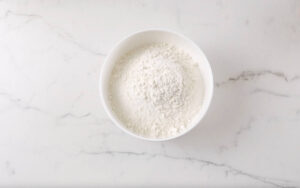
- In a separate bowl, whisk the sugar and flour together until the flour is evenly distributed throughout the sugar.
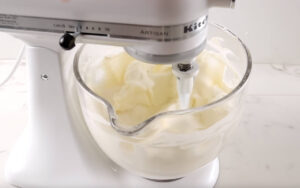
- With the mixer on medium-low speed, gradually add the sugar and flour mixture to the cream cheese. Mix until smooth and well combined, stopping to scrape the bottom and sides of the bowl as needed.
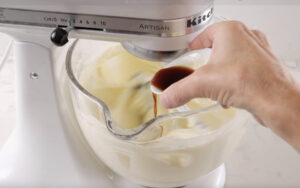
- Add the salt and vanilla extract and mix on low speed until combined.
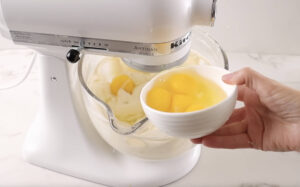
- With the mixer on low speed, add the eggs one at a time, followed by the egg yolk, mixing just until each addition is incorporated. Stop occasionally to scrape the bottom and sides of the bowl.
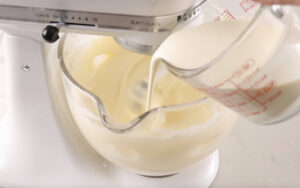
- With the mixer on low speed, slowly pour in the heavy cream and mix just until smooth and fully incorporated. Scrape the bottom and sides of the bowl as needed.
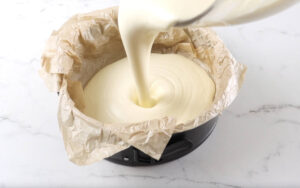
- Pour the batter into the prepared pan and tap the pan firmly on the countertop a few times to bring any air bubbles to the surface.Bake for about 48 to 55 minutes, or until the top is deeply browned and the cheesecake is puffed, especially around the edges. The center should still jiggle when you gently move the pan. If using an instant-read thermometer, the center should register 152°F to 158°F.
- Transfer the cheesecake to a wire rack and let it cool in the pan for 1 to 2 hours. Refrigerate, still in the pan, for at least 6 hours or overnight before serving.
- For the creamiest texture, let the cheesecake stand at room temperature for about 1 hour before serving. For clean slices, use a thin, sharp knife dipped in hot water and wiped dry between each cut.
Notes
Nutrition
Nutrition information is automatically calculated, so should only be used as an approximation.
 Like this recipe? Rate & comment below!










Love the way you introduce all the facts and details behind each recipe that is provided…..I’ll not a big fan of regular baked cheesecake, but after reading the method of baking this particular cheesecake, I had to try it and I’m so grateful I did…it was easy to follow and delicious as well…cant beat those two combinations …..please keep up the great work you both do for us baking folks…
Thank you. I’m glad you gave it a try. Thanks for the comment.
Attempting to make this cheesecake, my questions are….could it be freeze and how long can it stay in the fridge for freshness as well
thank you
Yes, you can freeze this cheesecake! Once it has cooled completely, wrap it well and freeze it for up to 3 months. You can freeze the whole cheesecake or individual slices. Thanks for the question.
This turned out really perfect, Pat. Do you think that I can use almond flour instead of AP?
Thanks, Angie….I have not tested this recipe with anything but AP flour and cannot confirm that almond flour would work. I have occasionally used cornstarch in cheesecake recipes and it is a gluten free product if gluten is a concern.