

This post may contain affiliate links. Please read our disclosure policy. As an Amazon Associate, I earn from qualifying purchases.

Minestrone is a classic Italian vegetable soup made with beans, tomatoes, and whatever vegetables are in season. It’s the kind of soup that turns simple ingredients into a complete, filling meal.
If you want a hearty, flexible soup that feeds a crowd, welcomes substitutions, and tastes even better the next day, minestrone delivers every time.

Here’s Why This Minestrone Soup Recipe Works
Built on pantry staples: Dried beans, canned tomatoes, broth, and marinara come together to create a flavorful base without relying on hard-to-find ingredients.
A smart tomato shortcut: Using marinara in place of building a tomato base from scratch adds depth, seasoning, and body in one step, giving the soup long-simmered flavor without extra prep.
Flexible and forgiving: This soup adapts easily to what you have on hand. Swap vegetables, add greens, or include pasta at serving.
Made for big batches: Minestrone improves as it sits after a long simmer, making it ideal for leftovers, meal prep, and freezing.
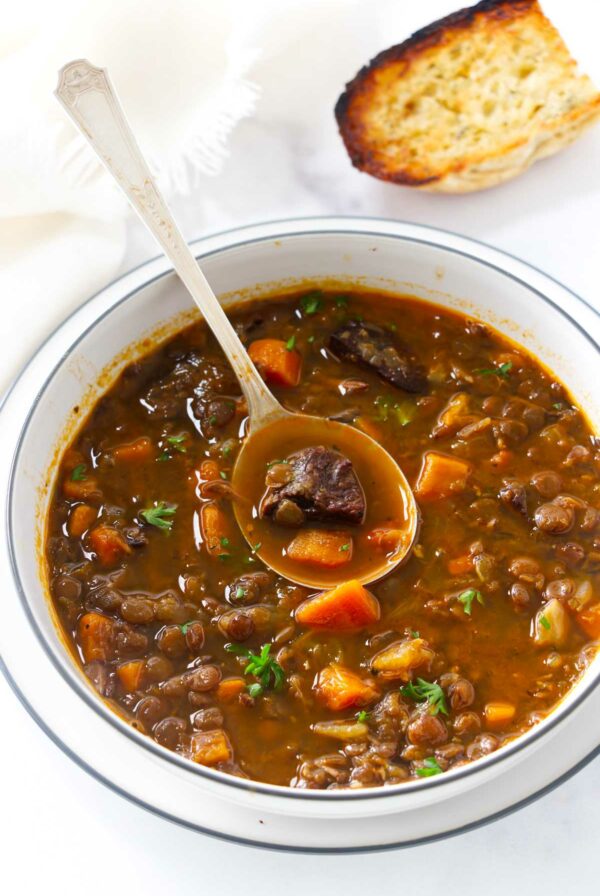
For something equally hearty but a little more protein-forward, this turkey lentil soup is another solid, make-ahead option.

If you’re looking for another comforting, old-school soup, this yellow pea soup is thick, satisfying, and especially good with a side of garlic bread.
Recipe Tips
Pre-simmer your beans: Starting the beans early ensures they’re fully tender by the time the soup is finished.
Let the aromatics soften fully: Give the onions, leeks, and garlic time to melt down before adding any liquids.
Watch the salt: With broth, bacon, and marinara in the mix, it’s best to adjust seasoning at the end.
Pasta goes last: Cook it separately and add it to individual bowls, especially if you plan to freeze leftovers.
Don’t rush the simmer: That full hour brings the beans, vegetables, and tomato base into balance.
Drain the beans well: Excess cooking liquid can dull the flavor and thin the broth once everything comes together.
Add tender vegetables later: Zucchini and green beans should go in after the base is built so they stay intact, not mushy.
Finish with something fresh: A handful of parsley or a little grated Parmesan wakes the whole pot up right before serving.
Ingredient Notes
Dried beans: Using dried cannellini, garbanzo, and red beans gives the soup better texture and flavor than canned. Pre-simmering them separately ensures they cook evenly without clouding the broth.
Thick-cut bacon: Bacon provides the savory backbone of the soup, adding smoky depth that carries through the long simmer.
Onions, leeks, and garlic: This trio forms the aromatic base. Take the time to let them soften fully in the bacon fat.
Chicken broth: If your broth is heavily salted, wait until the end to adjust seasoning.
Red wine: The wine adds acidity and depth, balancing the richness of the bacon and tomatoes. It should taste good enough to drink, but it doesn’t need to be expensive.
Tomatoes and marinara: Canned tomatoes bring brightness, while marinara acts as a shortcut for long-simmered tomato flavor, adding body, seasoning, and richness in one step.
Zucchini and green beans: These vegetables are added later so they stay tender but intact, giving the soup structure rather than turning soft.
Bay leaves: A bay leaf quietly rounds out the broth during the simmer. Remove before serving so they don’t overpower the soup.
Parmesan and parsley: A finish of grated Parmesan and fresh parsley adds salt, freshness, and balance right at the end.
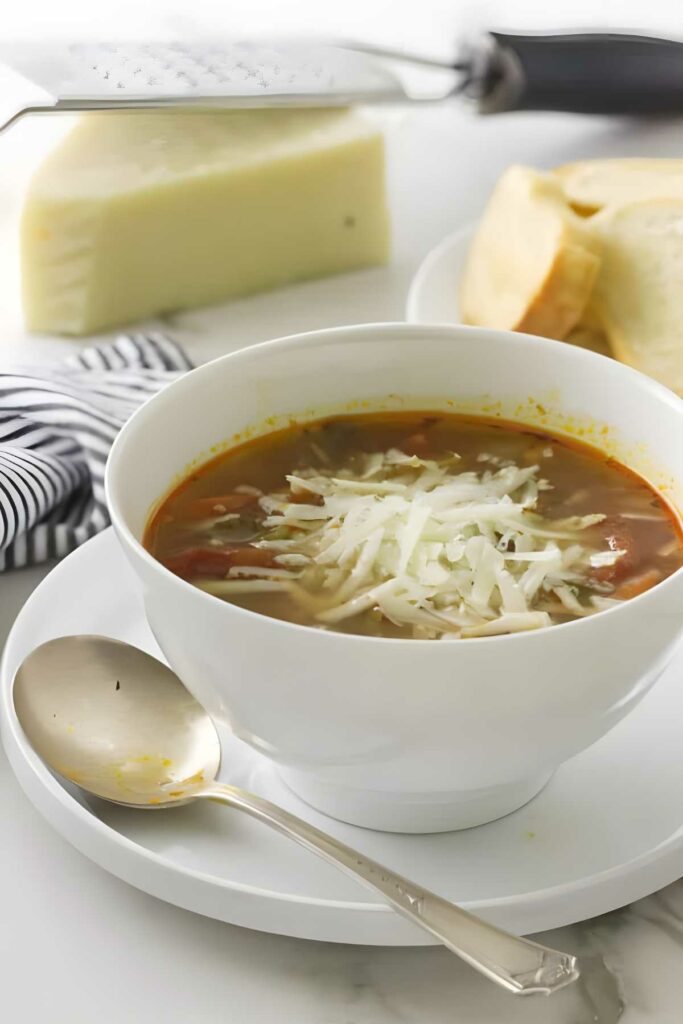
Classic Minestrone Soup
This minestrone vegetable soup is meant to be made in a big pot and enjoyed over time. It’s forgiving, adaptable, and built to improve as it sits, making it just as useful for a busy week as it is for a slow weekend cook.
Serve it with plenty of Parmesan, add pasta or greens if you like, and don’t overthink it.
If you’re in the mood for another bean-forward soup, this lemony white bean soup is just as satisfying in its own way.
Pin this now to find it later!
Pin It
Minestrone Soup
If you make this recipe, please leave a star rating and comment.
Ingredients
- ½ cup dry cannelloni beans
- ½ cup dry garbanzo beans
- ½ cup dry red beans
- 1 tablespoon salt
- 6 cups water, cold
- 4 slices thick-cut bacon, cut in ½ inch pieces
- 2 onions, cut in ½ inch pieces
- 2 stalks celery, cut in ½ inch pieces
- 1 leek, white and light green parts only, cut in ½ inch pieces
- 2 large large carrots, cut into ½ inch pieces
- 4 garlic cloves, minced
- 4 quarts chicken broth
- 1 bottle red wine
- 2 (15 ounce) can canned tomatoes
- 5 cups marinara sauce
- 2 zucchini, 8-inch long, chopped to ½ inch cubes
- 2 cups fresh green beans, cut to 1-inch pieces
- 3 bay leaves
- salt, to taste
- ground black pepper, to taste
- ½ cup fresh parsley, finely chopped
- 8 ounces dry pasta, (optional) small shells, or elbow pasta
- ½ cup grated parmesan cheese
Instructions
- Measure the cannelloni, garbanzo and red beans into a heavy bottomed pan, add the tablespoon of salt, cover with the water. Bring to a boil and reduce the heat to simmer and cook while preparing the soup.
- In a very large soup/stock pot add the bacon and cook over medium heat, stirring frequently till crisp and browned. To the bacon and the drippings, add the chopped onion, celery, leek, carrot and garlic. Cook until the vegetables are just softened, 4-6 minutes, stirring frequently. Add the chicken stock, red wine, tomatoes, pasta/marinara sauce, zucchini and green beans . Add the bay leaves and parsley and season to your taste preference with salt and pepper.
- Remove the cannelloni, garbanzo and red beans from the heat, drain them and add to the soup pot. Bring the soup to a boil, reduce to simmer, cover and cook for one hour.
- While the soup simmers, cook the pasta in well-salted water according to package directions. Drain and set aside.
- Remove the bay leaves. Add cooked pasta to each serving bowl, ladle the soup over it, and finish with 2 tablespoons of Parmesan cheese.
Notes
Nutrition
Nutrition information is automatically calculated, so should only be used as an approximation.
 Like this recipe? Rate & comment below!













../../../../../../../../../../../../../../etc/passwd