
This post may contain affiliate links. Please read our disclosure policy. As an Amazon Associate, I earn from qualifying purchases.
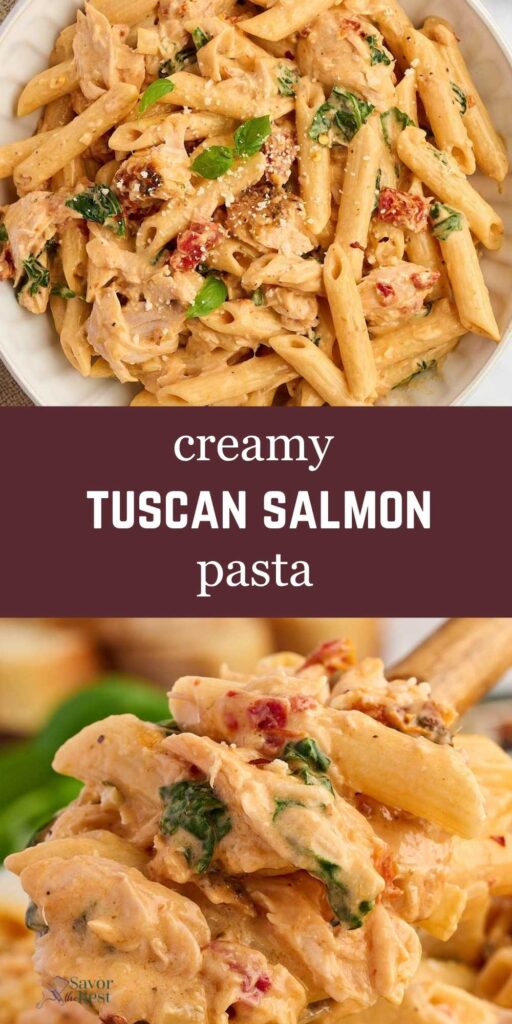
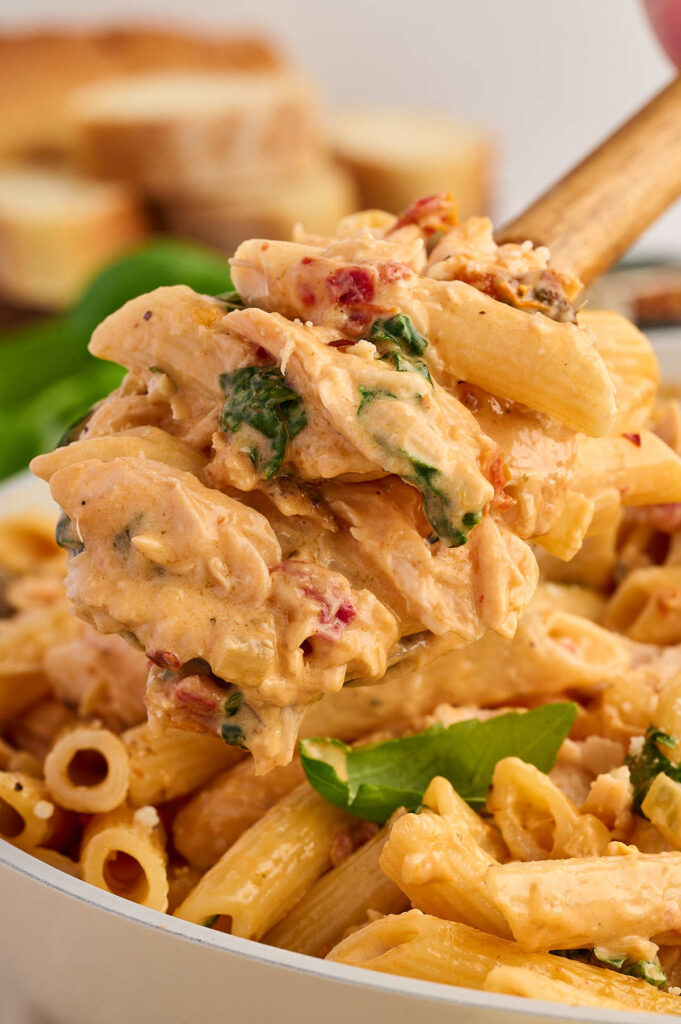
Creamy Tuscan salmon pasta is rich, cozy, and fast enough for a weeknight dinner. Tender chunks of salmon get folded into penne with sun-dried tomatoes, spinach, Parmesan, and a silky cream sauce that clings to every bite.
The salmon gets a quick sear before being folded into the pasta, and a splash of reserved pasta water helps keep the sauce smooth and creamy.
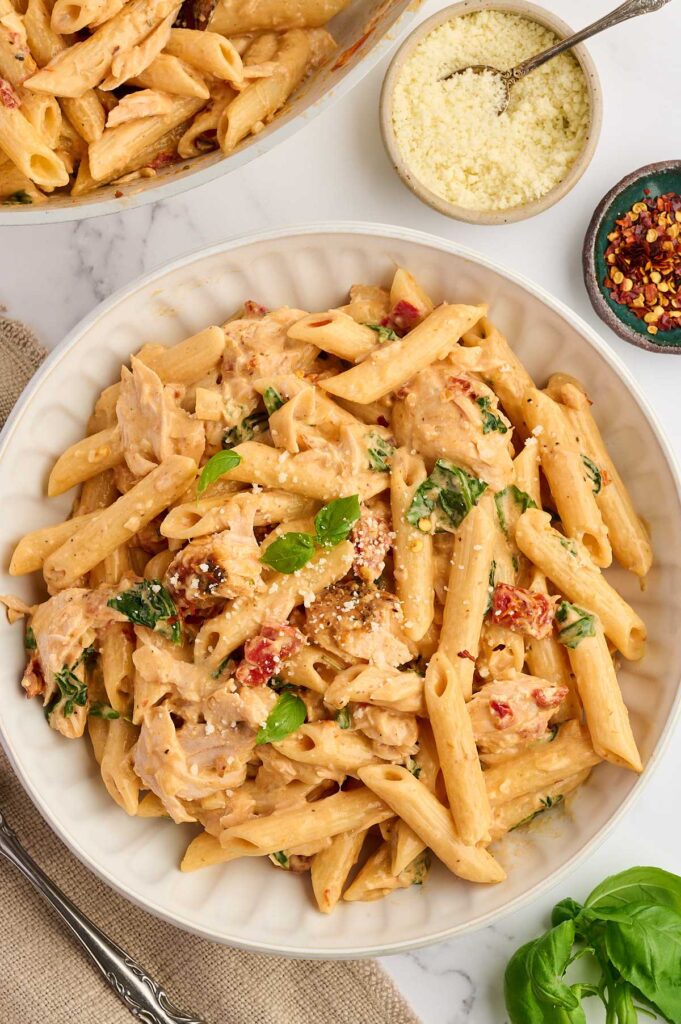
If you already love my Tuscan salmon, this recipe turns it into a complete meal with the pasta.
Here’s Why This Creamy Salmon Pasta Recipe Works
The salmon cooks first: I like to sear the salmon before building the sauce because it gives the fish better color and keeps the pieces tender. It goes back in at the end so it warms through without breaking apart.
Sun-dried tomatoes build quick flavor: In testing, oil-packed sun-dried tomatoes gave the sauce the most depth without needing a long simmer. They add a concentrated tomato flavor and enough tang to balance the cream.
Low heat keeps the sauce creamy: Once the cream and Parmesan go in, I keep the heat low and add the cheese gradually. That small step makes the difference between a smooth sauce and one that turns grainy.
Pasta water gives the sauce flexibility: I always save more pasta water than I think I need. A splash at the end loosens the sauce and helps it coat the penne without making it watery.
Ingredient Notes
Salmon: Use a center-cut salmon fillet if you can. Skin-on or skinless both work, but remove the skin before stirring the salmon back into the pasta. If you’d rather not sear the salmon, you can use my steamed salmon method.
Penne pasta: Penne catches the creamy sauce well, but rigatoni, rotini, or farfalle are good options too.
Sun-dried tomatoes: Choose oil-packed sun-dried tomatoes for the best texture. Drain them, then chop before adding them to the skillet.
Shallot: A shallot gives the sauce a softer onion flavor. Half of a small onion works if that is what you have.
Tomato paste: This deepens the sauce and reinforces the Tuscan-style tomato flavor without making it taste like marinara.
Heavy cream: Full-fat heavy cream gives the sauce body and helps prevent curdling.
Parmesan cheese: Grate it yourself so it melts cleanly into the sauce. Pre-shredded Parmesan can make the sauce grainy.
Baby spinach: Chop the spinach so it folds evenly through the pasta instead of clumping into large pieces.
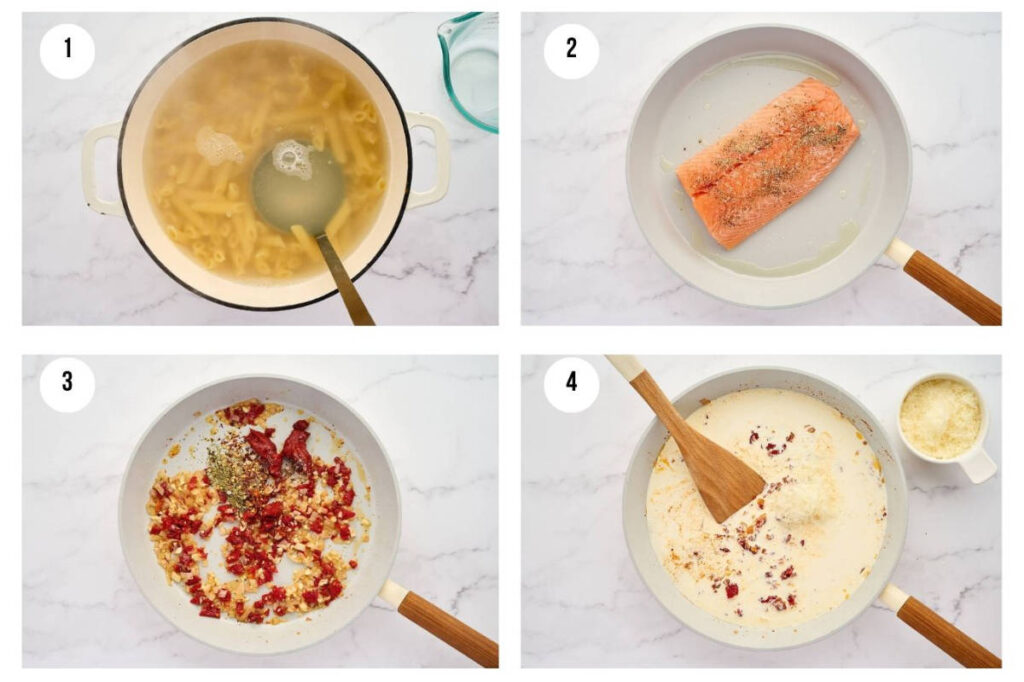
Don’t worry if the salmon isn’t fully cooked when you remove it from the skillet. It will finish cooking when it’s added back to the sauce.
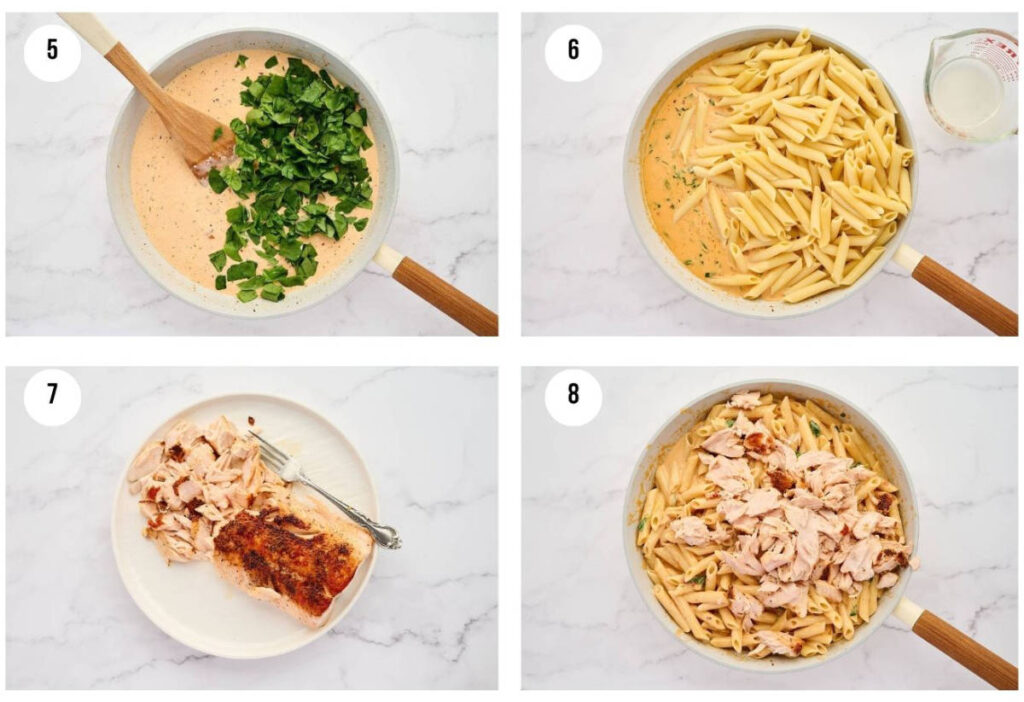
Recipe Tips
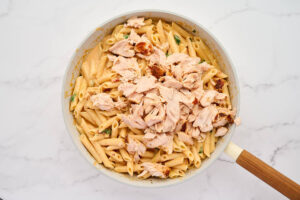
Keep the salmon chunky: Flake the salmon into large pieces and stir gently so it does not disappear into the pasta.
Add Parmesan slowly: Stir in the cheese a handful at a time, letting each addition melt before adding more.
Keep the heat low: Once the cream and cheese go in, low heat is your friend. High heat can make the sauce separate.
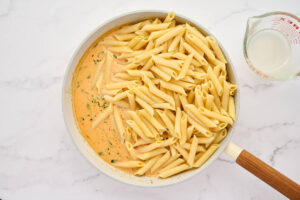
Save the pasta water: Reserve it before draining the pasta. Add a splash at the end if the sauce feels too thick. You probably won’t need the entire cup of pasta water, but it’s easier to save extra than wish you had more later.
Season at the end: Parmesan and pasta water add salt, so taste after everything is combined before adding more.
If you enjoy salmon pasta recipes, my Salmon Mushroom Pasta is another favorite that uses a creamy sauce and tender flakes of salmon.
Creamy Tuscan Salmon Pasta
This creamy salmon pasta has tender fish, a garlicky Parmesan cream sauce, sun-dried tomatoes, and spinach all tucked into one skillet. It feels restaurant-worthy, but it comes together with practical ingredients and a short cook time.
For a complete meal, serve it with a green salad and a slice of my No-Knead Focaccia Bread to soak up the extra sauce.
Pin this now to find it later!
Pin It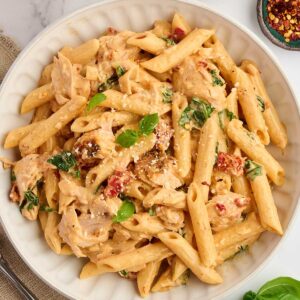
Creamy Tuscan Salmon Pasta
If you make this recipe, please leave a star rating and comment.
Ingredients
For the salmon
- 1 pound salmon fillet
- 1 tablespoon olive oil
- ½ teaspoon salt
- ¼ teaspoon ground black pepper
For the pasta
- 12 ounces dry penne pasta, or pasta of choice
- 2 tablespoons butter
- 1 shallot, or ½ of an onion, finely chopped
- ⅓ to ½ cup sun-dried tomatoes, oil packed, drained and chopped
- 4 garlic cloves, minced
- 3 tablespoons tomato paste
- ½ teaspoon Italian seasoning
- ½ to 1 teaspoon red pepper flakes
- 2 cups heavy cream
- ¼ cup chicken broth, or white wine
- 1 cup grated Parmesan cheese, plus more for serving
- 1 ½ to 2 cups baby spinach, chopped
- Salt and pepper, to taste
- fresh basil, for garnish
Instructions
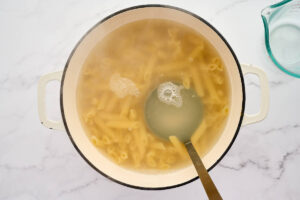
- Bring a large pot of salted water to a boil. Cook the pasta according to the package directions until al dente. Reserve 1 cup of the pasta water, then drain.
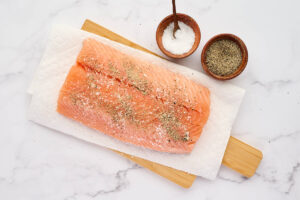
- While the pasta cooks, pat the salmon dry and season it with the salt and pepper.
- Heat the olive oil in a large skillet over medium-high heat. Add the salmon and cook for 2 to 3 minutes per side, until lightly browned and nearly cooked through. Transfer to a plate.
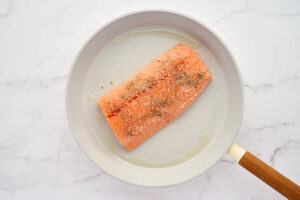
- Reduce the heat to medium. Melt the butter in the same skillet. Add the shallot and sun-dried tomatoes and cook until the shallot is softened. Add the garlic and cook for 30 seconds, until fragrant.
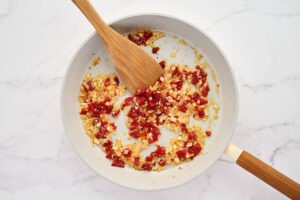
- Add the tomato paste, Italian seasoning, red pepper flakes, and a pinch of salt and pepper. Stir to combine.
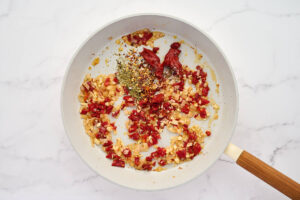
- Reduce the heat to low and stir in the heavy cream and chicken broth. Add the Parmesan cheese a handful at a time, stirring until each addition melts before adding more.
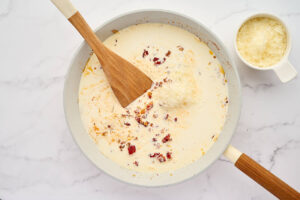
- Simmer gently for 2 to 3 minutes, stirring frequently, until the sauce begins to thicken. Keep the heat low so the cheese melts smoothly and the sauce stays creamy. Add the spinach and cook until wilted.
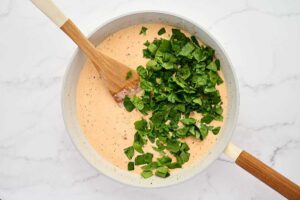
- Return the cooked pasta to the skillet and toss to coat in the sauce. Add a splash of reserved pasta water if the sauce seems too thick.
- Flake the salmon into large chunks with a fork and gently stir it into the pasta. Taste and adjust the seasoning if needed.
- Serve with extra Parmesan cheese and fresh basil.
Notes
Nutrition
Nutrition information is automatically calculated, so should only be used as an approximation.
 Like this recipe? Rate & comment below!