
This post may contain affiliate links. Please read our disclosure policy. As an Amazon Associate, I earn from qualifying purchases.
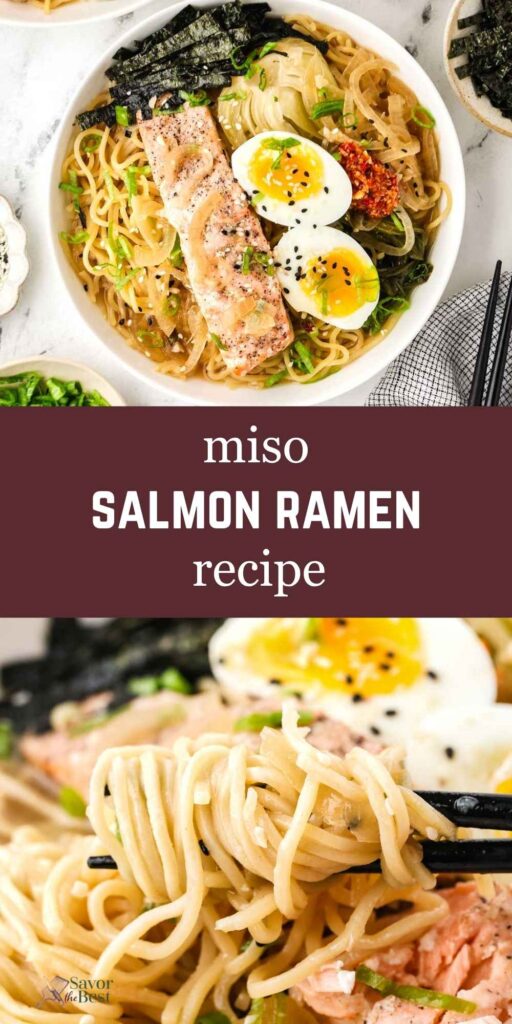
A really good bowl of ramen doesn’t have to start with a broth that’s been simmering for hours. This miso salmon ramen gets plenty of savory depth from white miso, while roasted salmon turns it into a satisfying dinner that still feels a little special. Best of all, it comes together in about 40 minutes.
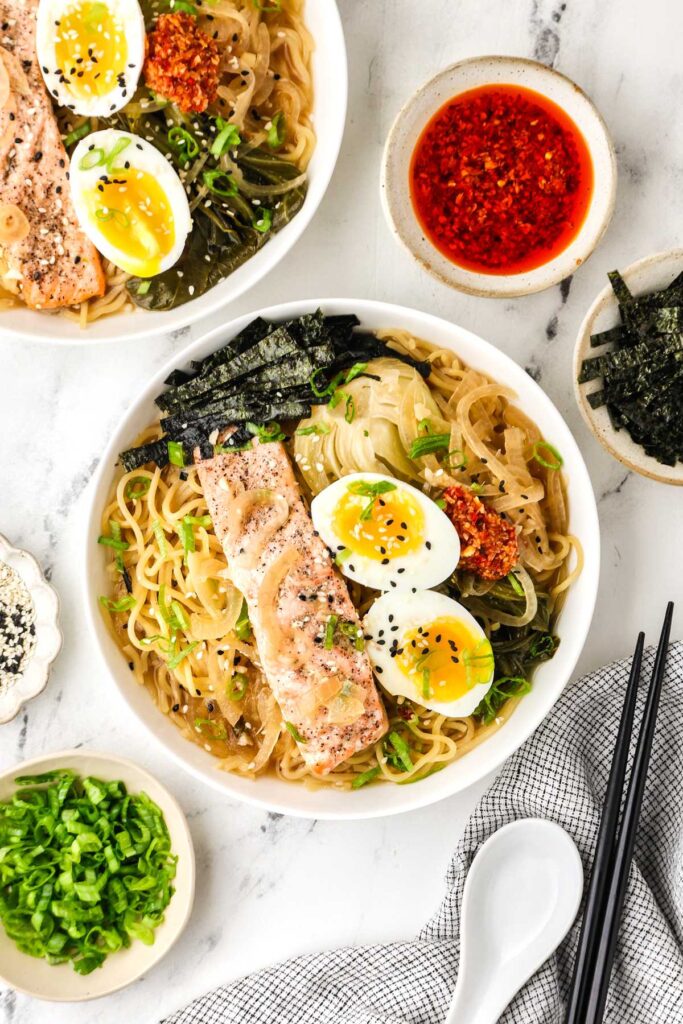
If you made my chicken ramen, the process will feel familiar: build the broth, cook the noodles separately, and assemble each bowl at the end. The roasted salmon keeps the meal manageable, while white miso gives the broth depth without a long simmer.
Here’s Why This Salmon Ramen Recipe Works
The salmon roasts separately: I prefer roasting the salmon instead of simmering it in the broth. It keeps the fish intact and makes the bowl easier to assemble.
The miso goes in at the end: Miso has the best flavor when it is whisked into hot broth gently instead of boiled hard.
The noodles cook separately: Cooking the ramen noodles outside the broth keeps them from absorbing too much liquid or turning soft before serving.
Bok choy cooks quickly: Baby bok choy only needs a few minutes in the broth, so it stays crisp-tender.
Ingredient Notes
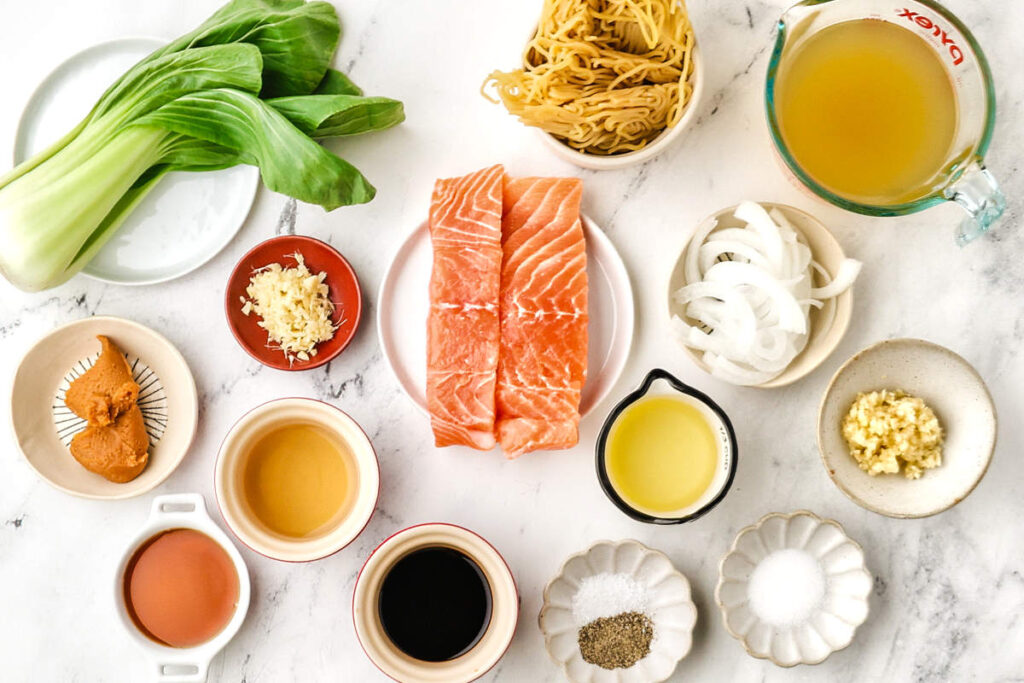
Salmon fillets: Use center-cut fillets if possible so the pieces cook at about the same rate. Skin-on or skinless will work since the salmon is roasted separately and added to the bowls after cooking.
White miso paste: White miso is milder and slightly sweeter than darker miso varieties, which works well with the salmon. Whisk it with a little hot broth before adding it to the pot so it blends in smoothly.
Ramen noodles: Fresh refrigerated ramen noodles have the best springy texture, but dried ramen noodles work well too. You can even use instant ramen noodles; just discard the seasoning packets.
Baby bok choy: Baby bok choy cooks quickly and adds some freshness and crunch to the bowl. Spinach, napa cabbage, mushrooms, or snow peas are good alternatives.
Toppings: Use as many or as few as you like. A soft-boiled egg makes the bowl more substantial, while chili crisp or chili oil is an easy way to add heat at the table.
Chicken stock: This is the base of the ramen broth, so use a good-quality stock. Homemade chicken broth is great here, but store-bought works just fine when you want to keep dinner quick.
Recipe Tips
Don’t boil the miso: Whisk the miso with a little hot broth first, then stir it back into the pot and keep the broth at a gentle simmer. Boiling can dull its flavor.
Cook the noodles separately: Ramen noodles absorb broth quickly and can turn soft if they sit in the pot. Cook and drain them separately, then divide them among the bowls just before serving.
Keep the salmon in large pieces: Break the roasted salmon into generous chunks when you assemble the bowls.
Adjust the heat at the table: Let everyone add chili crisp, chili oil, or sriracha to their own bowl so the base broth works for different heat preferences.
Use fresh noodles if you can: Fresh ramen has a springier texture, but dried noodles are still a good option.
Store components separately: Broth, salmon, and noodles hold up better when stored in separate containers.
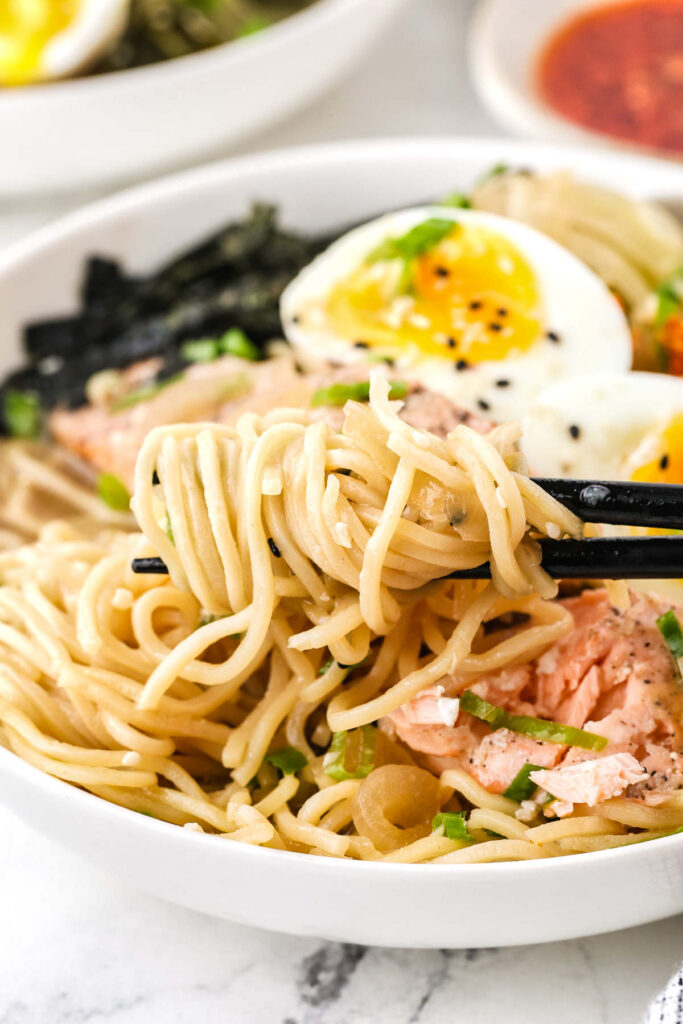
Serving Ideas
This salmon ramen bowl is filling on its own, but Japanese cucumber salad makes a crisp side if you want something cool next to the broth.
For the eggs, use soft-boiled eggs if you want jammy centers. If you prefer a firmer topping, this guide to hard boiled eggs is useful.
If you like the flavors in this ramen, try our miso butter salmon next. And for another easy noodle dinner, shrimp yakisoba is loaded with vegetables and tossed in a savory-sweet sauce.
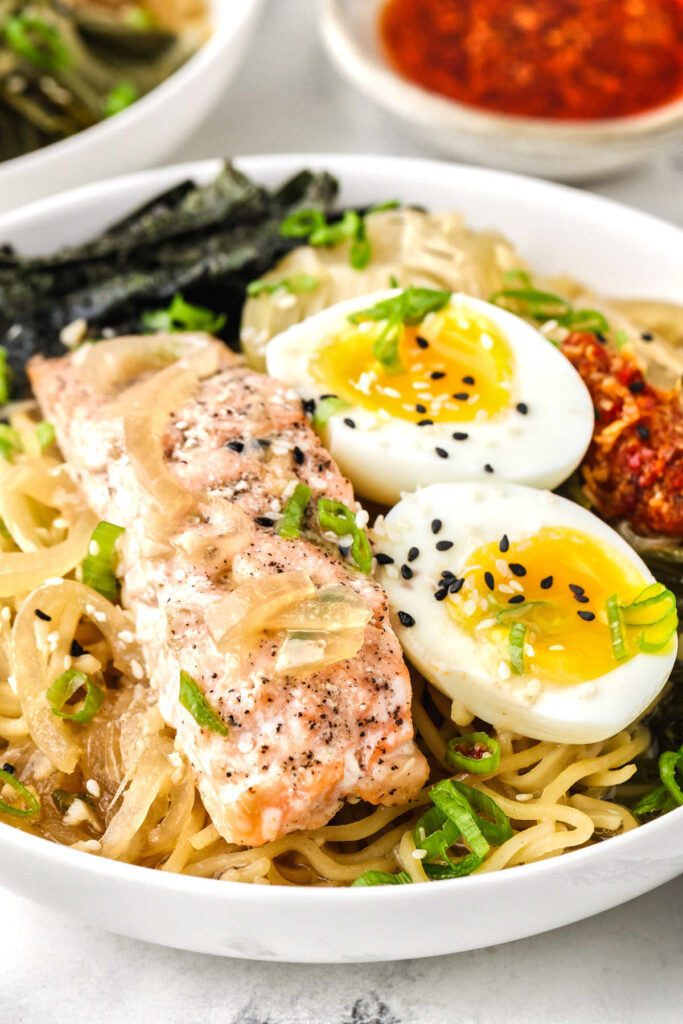
Frequently Asked Questions
You can, but roasting it separately gives you better control over the texture and keeps the salmon in larger pieces for serving.
Spinach, napa cabbage, sliced mushrooms, or snow peas can work. Add quick-cooking vegetables near the end so they do not overcook.
Store the broth, salmon, and noodles separately for up to 3 days. Reheat the broth gently, warm the salmon briefly, and add the noodles when serving.
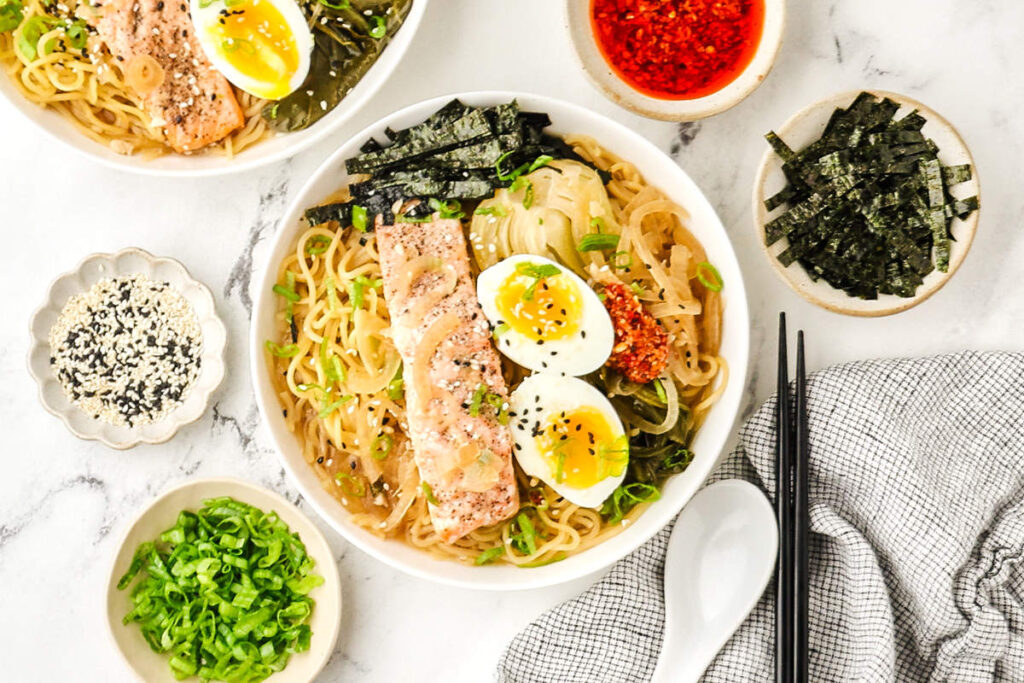
Once you have your toppings prepped, the rest comes together quickly. Build the bowls just before serving so the noodles stay springy and the salmon stays in those nice, tender chunks.
Pin this now to find it later!
Pin It
Miso Salmon Ramen
If you make this recipe, please leave a star rating and comment.
Ingredients
Salmon
- 1 ½ pounds salmon fillets, cut into 4 portions
- 1 tablespoon vegetable oil
- ¾ teaspoon salt
- ½ teaspoon ground black pepper
Ramen
- 1 tablespoon vegetable oil
- 1 small yellow onion, thinly sliced
- 3 garlic cloves, minced
- 1 tablespoon grated fresh ginger
- 6 cups chicken broth
- 2 tablespoons soy sauce
- 2 tablespoons mirin
- ½ teaspoon granulated sugar
- 2 tablespoons white miso paste
- 1 teaspoon toasted sesame oil
- 1 to 2 teaspoons chili garlic sauce, or chili crisp (optional)
- 2 to 4 baby bok choy, halved lengthwise
- 12 ounces ramen noodles, dried, or 16 ounces fresh noodles
For Serving
- 3 green onions, thinly sliced
- Soft-boiled eggs, halved
- Nori strips
- toasted sesame seeds
Instructions
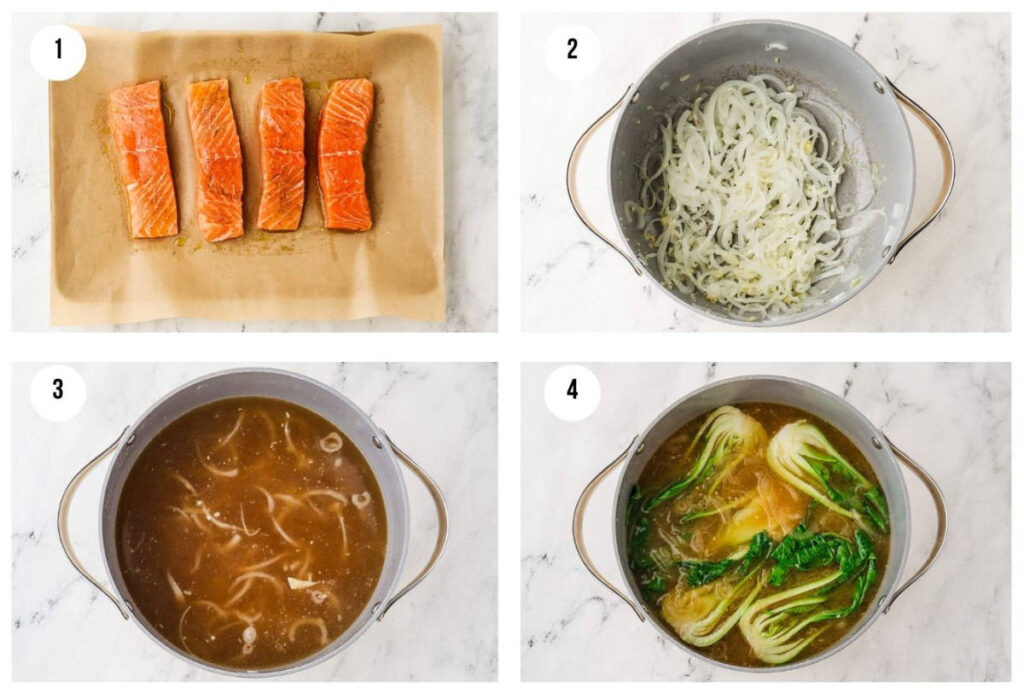
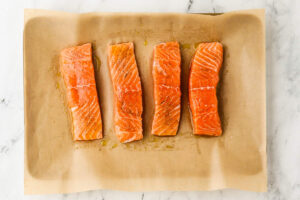
- Preheat the oven to 425°F. Brush the salmon with the oil and season with the salt and pepper. Place the salmon on a parchment-lined baking sheet and roast for 10 to 14 minutes, depending on thickness, until it flakes easily with a fork.
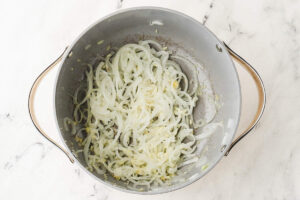
- While the salmon cooks, heat the oil in a large pot over medium heat. Add the onion and cook for 3 to 4 minutes, then add the garlic and ginger and cook for 1 minute until fragrant.
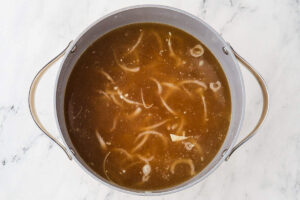
- Pour in the chicken stock, soy sauce, mirin, and sugar. Bring the broth to a gentle simmer and cook for 8 to 10 minutes.
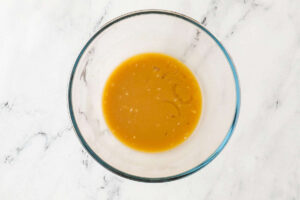
- Ladle about ½ cup of the hot broth into a small bowl. Whisk in the miso until smooth, then stir it back into the pot. Stir in the toasted sesame oil and chili garlic sauce, if using.
- Add the bok choy to the simmering broth and cook for 2 to 3 minutes, until crisp-tender.
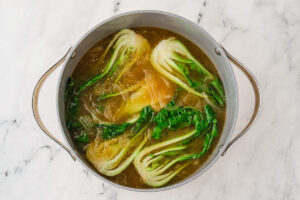
- Meanwhile, cook the ramen noodles according to the package directions. Drain well.
- Divide the noodles among serving bowls. Ladle the broth and bok choy over the noodles. Break the salmon into large pieces and add it to the bowls. Top with the green onions, soft-boiled eggs, nori, sesame seeds, and a drizzle of chili crisp, if desired.
Notes
Nutrition
Nutrition information is automatically calculated, so should only be used as an approximation.
 Like this recipe? Rate & comment below!