

This post may contain affiliate links. Please read our disclosure policy. As an Amazon Associate, I earn from qualifying purchases.
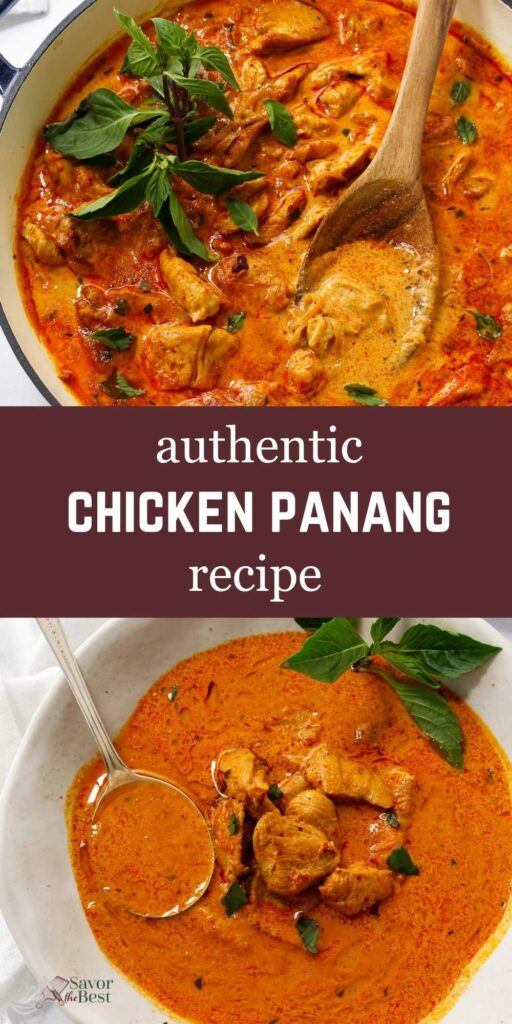
Panang curry should be thick, savory, a little nutty, and layered with more than just coconut milk and curry paste. This chicken panang curry takes the time to build that flavor properly, starting with chicken marinated in curry paste before it ever hits the skillet.
The rest of the flavor comes in layers: onions and lemongrass, curry paste cooked until fragrant, kaffir lime leaves, coconut cream, and Thai basil. It is not a 30-minute shortcut chicken curry, and it is not trying to be. The sauce is rich and concentrated, and the whole thing leans into the deeper flavor Panang curry is known for.
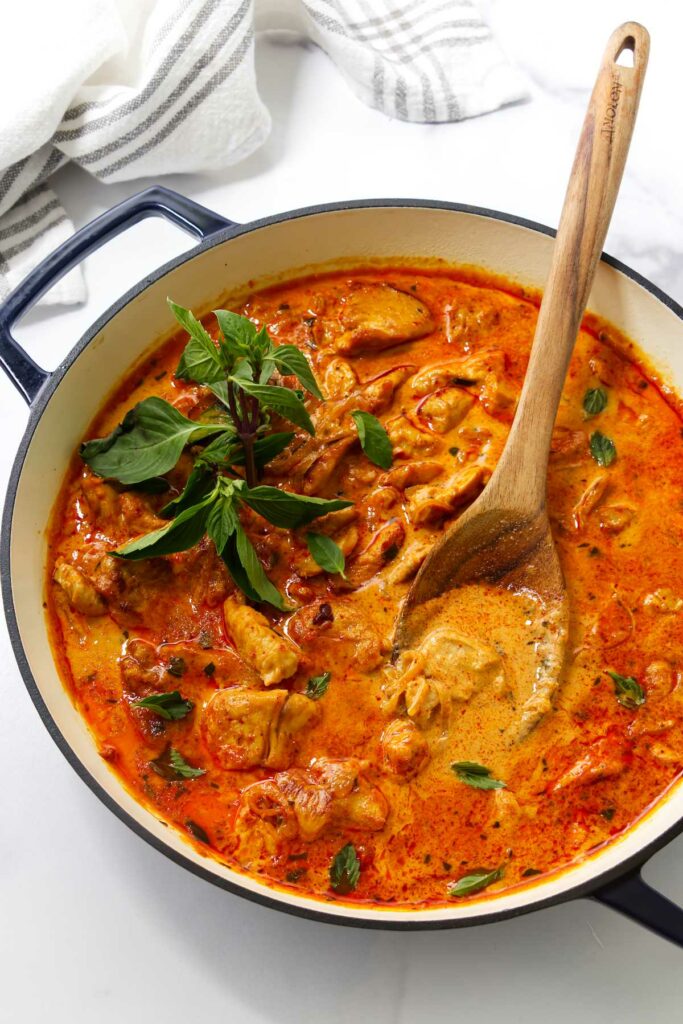
This isn’t my fastest curry, and that’s the point. This recipe is the one to make when you want something with more depth. For a quicker weeknight curry, I’d go with the simpler peanut chicken curry instead.
Why This Chicken Panang Curry Works
I wanted this chicken panang curry to taste like actual Panang curry, not chicken floating around in a sweet coconut-peanut sauce. A few extra steps make a big difference, and none of them are complicated.
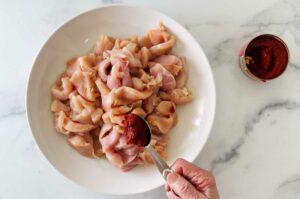
The chicken gets flavor before it hits the pan. I toss it with a little oil and Panang curry paste first, so the seasoning starts with the meat instead of trying to catch up later in the sauce.
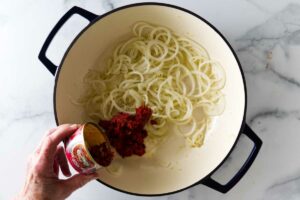
The curry paste gets cooked, not just stirred in. Sautéing it with the onions and lemongrass gives the paste time to bloom and keeps the sauce from tasting flat.
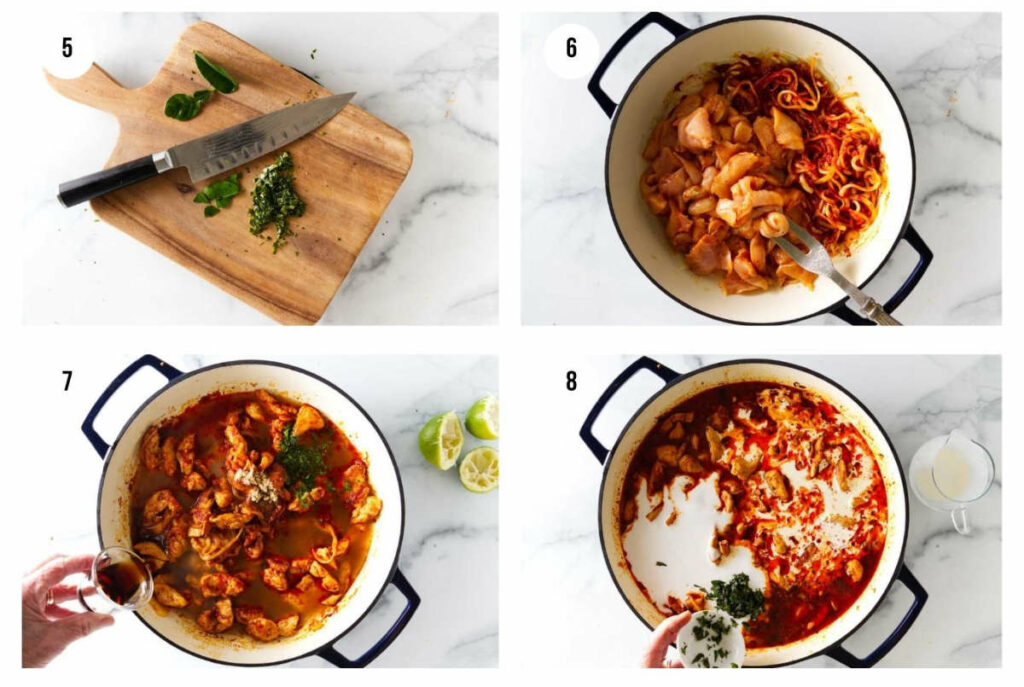
The kaffir lime leaves are not optional wallpaper. They bring that floral citrus flavor that makes Panang curry taste like Panang curry. I finely chop them so the flavor runs through the whole sauce.
The sauce gets balanced before the cream goes in. I add fish sauce, brown sugar, and fresh lime juice before the final simmer, so the sauce has salt, sweetness, and brightness working together. That keeps the curry rich without letting it turn heavy or overly sweet.
If you enjoy this style of curry, my yellow curry chicken has a sweeter, turmeric-forward flavor and makes a good one to try next.
What Makes Panang Curry Different?
Panang curry and red Thai curry share a similar base, but Panang curry has a thicker, nuttier sauce with a warmer spice profile and it is usually milder.
The difference comes from the Panang curry paste, which usually includes ground peanuts, cumin, and coriander seed. Those ingredients give the sauce more body and make it less brothy than red curry. It is perfect served over white rice.
Ingredient Notes
Panang curry paste: Look for it in the Asian section of larger grocery stores, at Asian markets, or online. Mae Ploy, Maesri, and Aroy-D are common brands. Mae Ploy tends to be spicier; Maesri is usually milder.
Red curry paste substitute: Use an equal amount of red curry paste and stir in 2 to 3 tablespoons of peanut butter. It will not taste exactly the same, but it adds the nutty body Panang curry is known for.
Lemongrass paste: Usually found in the produce section near the fresh herbs and ginger. Fresh lemongrass also works; use only the tender white part and chop it finely.
Kaffir lime leaves: Also called makrut lime leaves, these add the floral citrus flavor that makes Panang curry distinct. Fresh or frozen leaves both work. Remove the tough center vein before chopping.
Coconut cream: Use full-fat, unsweetened coconut cream, not cream of coconut. Cream of coconut is sweetened and will make the curry too sweet.
Heavy cream: Not traditional, but it gives the sauce a silky texture. For a dairy-free version, skip it and use more coconut cream.
Chicken: Breasts are leaner; thighs have more flavor and are harder to overcook. Either one works.
Thai basil: Thai basil has a slightly spicy, citrus-like flavor. Regular basil works in a pinch, but the flavor will be different.
Recipe Tips
Marinate the chicken if you can. Even 30 minutes helps the curry paste season the chicken instead of leaving all the flavor in the sauce. Overnight gives it more depth.
Cook the curry paste before adding liquid. Sautéing the paste with the onions and lemongrass helps bloom the spices and keeps the sauce from tasting flat.
Do not add the coconut cream too early. Let the curry paste cook first, then add the broth and other seasonings before finishing with coconut cream and heavy cream.
Simmer gently after adding the cream. A few minutes of gentle simmering helps the sauce thicken and come together. Do not boil it hard.
Adjust the heat with the curry paste. Different brands vary in spice level. Use a little less for a milder curry, or add sliced Thai chilies if you want more heat.
Do not skip the lime leaves. They add the citrusy flavor that makes Panang curry taste distinct. Remove the tough center vein and chop them finely.
Add the peanuts at the end. Sprinkle them on right before serving so they stay crunchy.
FAQs
Panang curry is thicker, nuttier, and usually milder than red Thai curry. The curry paste includes peanuts along with cumin and coriander, which gives the sauce more body and a deeper flavor.
Yes. Use an equal amount of red curry paste and stir in 2 to 3 tablespoons of peanut butter.
The flavor won’t be exactly the same because red curry paste is usually spicier and less nutty, but it still makes a very good curry.
Kaffir lime leaves (also called makrut lime leaves) are aromatic citrus leaves commonly used in Thai cooking.
They add a floral lime flavor that fresh lime juice alone can’t provide. They’re one of the signature flavors in Panang curry and worth tracking down if possible.
Panang curry is usually milder than red or green Thai curry, but the heat level depends heavily on the brand of curry paste you use. Coconut cream also softens the heat quite a bit.
What to Serve with Chicken Panang Curry
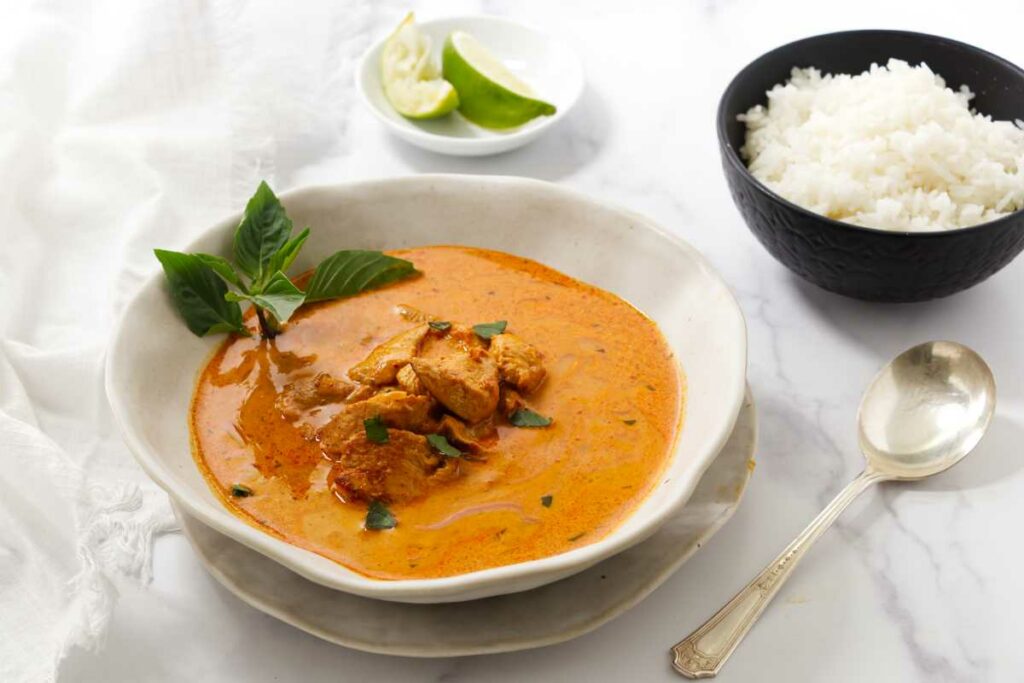
Jasmine rice is the classic choice here. The sauce is thick and concentrated, so you want something simple that can catch every bit of it without competing with the curry.
For a starter, Pork Satay Skewers or Tom Kha Soup will keep the meal in the same Thai-inspired lane without making everything feel heavy.
Pin this now to find it later!
Pin It
Chicken Panang Curry
If you make this recipe, please leave a star rating and comment.
Ingredients
- 2 ½ to 3 pounds boneless skinless chicken breasts, or chicken thighs
- 3 tablespoons vegetable oil, divided
- 1 (4 ounce) can Panang curry paste, divided
- 2 tablespoons lemongrass paste
- 1 yellow onion, thinly sliced
- 1½ cups chicken broth
- 2 tablespoons brown sugar
- 3 tablespoons fresh lime juice, about 2 limes
- 2 tablespoons fish sauce
- 8-10 kaffir lime leaves, (veins removed) finely chopped
- 1 (14 ounce) can unsweetened coconut cream, full-fat
- ½ cup heavy cream
- ⅓ cup fresh Thai basil, chopped
- ¼ cup roasted peanuts, chopped, for serving
Instructions
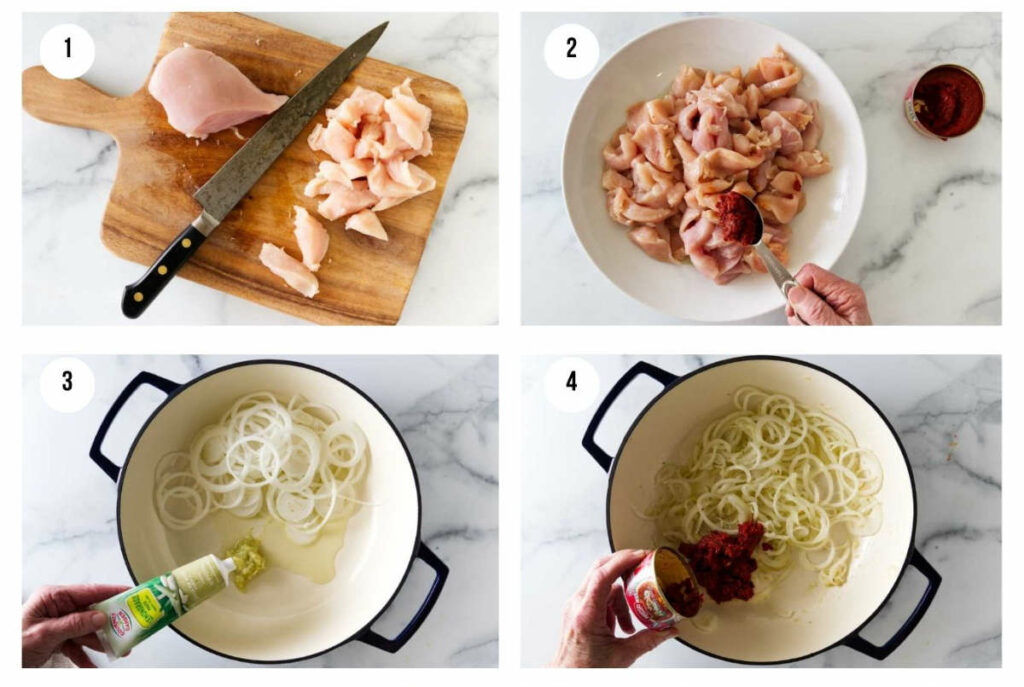
- Trim any excess fat from the chicken and cut it into 1-inch pieces. Place the chicken in a large bowl and toss it with 1 tablespoon of oil and 1 tablespoon of the Panang curry paste. Cover and marinate in the refrigerator for at least 1 hour, or overnight for deeper flavor.
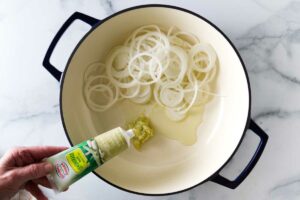
- In a large heavy-bottomed skillet, heat the remaining 2 tablespoons of oil over medium heat. Add the onion and lemongrass and sauté until the onion softens, about 3 to 4 minutes.
- Stir in the remaining curry paste and sauté for 2-3 minutes.
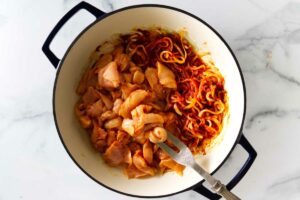
- Push the mixture to the edge of the skillet and add the marinated chicken. Cook until the chicken is lightly browned, about 5-7 minutes.
- Add the chicken broth, sugar, lime juice, fish sauce and the chopped lime leaves, stir to combine. Bring to a simmer and cook for 5-8 minutes to finish cooking the chicken and build flavor.
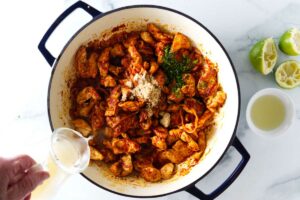
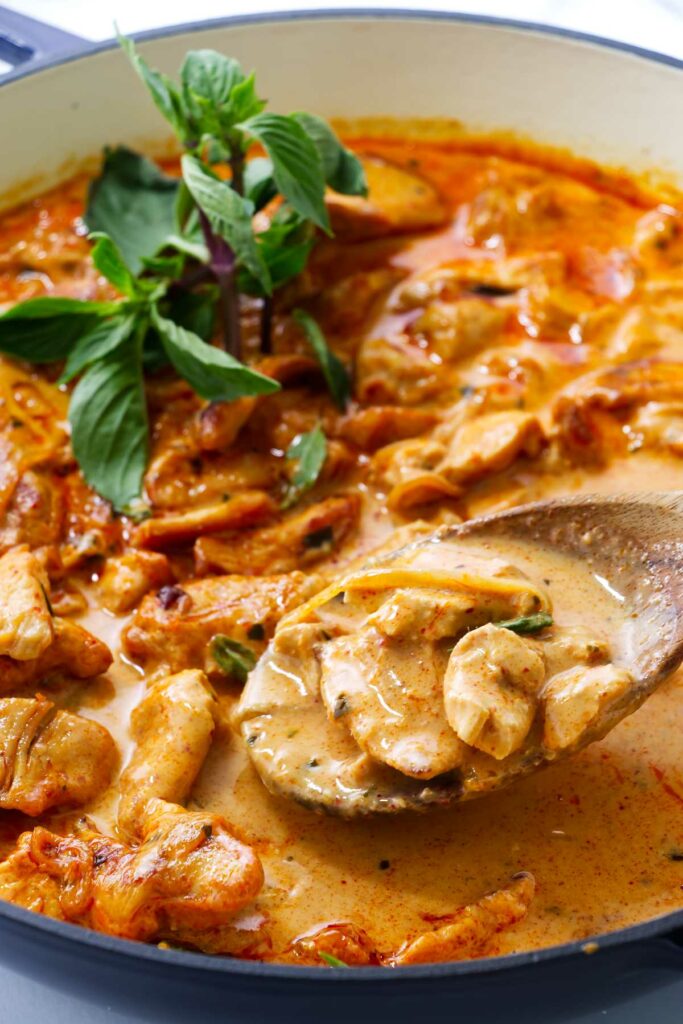
- Pour in the coconut cream, heavy cream and chopped Thai basil, simmer for another 3-5 minutes until slightly reduced and creamy.
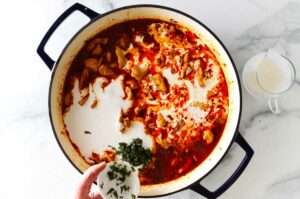
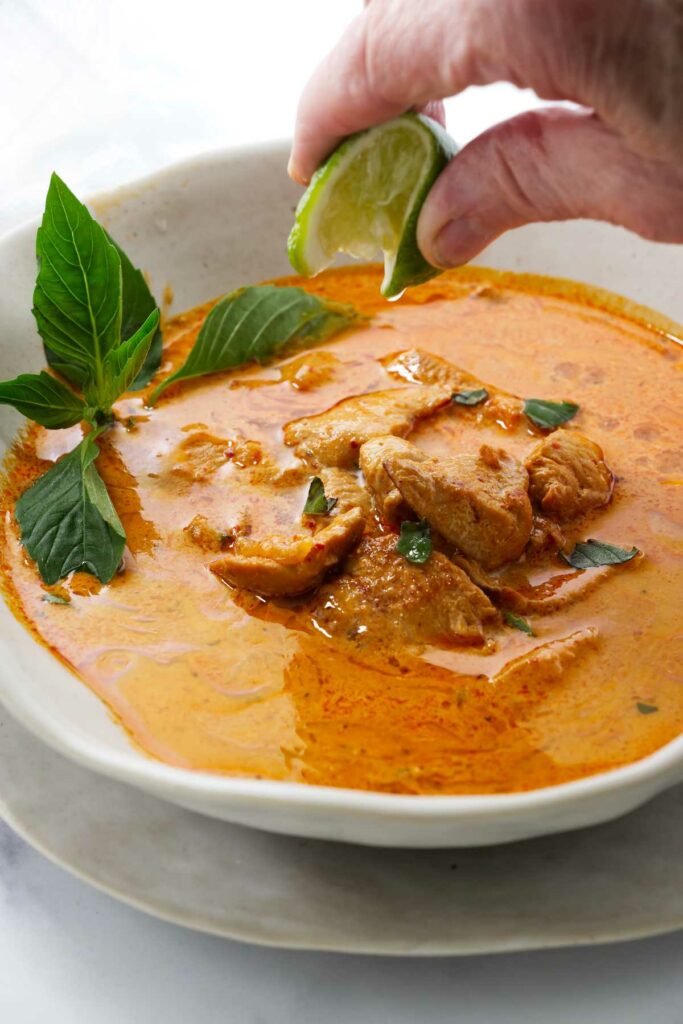
- Ladle into bowls and top each serving with chopped peanuts and a sprig of Thai basil. Serve with lime wedges and white rice.
Notes
Nutrition
Nutrition information is automatically calculated, so should only be used as an approximation.
 Like this recipe? Rate & comment below!











I made this dish today exactly to your recipe, marinating the chicken overnight. It was delicious and I will definitely be making it again.
I was very impressed that despite all the added flavours, kaffir lime, lime juice, Thai basil and fish sauce, there wasn’t one flavour that stood out. They all just complement the dish. Thank you
Thank you so much! I’m glad you enjoyed it.