

This post may contain affiliate links. Please read our disclosure policy. As an Amazon Associate, I earn from qualifying purchases.
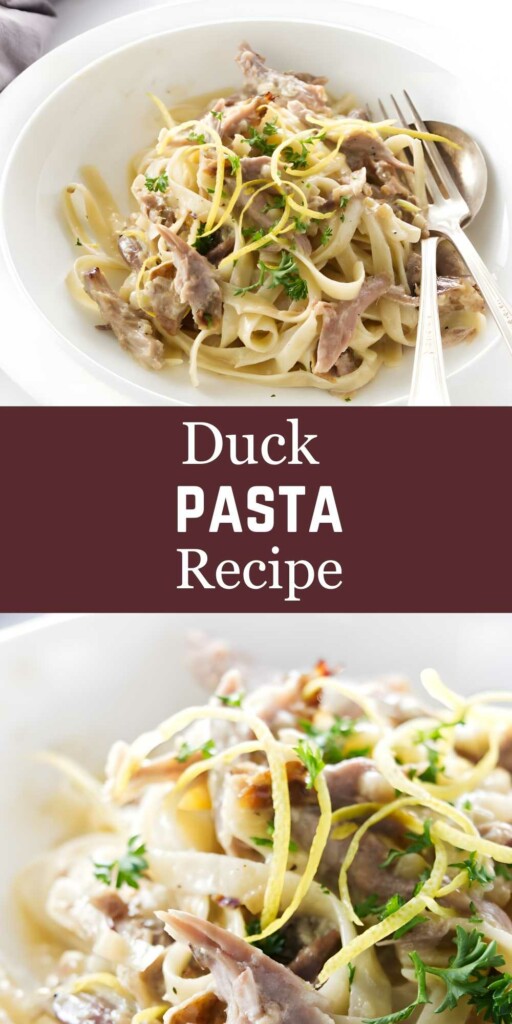
Duck pasta is a delicious way to use leftover roasted duck legs or duck confit. Tender pieces of duck and tagliatelle pasta are tossed in a creamy garlic sauce with white wine, duck fat, and a squeeze of lemon to balance the richness. Top it with crispy duck skin for a little crunch.
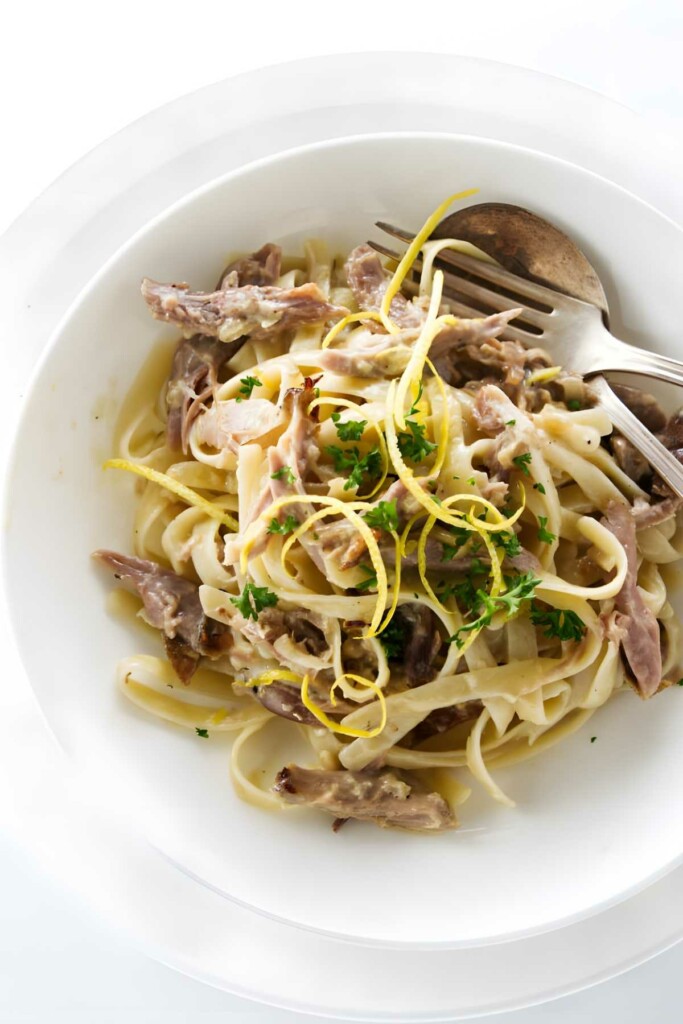
Like our Lobster Pasta, this dish feels special enough for a date-night dinner, but it’s surprisingly easy to make. Since the duck is already cooked, you can have dinner on the table in about 30 minutes.
It’s a great way to repurpose roasted duck legs. If you’ve got some on hand, you’re already halfway there.
Leftover Duck Makes This Pasta Easy
Use whatever cooked duck you have. Roasted duck legs, duck confit, or leftover duck breast all work, so there’s no need to prepare duck specifically for this recipe.
Duck fat adds extra flavor. A little rendered duck fat gives the garlic and shallots a richer flavor and makes the sauce especially good.
Rich but not too heavy. White wine and lemon balance the cream so the sauce doesn’t feel overly rich.
Don’t toss that crispy skin. It adds a savory crunch that contrasts nicely with the creamy pasta.
You can use leftovers from my duck with orange sauce or ginger roasted duck breast.

For another pasta night dinner, try our chorizo pasta with romesco.
Recipe Tips
Salt the pasta water. Season the boiling water generously with salt. This gives the pasta flavor as it cooks, rather than relying entirely on the sauce for seasoning.
Crisp the duck skin. Brown the skin before shredding the meat, then set it aside to sprinkle over the finished pasta. It adds a nice crunch.
Use duck fat and broth if you have them. They add extra flavor to the sauce, but chicken broth and olive oil work if you don’t have enough duck fat or broth.
Let the sauce reduce. Simmer until it’s slightly thickened and coats the pasta without pooling at the bottom of the bowl.
Finish with lemon. Add the lemon juice toward the end to balance the cream, then garnish with fresh lemon zest.
Storing Leftovers
- Fridge: Store leftover duck pasta in an airtight container in the refrigerator for up to 3 days.
- Freezer: Freezing isn’t ideal because the cream sauce may separate and the pasta can become soft. If needed, freeze in an airtight container for up to 2 months for best quality.
- Reheating: Warm gently in a skillet over low heat with a splash of broth, water, or cream to loosen the sauce. You can also microwave it in short intervals, stirring between each.
- Crispy duck skin: Store the skin separately from the pasta so it doesn’t get soggy. Re-crisp it in a dry skillet before serving.
If you’re into rich, silky pastas with a touch of decadence, don’t miss my Crab Pasta. It hits many of the same notes with a coastal twist.
Ingredient Notes
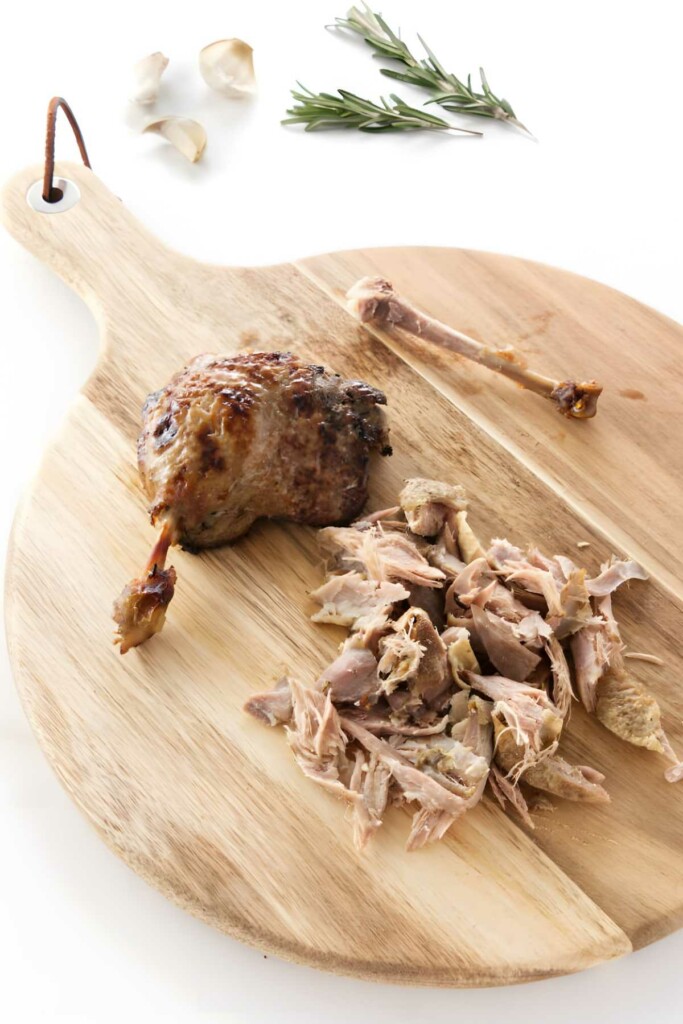
Cooked duck legs: Use sous vide, confit, roasted duck legs, or other leftover cooked duck.
Duck fat: If you don’t have enough rendered fat from the duck legs, a small store-bought jar works. It adds richness and extra duck flavor to the sauce.
Dry white wine: Pinot Grigio, Sauvignon Blanc, or any dry white you already cook with works. It reduces quickly and brightens the sauce.
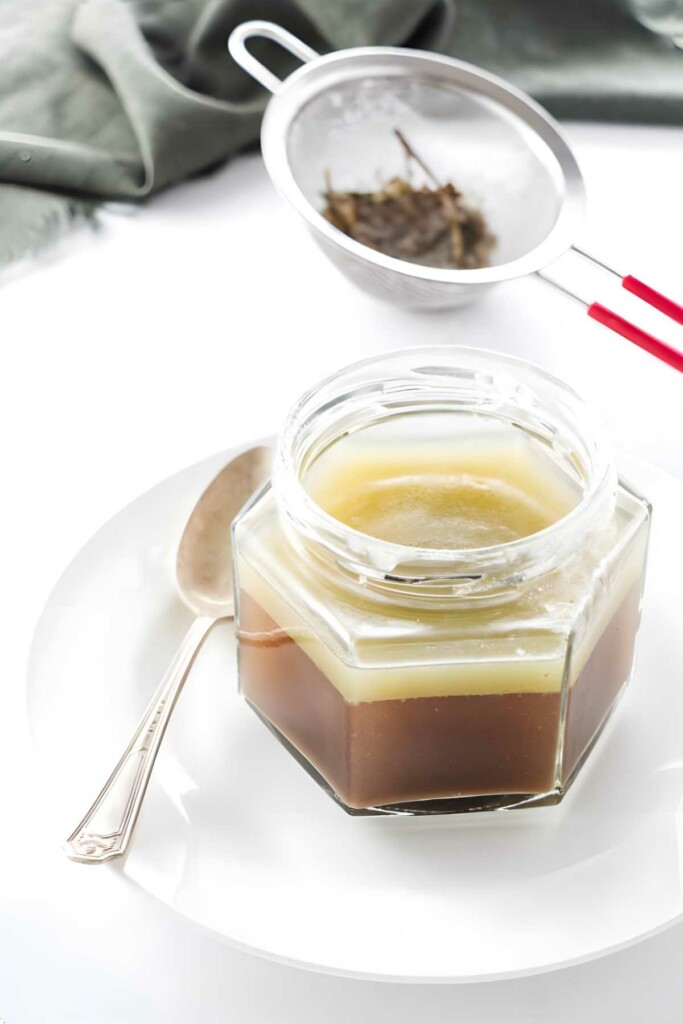
Chicken or duck broth: Strained sous vide duck broth is ideal, but store-bought chicken broth keeps everything simple and still tastes great.
Heavy cream: Helps the sauce thicken and cling to the pasta. Half-and-half won’t reduce the same way, so heavy cream is the better choice.
Tagliatelle (or similar pasta): Tagliatelle holds the sauce well, but fettuccine or linguine work too. Fresh pasta cooks faster, so check it early.

A Good Use for Leftover Duck
You don’t need much leftover duck to make a really good pasta dinner. A couple of cooked duck legs are enough for two generous servings, especially with the creamy sauce and pasta rounding out the meal. It’s a nice way to make the most of leftovers without feeling like you’re eating the same dinner twice.
Pin this now to find it later!
Pin It
Duck Pasta
If you make this recipe, please leave a star rating and comment.
Ingredients
For the Duck:
- 2 cooked duck legs , or any leftover duck meat
- 1 tablespoon olive oil
For the Pasta
- 6 ounces dry tagliatelle pasta, fettuccine or linguine
- Salt
For the Sauce:
- 2 tablespoons duck fat
- 2 medium shallots, chopped
- 3 garlic cloves, grated or minced
- ½ cup dry white wine
- 1 cup chicken broth, or duck broth
- ½ cup heavy cream
- 2 tablespoons butter
- Salt and pepper
- ½ lemon
- Lemon zest
- curly leaf parsley
Instructions
- If using sous vide duck, strain the broth through a fine-mesh sieve and reserve the broth. If you are starting with leftover duck meat and you don't have extra duck broth, you can use store-bought duck or chicken broth.
- Pat the moisture from the duck legs, brush lightly with oil.
- Heat a non-stick skillet over medium heat and place the duck legs skin side down and cook until the skin is crispy about 5 minutes. Flip over and brown lightly. Remove from the skillet, transfer to a cutting board and when cool enough to handle, remove the crispy skin, chop it and set aside. Strip the meat from the bones, and cut it and the meat into bite-size pieces. Reserve the meat and skin.
- Bring a large pot of salted water to a boil, add the pasta and cook until al dente.
- While the pasta is cooking, add the duck fat to the skillet set over medium heat. When the fat is melted, sauté the shallots until softened then add the garlic and cook until fragrant.
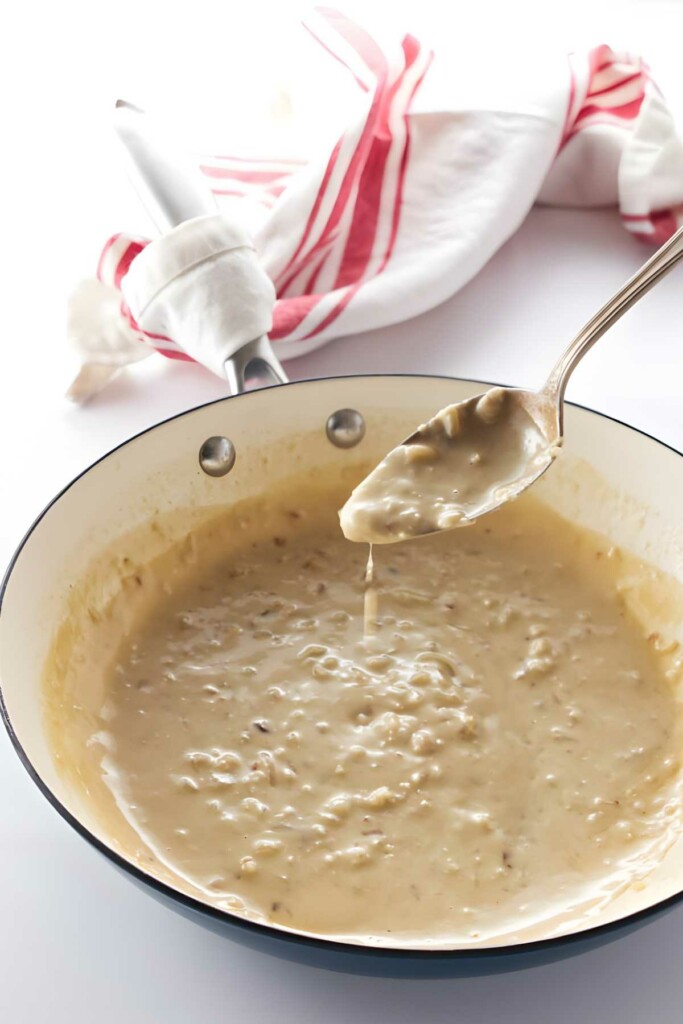
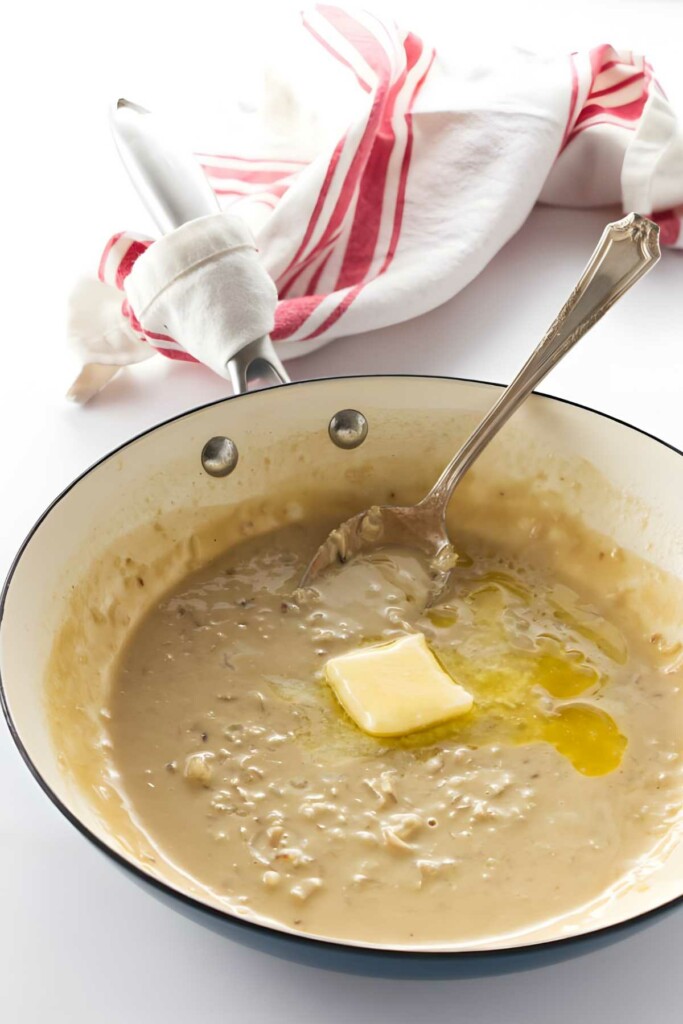
- Pour in the wine and cook for 1 minute to burn off the alcohol. Pour in the reserved duck broth (or chicken broth) and the cream. Bring to a boil then reduce the heat to low and simmer, stirring frequently, until the sauce is reduced and slightly thickened, about 8-10 minutes. Stir in the butter.
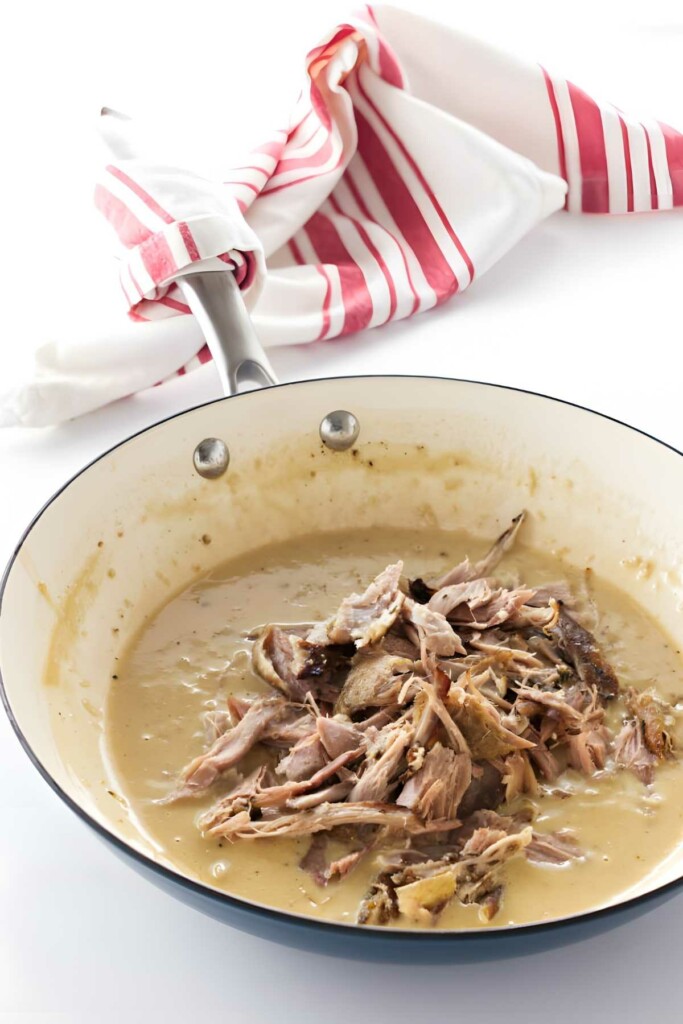
- Taste the sauce and season with salt and pepper accordingly. Stir in the reserved duck meat and squeeze the juice from the ½ lemon over the meat.
- Drain the pasta and add to the skillet tossing until coated with the sauce.
- Divide into pasta bowls and garnish with lemon zest, the crispy skin and chopped parsley.
Notes
Nutrition
Nutrition information is automatically calculated, so should only be used as an approximation.
 Like this recipe? Rate & comment below!










Delicious. I followed the recipe exactly except the lemon which I was out of. I used white wine vinegar instead and it was delicious. My family liked it with Parmesan as a garnish.
So glad you loved it! Thanks for taking the time to leave a note!
This is an excellent recipe to have on hand when you have leftover duck or even lamb. We love this recipe so much that we make sure we have leftovers. I think the lemon is a big part of it being so good plus it is very forgiving with substitutions. I rarely have shallots, so I finally dice some onion instead. I don’t usually have duck fat and oil has worked just fine and 2 ounces per person of fettuccine noodles is absolutely perfect for one meal without leftovers. We love this and encourage you to give it a try.
Thank you so much for the thoughtful comment! I’m glad to hear you’ve made this one a regular.
What an awesome recipe! I had a store-bought pre-braised duck sitting in my fridge for a week and thinking of what to do with it. Turned out a perfect 10, thank you very much. My only question was about the skin – wasn’t sure what to do with it.
Thank you so much for trying out the recipe and sharing your fantastic feedback! I’m thrilled to hear it turned out perfectly for you. The crispy duck skin can be chopped and added to eas serving as part of the garnnish. I have made this adjustment in the recipe card.
This recipe calls for 2 TBS of butter. Where is the butter used? Can’t seem to find it anywhere in the instructions. Made this last night and not sure if it was my technique or fact I’m using an electric stove (which I hate) but the sauce was very thin. This is despite the fact I did not just dump all of the cream into the pan after cooking the broth and wine for a bit. I whisked the cream in slowly and it cooked for perhaps 20 minutes on the stove and while the liquid did reduce, it still was not “slightly thickened,” so I had to mix a Tablespoon of cornstarch into some cold cream, then added it to the sauce. I also decided to put the 2 T of butter into it at this point as well. The sauce was a bit bland, despite the tasty shallots and wine, so I added in some sautéed garlic and a bit of Himalayan sea salt. I put the pasta right into the pan, hoping some of that starch would help thicken it a bit. I was hoping for “restaurant quality results,” and missed that mark, but my guests thought it was tasty (and they are not guests who lie).
Thank you so much for trying out the duck pasta recipe and for your detailed feedback. I’m glad to hear that your guests enjoyed the dish!
Regarding the butter, I apologize for the oversight in the instructions.
It’s great that you adjusted the recipe by whisking in cornstarch to achieve the desired thickness. As for the flavor, adding sautéed garlic and a touch of Himalayan sea salt sounds like a wonderful enhancement.
I appreciate your input and will update the recipe to clarify the use of butter and add a note about potentially needing a thickening agent like cornstarch.
Now I wish I had some leftover duck! The pasta looks so good with that rich creamy sauce.
Duck is SO good — love the stuff. Don’t cook it nearly often enough. And I’ve never used it in pasta. What a terrific idea! Gotta try this — thanks.
Oh, I know you will love this dish, John. Wish you could join us.