
This post may contain affiliate links. Please read our disclosure policy. As an Amazon Associate, I earn from qualifying purchases.

Steamed salmon is a simple way to cook salmon when you want it moist, tender, and ready without a lot of fuss. The fish cooks gently over simmering water, so it is less likely to dry out than it can in a hot skillet or oven.
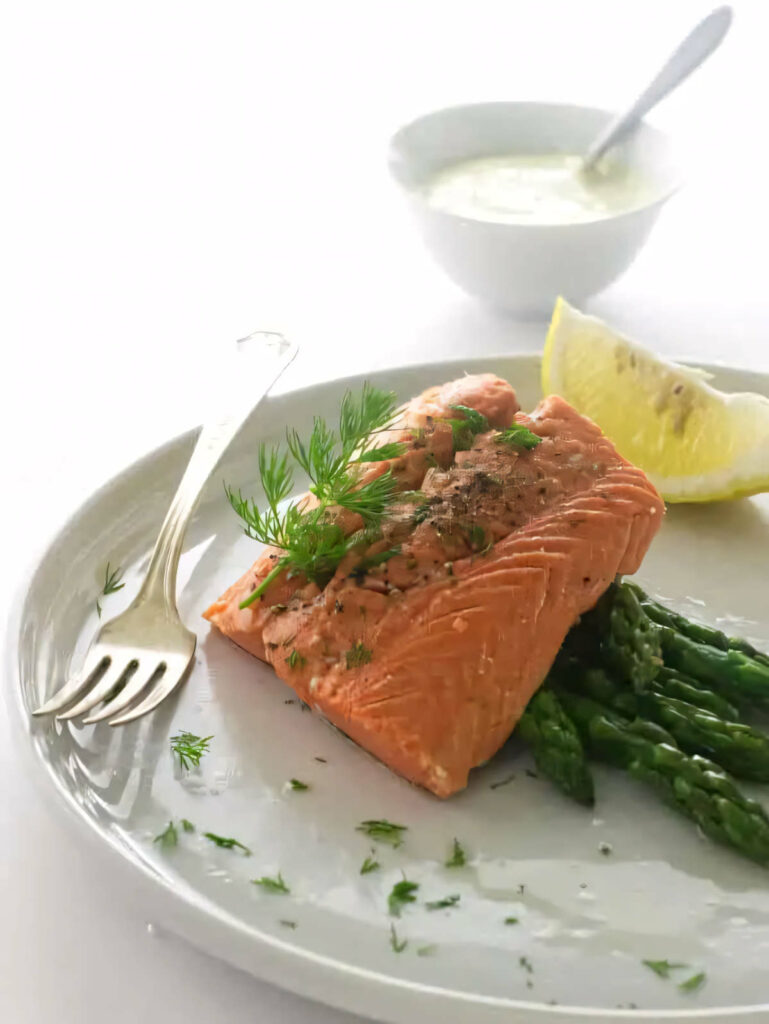
Garlic, lemon, and fresh dill go into the water, adding a light aroma while the salmon steams. It is an easy method to keep in your back pocket, especially when you want a quick salmon dinner that does not need much more than a sauce or a simple side.
Here’s Why This Steamed Salmon Recipe Works
Gentle heat keeps the salmon tender: Steaming surrounds the fish with moist heat, so it cooks evenly without the dry edges that can happen with higher-heat methods.
The aromatics keep things simple: Garlic, lemon, and dill in the water add a subtle aroma, so the salmon does not need a heavy marinade or much prep.
Even thickness helps the timing: If one end of the fillet is much thinner, tuck it under or trim it so the salmon cooks at the same rate.
You can check it early: Steamed salmon cooks quickly, so a 1-inch fillet is worth checking at about 5 minutes instead of waiting until it looks fully cooked.
Recipe Tips
Start with simmering water: Don’t add the fish until the water is steaming. This keeps the cooking time accurate and the texture on point.
Season well: A little salt and pepper go a long way when your ingredients are fresh and simple.
Create an even thickness: Tuck the thin end under or trim it to match the thickness so it cooks evenly.
Don’t over-steam: Check early. Salmon goes from perfect to dry faster than you’d think. Aim for that just-barely-translucent center.
Use a thermometer if unsure: 120°F to 125°F is that silky, medium-rare sweet spot. For medium-well, go up to 135°F but don’t let it creep higher or you’ll lose that tender texture.
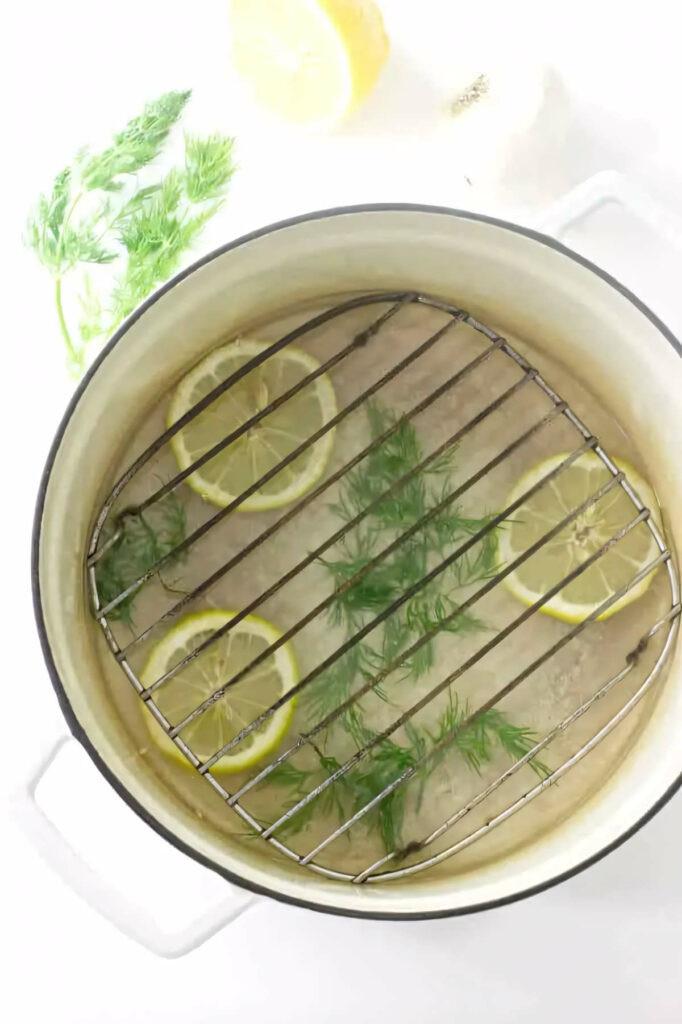
No steamer basket? Set a heatproof plate on a small rack inside a wide pot or skillet, keeping the plate above the water. Add the salmon to the plate, cover the pan tightly, and steam as directed.
Add a sauce if you’re feeling fancy: A spoonful of Lemon Dill Aioli Sauce takes this over the top.
Don’t toss leftovers: Flake any extra salmon into my salmon blue cheese salad, stir it into pasta, or use it as the base for something like my Salmon Stew.
Storage
- Refrigerate: Store any leftover salmon in an airtight container in the fridge for up to 2 days.
- Freeze: You can freeze steamed salmon, though the texture might get a little drier. Store in a freezer safe container. Use within 1 month for best quality.
- Reheat: Gently reheat in a covered skillet with a splash of water or broth over low heat.
How to Steam Salmon
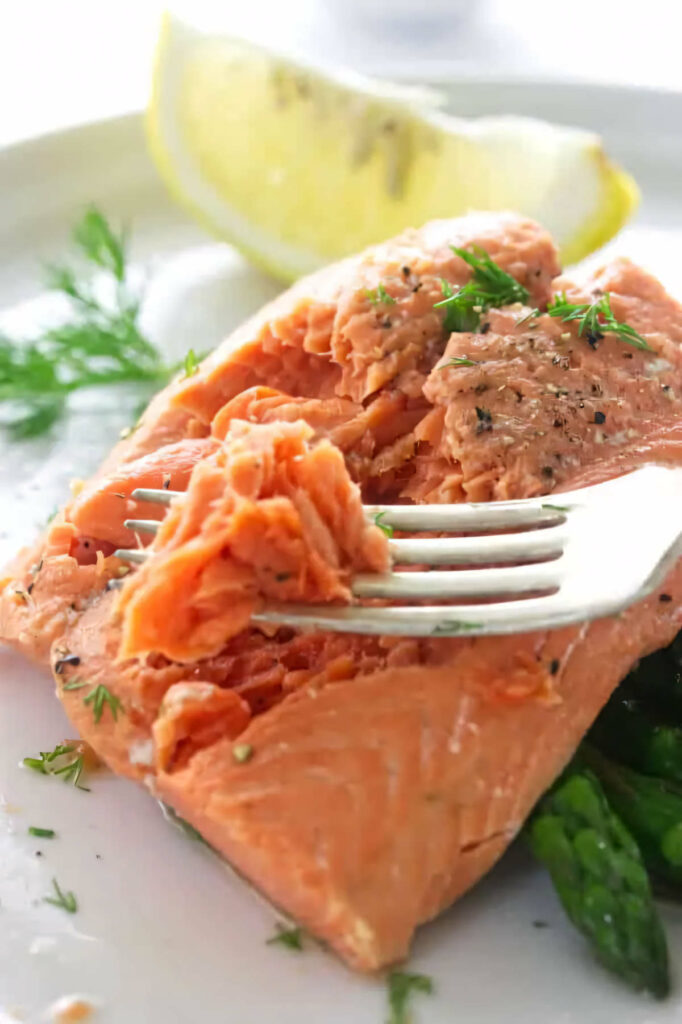
Bring the water and aromatics to a strong simmer before adding the fish, then keep the lid on so the steam stays steady. For 1-inch salmon fillets, start checking at 5 minutes. Thinner fillets may be ready sooner, while thicker pieces may need another minute or two. The thickest part should look opaque around the edges and give slightly when pressed.
For a different salmon dinner, my Hoisin Salmon has a bolder glaze, and this creamy tarragon salmon is a good one for a skillet sauce.
Pin this now to find it later!
Pin It
Steamed Salmon
If you make this recipe, please leave a star rating and comment.
Ingredients
- 2 salmon fillets, 6 ounces each, about 1-inch thick, skin removed
- ¼ teaspoon salt
- ¼ teaspoon ground black pepper
- 2 to 3 cups water, see notes
- 2 garlic cloves, grated or crushed
- ½ lemon, thinly sliced
- 4 to 5 sprigs Fresh dill
Instructions
- Place the steamer in the pan and add enough water to just reach the bottom of the steamer. Remove the steamer and set it aside.
- Add the grated garlic, lemon slices, and fresh dill sprigs to the water. Cover the pan and bring the water to a boil over high heat. Reduce the heat to low and let it simmer while you prepare the salmon.
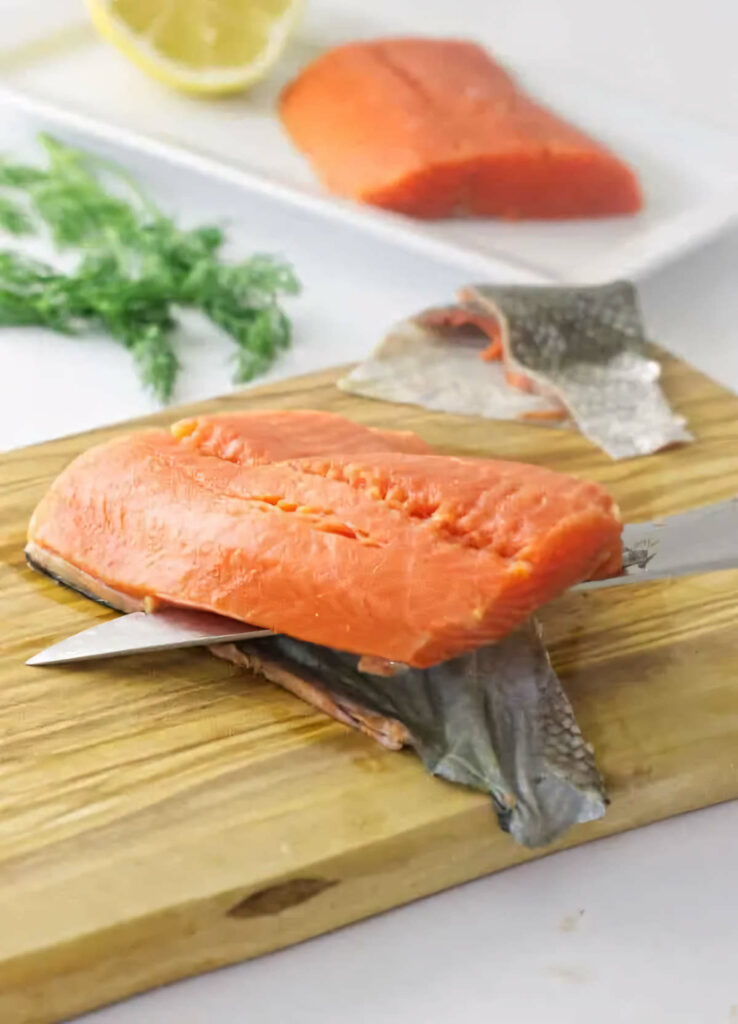
- If the salmon fillets have a thin end, either trim it off and save it for another use, or fold the thin end underneath so the fillets are an even thickness. Season with salt and freshly ground black pepper.
- Spray the steamer with nonstick cooking spray and place it in the pan. Check the water level to make sure it does not touch the bottom of the steamer. Add the salmon fillets, cover with a tight-fitting lid, and maintain a strong simmer.
- Steam the salmon for 5 minutes, then remove the lid. Use the tip of a sharp knife to check the thickest part for doneness. For medium-rare, the salmon should be opaque around the edges, slightly translucent in the center, and give slightly when pressed.
Notes
Flavor Variations
- Add a splash of white wine to the steaming water.
- Swap the dill for fresh basil, or add sliced jalapeño or red chile.
- Add orange slices in place of the lemon.
- Top the salmon with herb butter after steaming.
Nutrition
Nutrition information is automatically calculated, so should only be used as an approximation.
 Like this recipe? Rate & comment below!