

This post may contain affiliate links. Please read our disclosure policy. As an Amazon Associate, I earn from qualifying purchases.
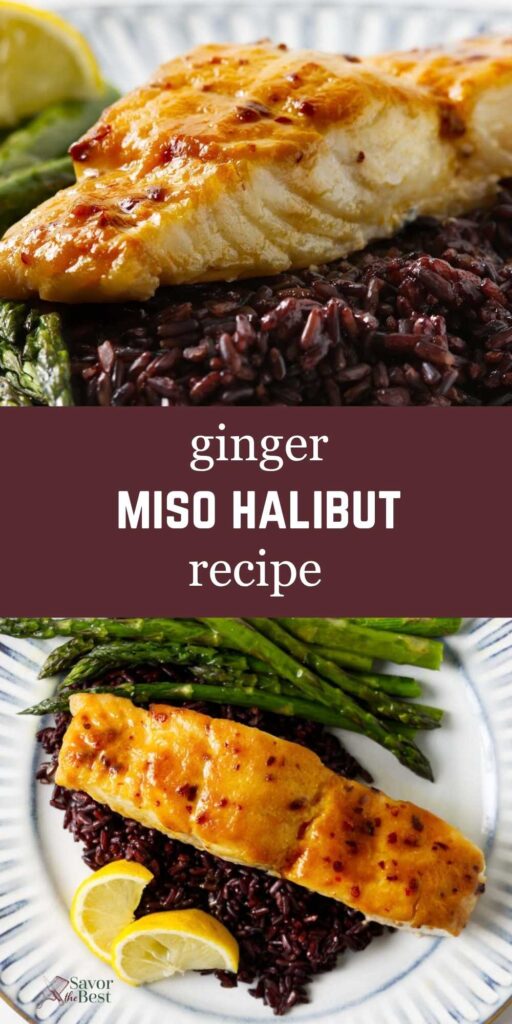
Miso halibut is one of those dinners that looks a little fancy but does not require much from you. The glaze does most of the heavy lifting with white miso, honey, soy sauce, fresh ginger, and a splash of lime juice or rice vinegar.
The result is tender baked halibut coated in a glossy, salty-sweet glaze with just enough chili oil to keep things interesting. No broiler babysitting to worry about.
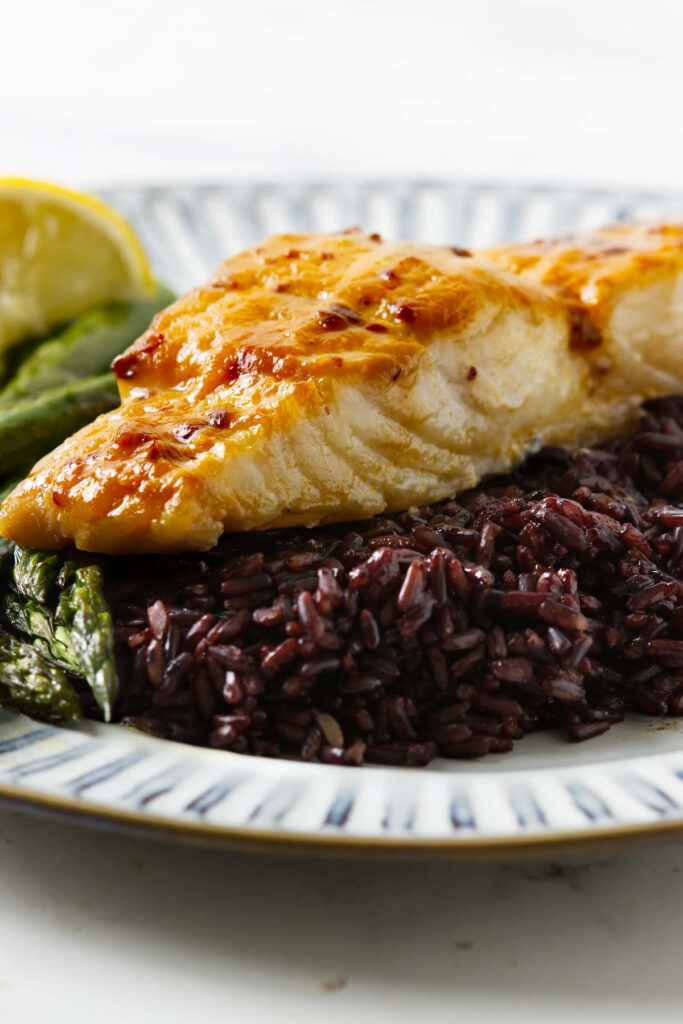
This is a fast and easy recipe. All it takes is a quick marinade and a short bake to get a fish that tastes like you put in more effort than you did.
Why This Recipe Works
The miso glaze does the heavy lifting: White miso, honey, soy sauce, ginger, and lime juice create a balanced glaze that adds plenty of flavor without masking the fish. If you’d like to keep a batch on hand, my Miso Glaze recipe works on everything from salmon to roasted vegetables.
Honey balances the salty ingredients: Between the miso and soy sauce, the glaze can lean pretty salty. A little honey rounds everything out and helps the fish develop a nice glossy finish in the oven.
Baking gives a gentler finish: I use the broiler for my miso glazed salmon when I want faster caramelization, but halibut is leaner and easier to overcook. For this recipe, baking gives the glaze time to set while keeping the fish tender.
A short marinade: During testing, I found 30 minutes was enough time for the fish to pick up flavor without affecting its texture. Halibut doesn’t need an overnight soak.
Ingredient Notes
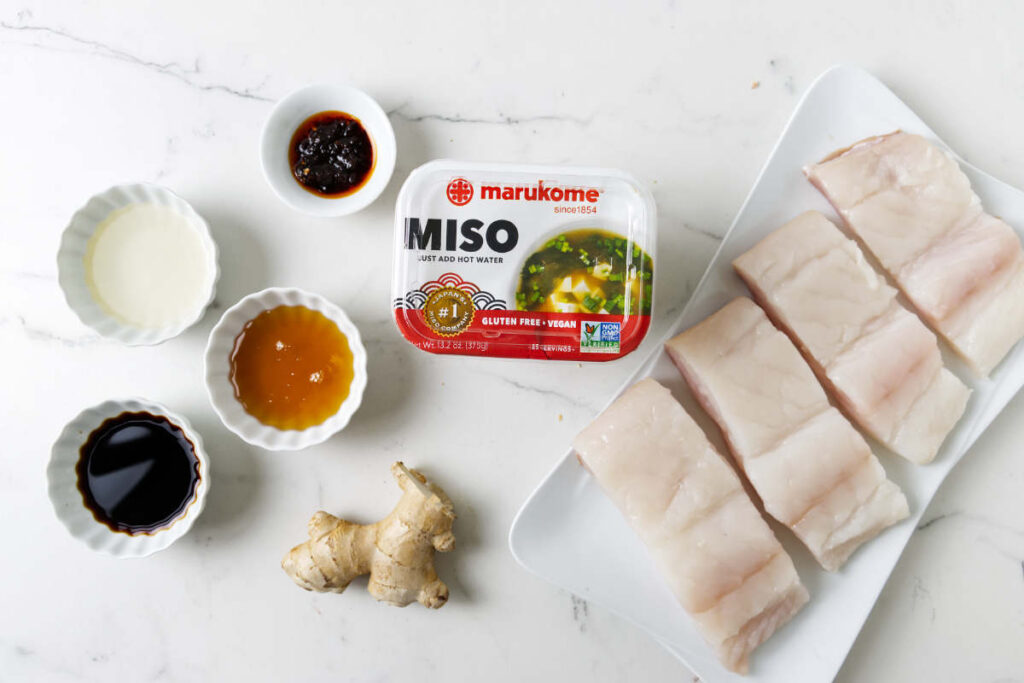
White miso: White miso has a milder, slightly sweeter flavor than red or dark miso. It adds savory depth without overpowering the delicate flavor of halibut.
Honey: Honey balances the salty flavors in the miso and soy sauce while helping the glaze caramelize slightly as the fish bakes. Maple syrup can work in a pinch, but it will change the flavor.
Soy sauce: Regular soy sauce adds plenty of flavor and saltiness. If using low-sodium soy sauce, the glaze may taste slightly less bold.
Fresh lime juice or rice vinegar: Either option adds acidity that balances the richness of the glaze. Lime juice contributes a brighter citrus flavor, while rice vinegar keeps the flavor more traditional and subtle.
Fresh ginger: Freshly grated ginger adds a clean, bright flavor that works well with the miso and honey. Ground ginger won’t provide the same flavor or aroma.
Chili oil: Chili oil adds gentle heat and a little extra complexity. Use less for a mild glaze or add an extra teaspoon if you prefer more heat.
Halibut: Look for fillets that are similar in thickness so they cook evenly. If using frozen halibut, thaw it completely and pat it dry before marinating.
Recipe Tips
Use thick fillets when possible: Center-cut pieces bake more evenly than thin tail pieces.
Don’t over-marinate: Thirty minutes is plenty for miso-marinated halibut. Longer is not always better here.
Line the pan with parchment: The honey miso glaze can stick as it bakes, and nobody needs that kind of cleanup.
Check the thickest part: The fish should flake easily with a fork and look opaque throughout.
Pull it before it dries out: We like halibut cooked to 135°F. The USDA recommends 145°F, and carryover heat will continue cooking the fish after it comes out of the oven.
Use a microplane for the ginger: It blends into the glaze better than chopped ginger and distributes the flavor more evenly.
Watch the glaze near the end of baking: The honey helps the glaze caramelize, but it can darken quickly if the fish is close to the heating element.
If you enjoy mild white fish with miso glaze, be sure to try our Miso Glazed Sea Bass. It has a softer, more buttery texture than halibut but pairs just as well with the savory-sweet glaze.
Miso Glazed Halibut
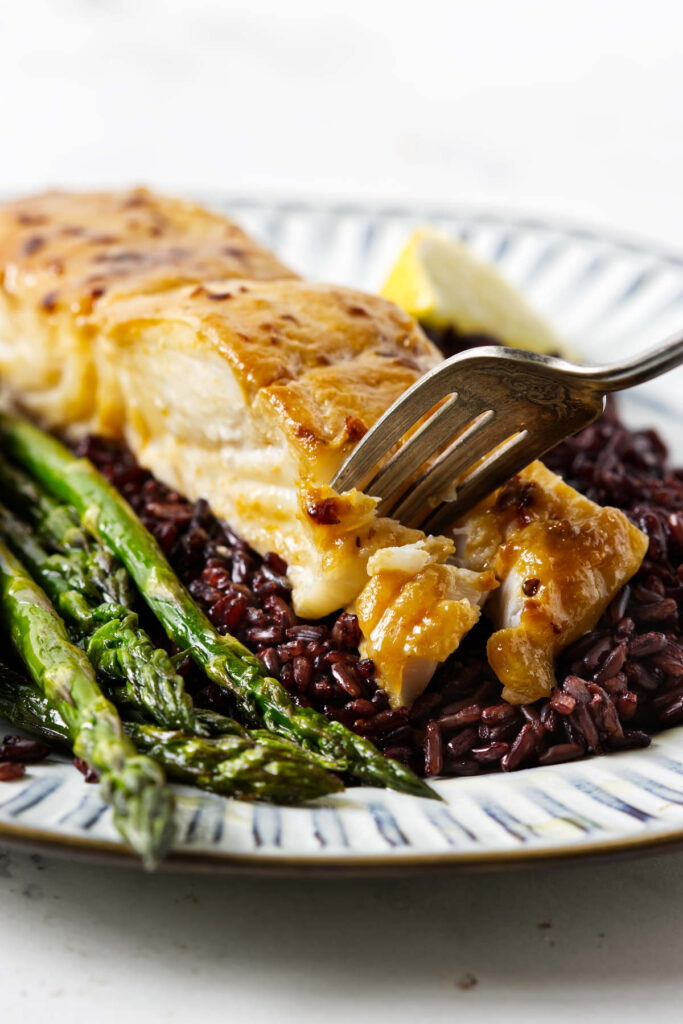
This miso halibut is the kind of recipe I like for weeknights: simple, but not dull. The glaze does the work, coating the fish with savory miso, honey, ginger, and just enough chili oil to give it depth.
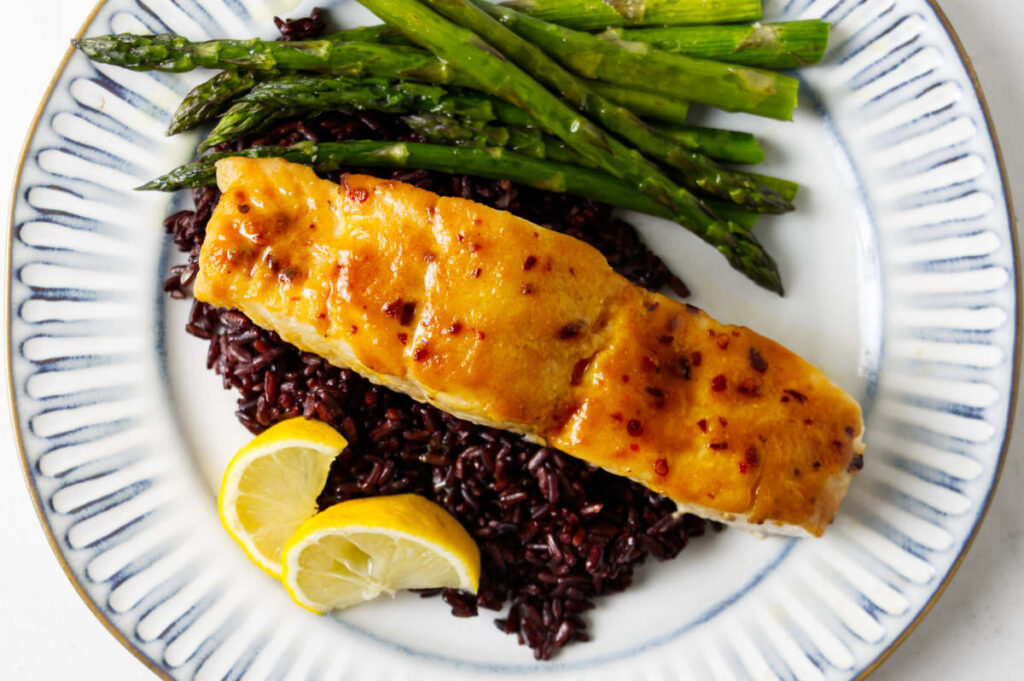
Add my instant pot black rice and something green, and dinner is done without making the evening difficult.
Pin this now to find it later!
Pin It
Ginger Miso Halibut
If you make this recipe, please leave a star rating and comment.
Ingredients
- 2 tablespoons white miso paste
- 2 tablespoons honey
- 2 tablespoons soy sauce
- 2 tablespoons fresh lime juice, or rice wine vinegar
- 1 teaspoon grated fresh ginger
- 1 to 2 teaspoons chili garlic sauce, or sriracha
- 2 Halibut fillets, 8 ounces each
Instructions
For the Ginger Miso Glaze:
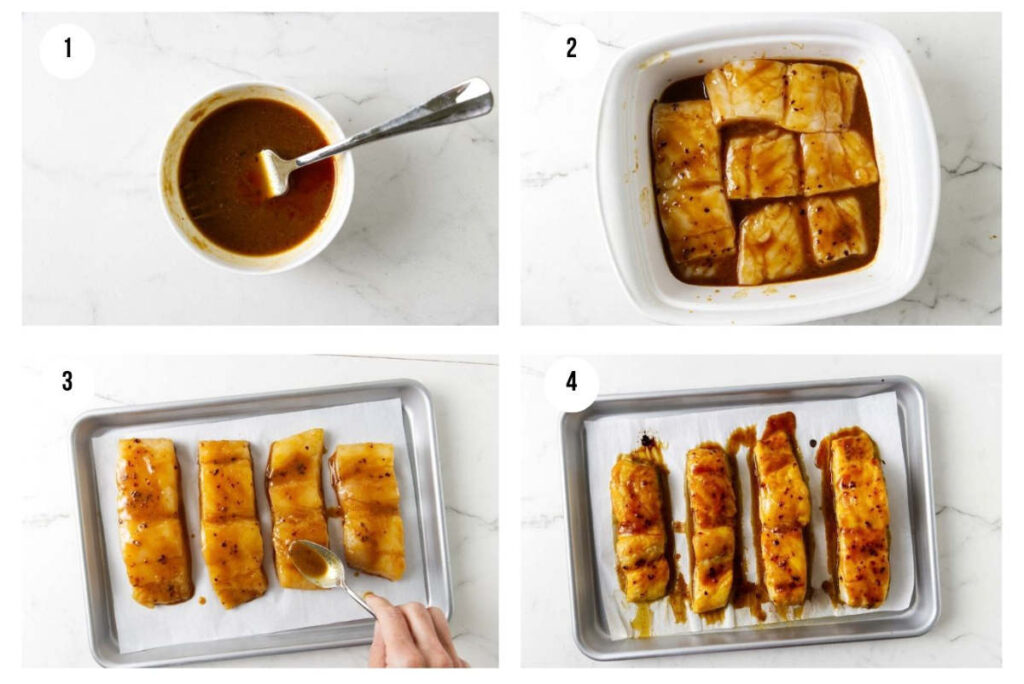
- In a small bowl, whisk together the miso, honey, soy sauce, lime juice (or rice vinegar), grated ginger, and chili garlic sauce until smooth.
- Place the halibut fillets in a shallow dish or a sealable bag and marinate in the refrigerator for 30 minutes.
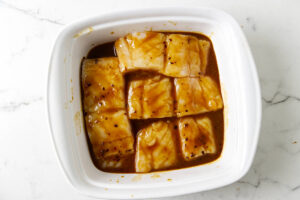
To Bake the Halibut:
- Heat the oven to 400°F.
- Remove the halibut from the marinade and place it on a parchment-lined rimmed baking sheet. Spoon any remaining glaze over the fillets.
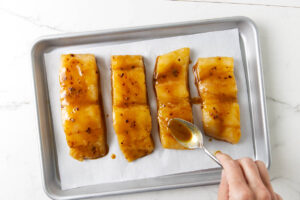
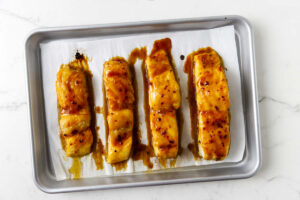
- Bake for 14 to 18 minutes, depending on the thickness of the fillets, until the fish flakes easily with a fork and is opaque throughout.
Notes
Nutrition
Nutrition information is automatically calculated, so should only be used as an approximation.
 Like this recipe? Rate & comment below!
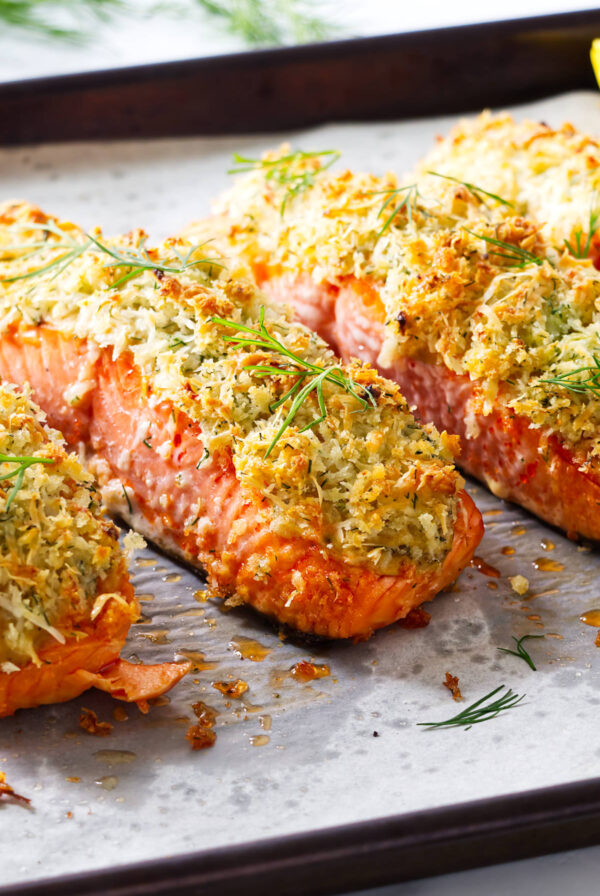












My daughter used this recipe on halibut I gave her from my Alaskan fishing trip. OMG, it was fantastic! Highly recommend this one!
That sounds amazing! Fresh Alaskan halibut is such a treat, and I’m so happy this recipe was a hit. Thank you for taking the time to comment.