
This post may contain affiliate links. Please read our disclosure policy. As an Amazon Associate, I earn from qualifying purchases.
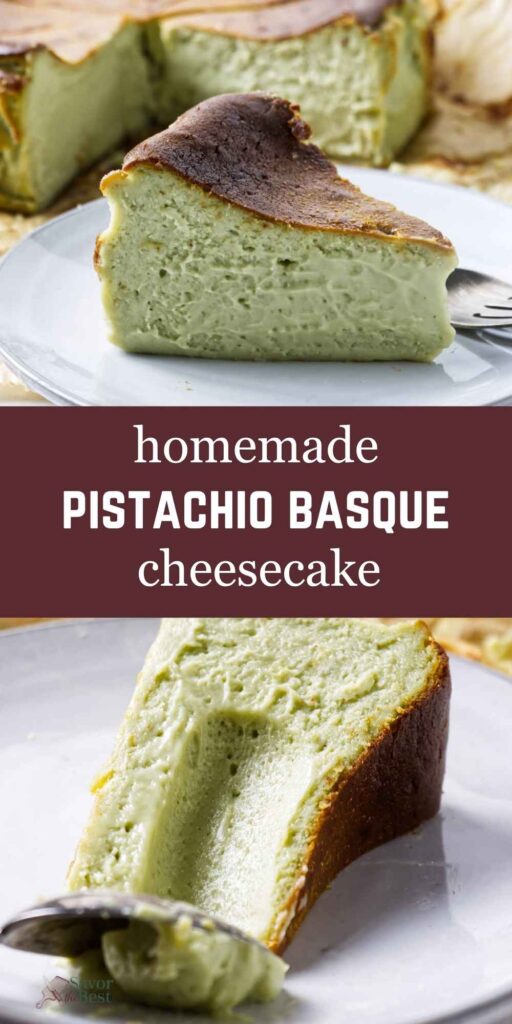
Pistachio Basque cheesecake takes that creamy, custardy center and deeply browned top of a classic Basque cheesecake and adds plenty of rich pistachio flavor. Pistachio paste goes right into the batter, so the flavor runs all the way through.
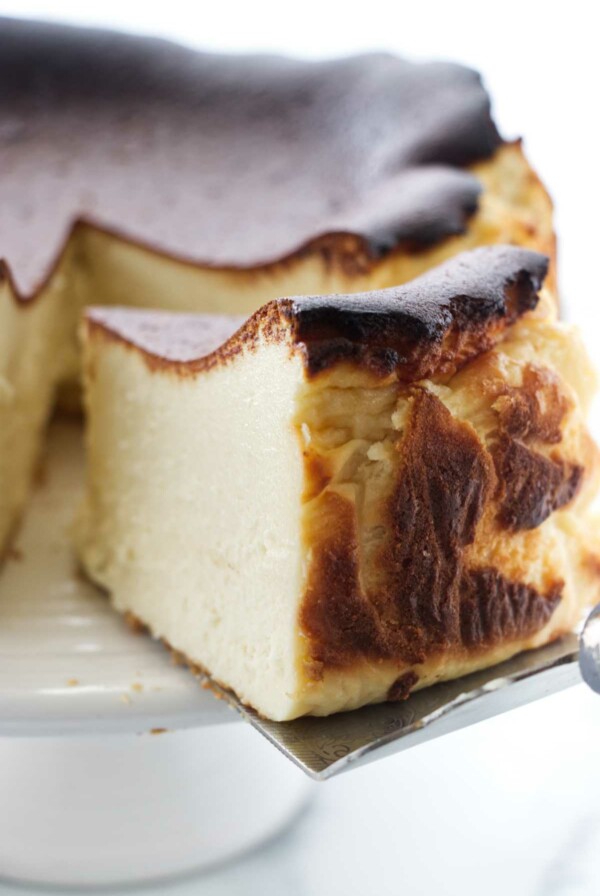
It is also a surprisingly easy cheesecake to make. There is no water bath, no crust to prepare, and no need to worry about cracks. The dark, rustic top and sunken center are exactly what you want.
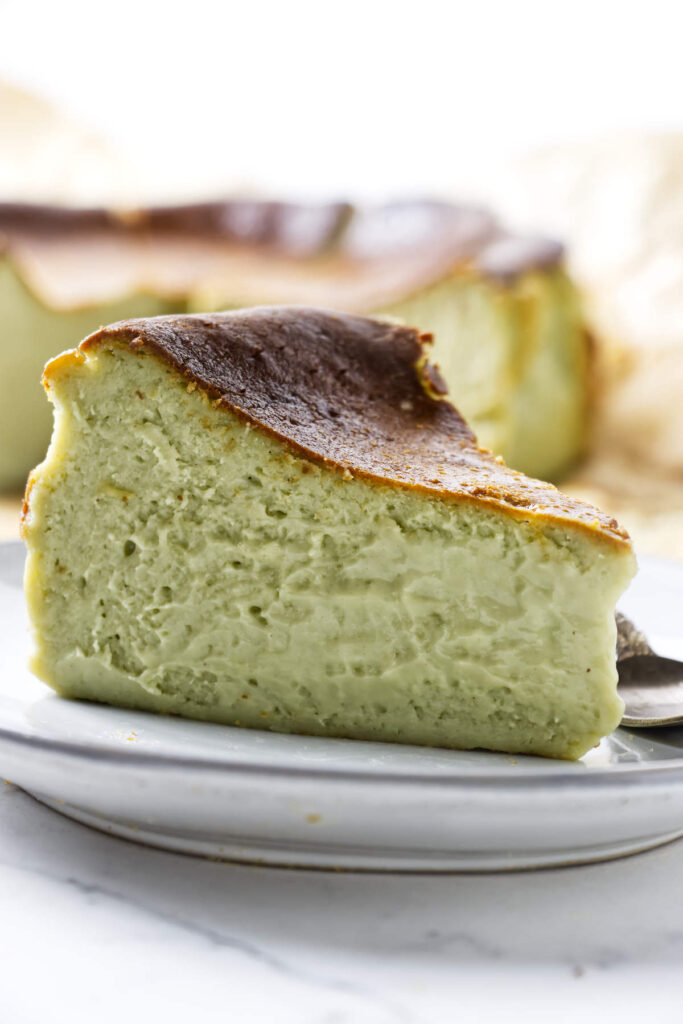
A Basque Cheesecake for Pistachio Lovers
Pistachio paste flavors the whole cheesecake: It blends right into the batter, so you get pistachio in every bite without changing the creamy texture. I tested the recipe with homemade pistachio paste, store-bought pistachio butter, and store-bought pistachio paste, and all three work.
The sugar adjusts to the pistachio paste: Some store-bought pistachio pastes and butters contain added sugar, while others are unsweetened. The recipe includes a lower sugar amount for sweetened versions so you can use either one.
High heat gives you that signature Basque top: Just like my San Sebastian Cheesecake, this version bakes at 400°F to develop a deeply browned top while the center stays soft and creamy. No water bath needed.
A little extra pistachio flavor goes a long way: Pistachio emulsion can give a mild pistachio paste a boost without adding more paste to the batter. Almond extract is another option if you want to bring out the nutty flavor.
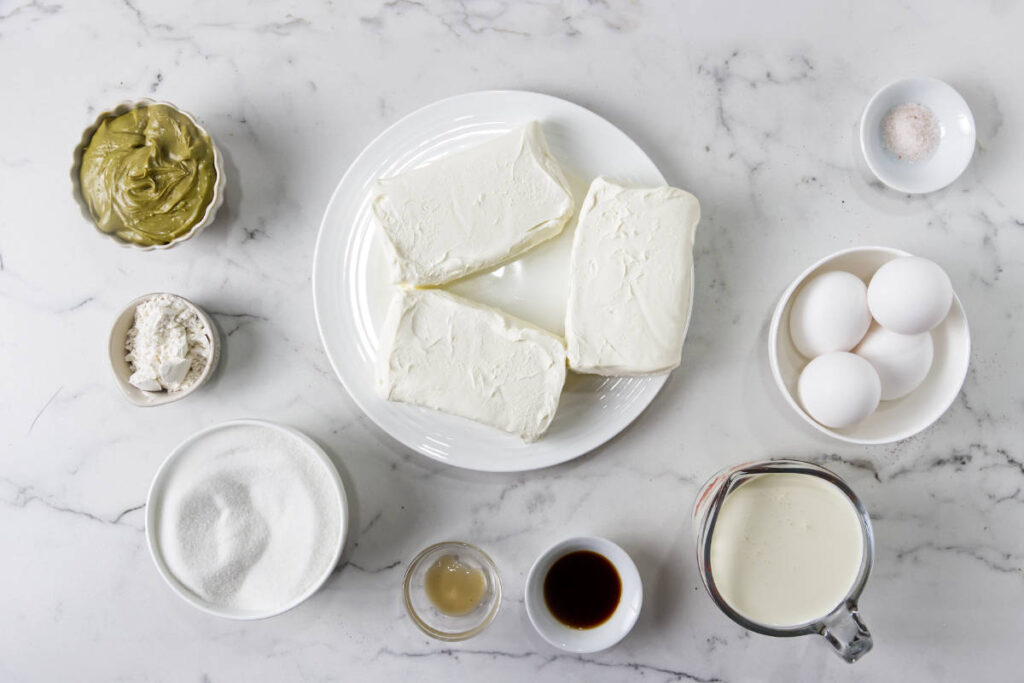
Ingredient Notes
Pistachio paste: Different brands vary in sweetness, and the color can range from a muddy green to a brighter green, so the finished cheesecake may look a little different depending on the brand you use.
Granulated sugar: Check whether your pistachio paste is sweetened, since you’ll need less sugar when using a product with added sugar.
Almond extract or pistachio emulsion: A little almond extract complements the pistachios and brings out their nutty flavor. For a more pronounced pistachio flavor, use pistachio emulsion instead.
Cream cheese and eggs: Bring both to room temperature so the batter blends smoothly without needing to overmix.
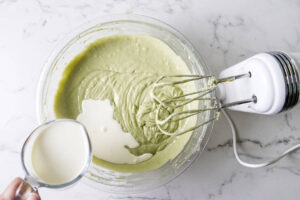
Heavy cream: Heavy cream keeps the center soft and creamy. Pour it in slowly at the end and mix only until the batter is smooth.
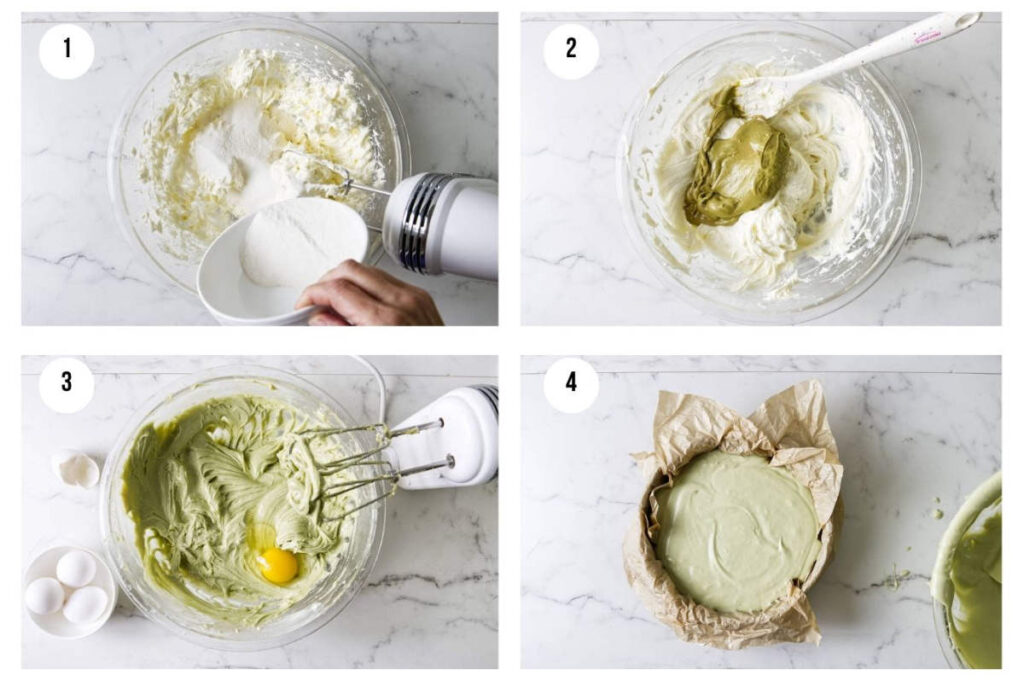
Recipe Tips
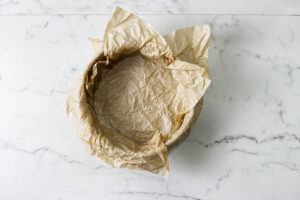
Crumple the parchment: Crumpling and lightly dampening the parchment makes it much easier to fit into the springform pan.
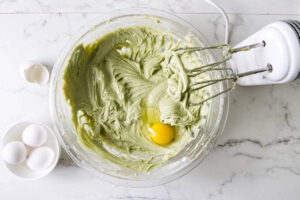
Keep the mixer speed low: Once you start adding the eggs, mix on low and only until each one is incorporated. Too much air in the batter can make the cheesecake puff too much.
Scrape the bowl as you go: Scrape a few times during mixing so everything gets evenly incorporated without having to overmix the batter.
Expect some variation in color: The shade of green will depend on the pistachio paste or butter you use.
Don’t overbake it: The center should still jiggle when the cheesecake comes out of the oven. It will continue to set as it cools and then firms further in the refrigerator.
Let it sit before serving: Basque cheesecake is much creamier after it loses some of its refrigerator chill. Let it sit at room temperature for about an hour before slicing.
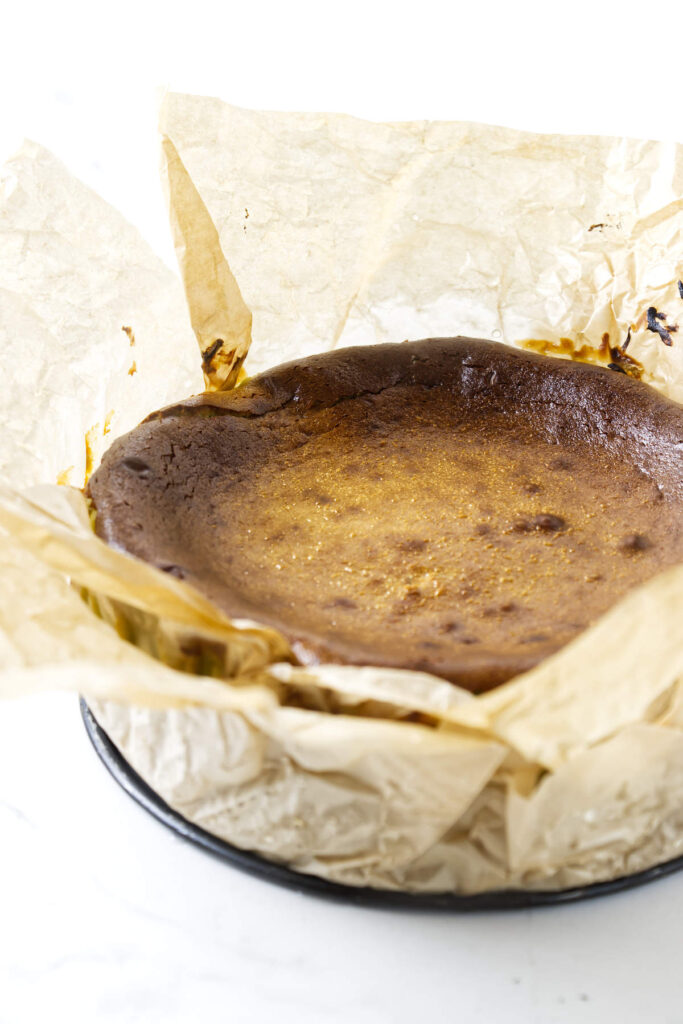
A Deeply Browned Top and a Jiggly Center
The trickiest part of a Basque cheesecake is knowing when to pull it from the oven. The top should be deeply browned and the edges puffed, but the center should still have a noticeable jiggle when you gently move the pan.
Don’t wait for the middle to look completely set. It will continue to firm up as the cheesecake cools. It will also sink as it cools, which is exactly what you want. That rustic, sunken center is part of what makes Basque cheesecake different from my more traditional cheesecake without a water bath.
Frequently Asked Questions
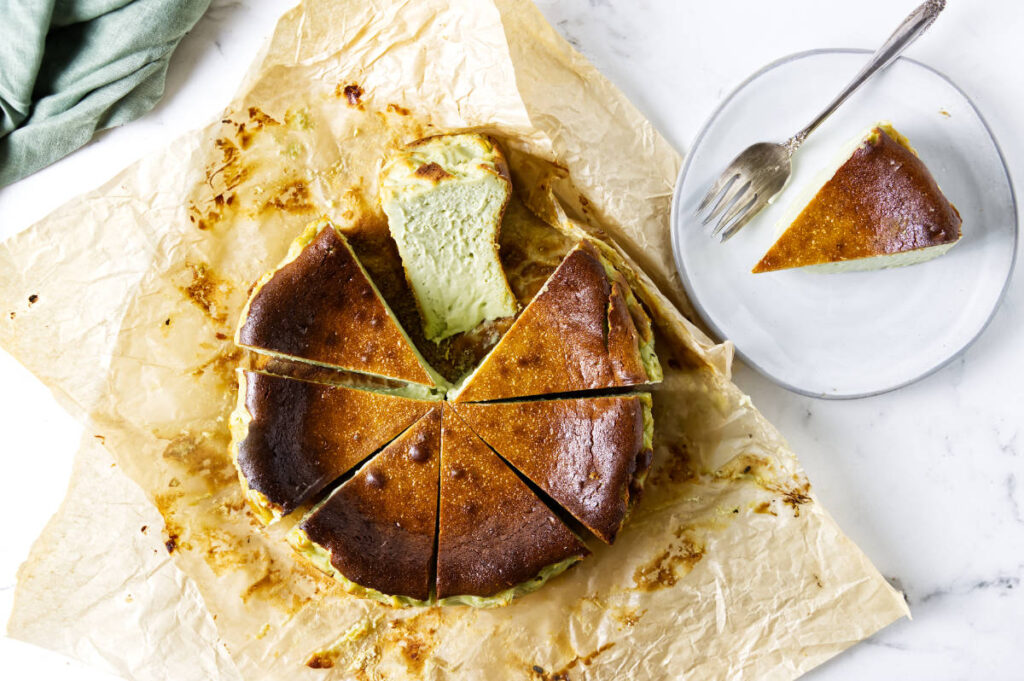
Despite its deeply browned top, Basque cheesecake shouldn’t taste unpleasantly burnt. The dark surface develops a caramelized flavor that balance the rich, sweet filling.
No. Basque cheesecake is baked at high heat without a water bath. Cracks, puffing, and a sunken center are all part of its rustic appearance, so there is no need for the gentle, even baking that a water bath provides.
Yes. Let the cheesecake chill completely, then wrap it well and freeze it whole or in individual slices. Thaw it overnight in the refrigerator, then let it sit at room temperature before serving if you prefer a softer, creamier texture.
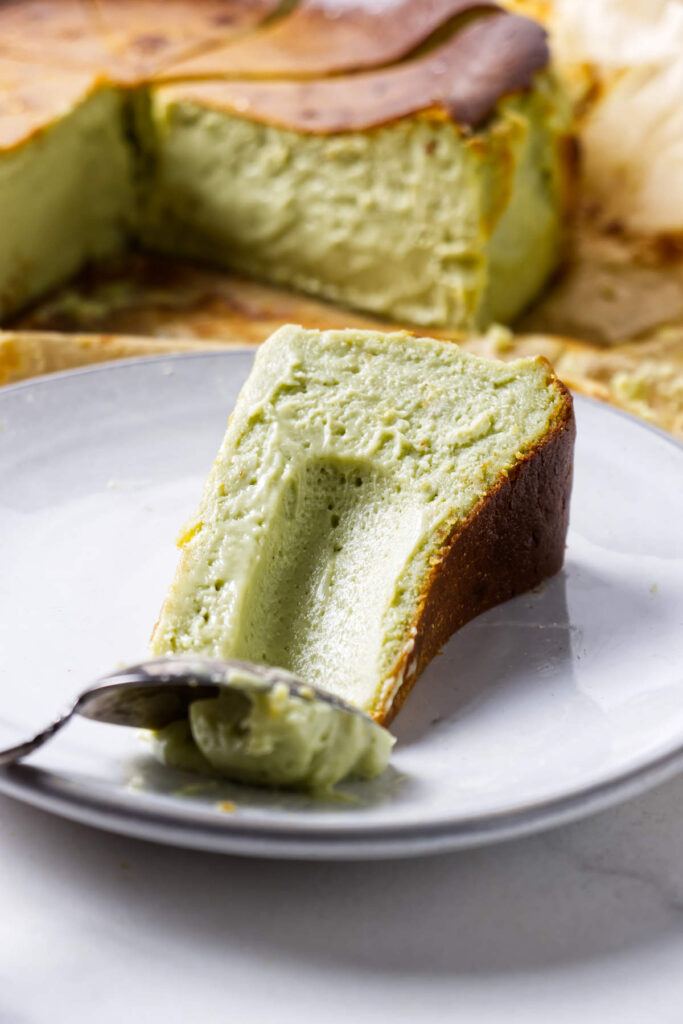
A Pistachio Twist on Basque Cheesecake
If pistachio is your thing, this cheesecake gives you plenty of it without losing what makes a Basque cheesecake so good. You still get that dark, caramelized top and soft, creamy center, with pistachio running all the way through.
Pin this now to find it later!
Pin It
Pistachio Basque Cheesecake
If you make this recipe, please leave a star rating and comment.
Ingredients
- 24 ounces cream cheese, room temperature, 680 grams
- 1¼ cups granulated sugar, 250 grams (see notes if using sweetened pistachio paste)
- 3 tablespoons all-purpose flour, 23 grams
- ¾ cup pistachio paste, 200 grams
- 2¼ teaspoons vanilla extract
- ¼ teaspoon almond extract, or ½ teaspoon pistachio emulsion
- ⅜ teaspoon salt
- 4 large large eggs, room temperature
- 1¼ cups heavy cream, 284 grams
Instructions
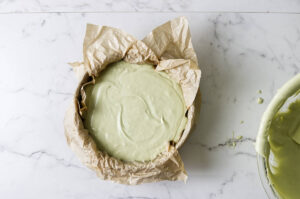
- Preheat the oven to 400°F. Line an 8-inch springform pan with two overlapping sheets of damp, crumpled parchment paper, arranging them in opposite directions so the bottom and sides are completely covered.
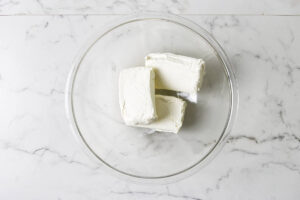
- In the bowl of a stand mixer fitted with the paddle attachment, or in a large mixing bowl with a handheld mixer, beat the cream cheese on medium speed until smooth and creamy.
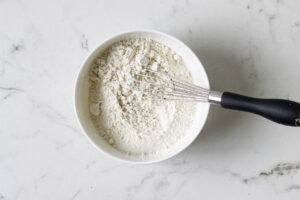
- In a separate bowl, whisk the sugar and flour together until the flour is evenly distributed throughout the sugar.
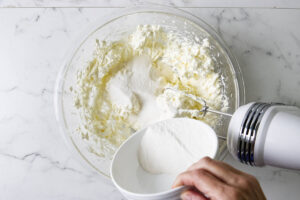
- With the mixer on medium-low speed, gradually add the sugar and flour mixture to the cream cheese. Mix until smooth and well combined, stopping to scrape the bottom and sides of the bowl as needed.
- Add the pistachio paste and mix on low speed until smooth and evenly incorporated.
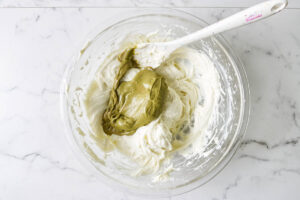
- Add the vanilla extract, almond extract or pistachio emulsion, and salt. Mix on low speed until combined. With the mixer on low speed, add the eggs one at a time, mixing just until each addition is incorporated. Stop occasionally to scrape the bottom and sides of the bowl.
- With the mixer on low speed, slowly pour in the heavy cream and mix just until smooth and fully incorporated. Scrape the bottom and sides of the bowl as needed.
- Pour the batter into the prepared pan and tap the pan firmly on the countertop a few times to bring any air bubbles to the surface.
- Bake for 33 to 38 minutes, or until the top is deeply browned and the cheesecake is puffed, especially around the edges. The center should still jiggle when you gently move the pan. If using an instant-read thermometer, the center should register 155°F to 158°F.
- Transfer the cheesecake to a wire rack and let it cool in the pan for 1 to 2 hours. Refrigerate, still in the pan, for at least 6 hours or overnight before serving.
Notes
Nutrition
Nutrition information is automatically calculated, so should only be used as an approximation.
 Like this recipe? Rate & comment below!