
This post may contain affiliate links. Please read our disclosure policy. As an Amazon Associate, I earn from qualifying purchases.
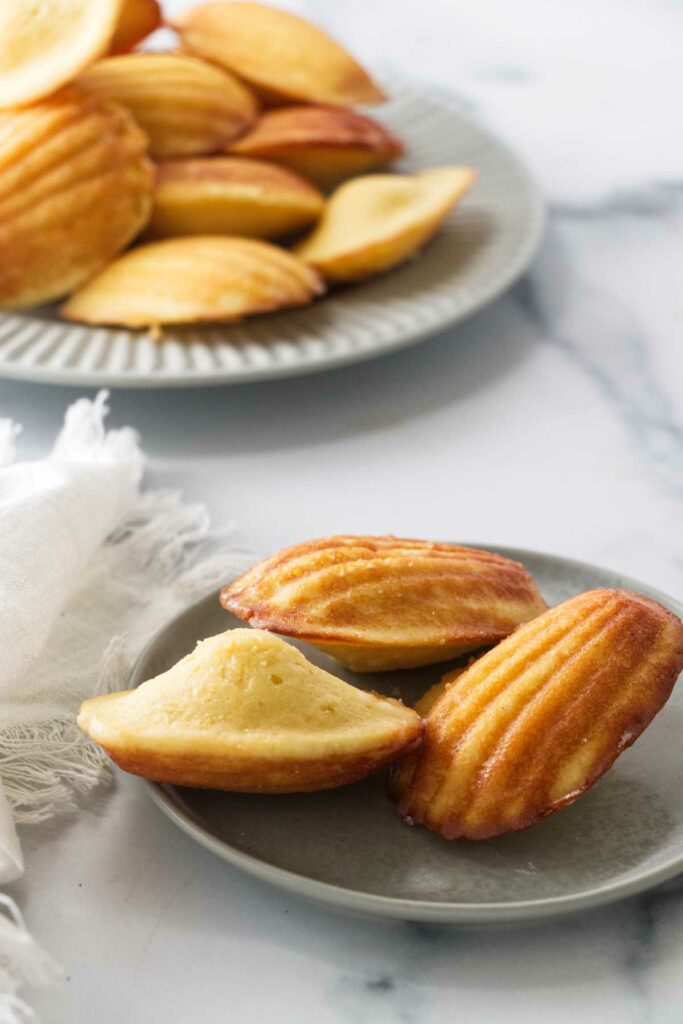
Lemon madeleines are soft little French butter cakes with bright lemon flavor and a sweet lemon glaze settled into all those shell-shaped ridges. The glaze adds another layer of lemon without turning them into puckery little sour bombs.
I like making these for brunches, tea parties, and spring dessert trays because they look polished without requiring much effort. The batter comes together quickly, chills well overnight, and the madeleines bake in just a few minutes.
If you enjoy classic madeleines, my classic madeleine cookies are another favorite for tea trays and cookie platters.
Why I Keep Making These Lemon Madeleines
The batter chills beautifully overnight, which makes these easy to prep ahead for brunches, showers, or tea parties.
They bake fast. Once the batter is chilled, the madeleines only need a few minutes in the oven.
I use both lemon zest and lemon juice so the lemon flavor actually comes through instead of disappearing into the butter.
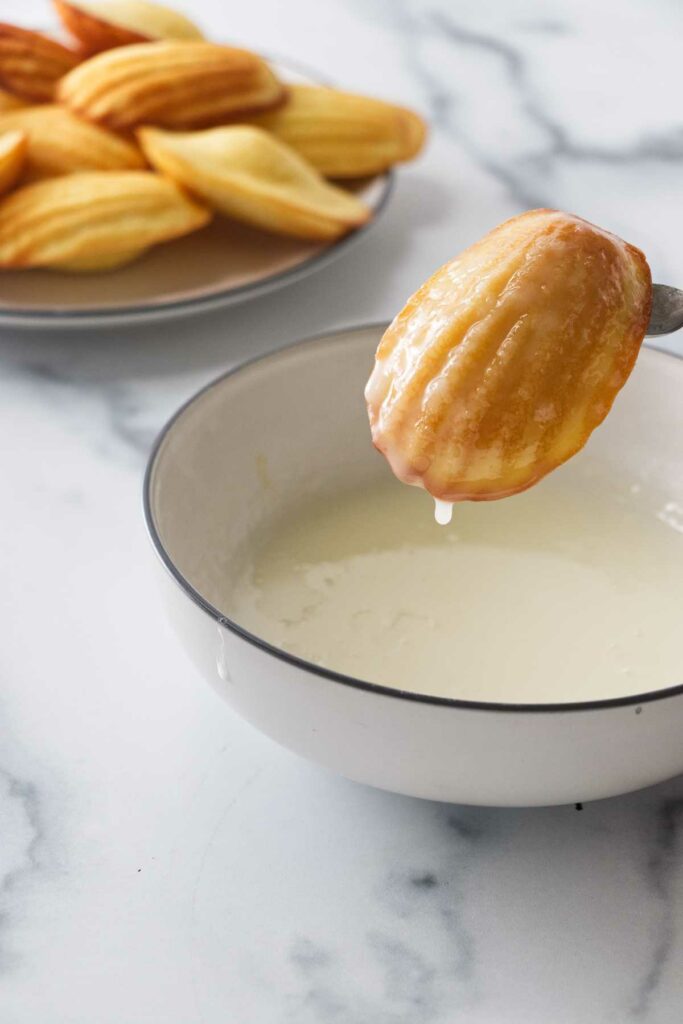
The glaze is worth the extra step. It settles into the shell pattern and adds another layer of lemon flavor without making the madeleines heavy.
That little hump is not an accident. Chilled batter and a cold pan help create the classic madeleine shape without much fuss.
Key Ingredients
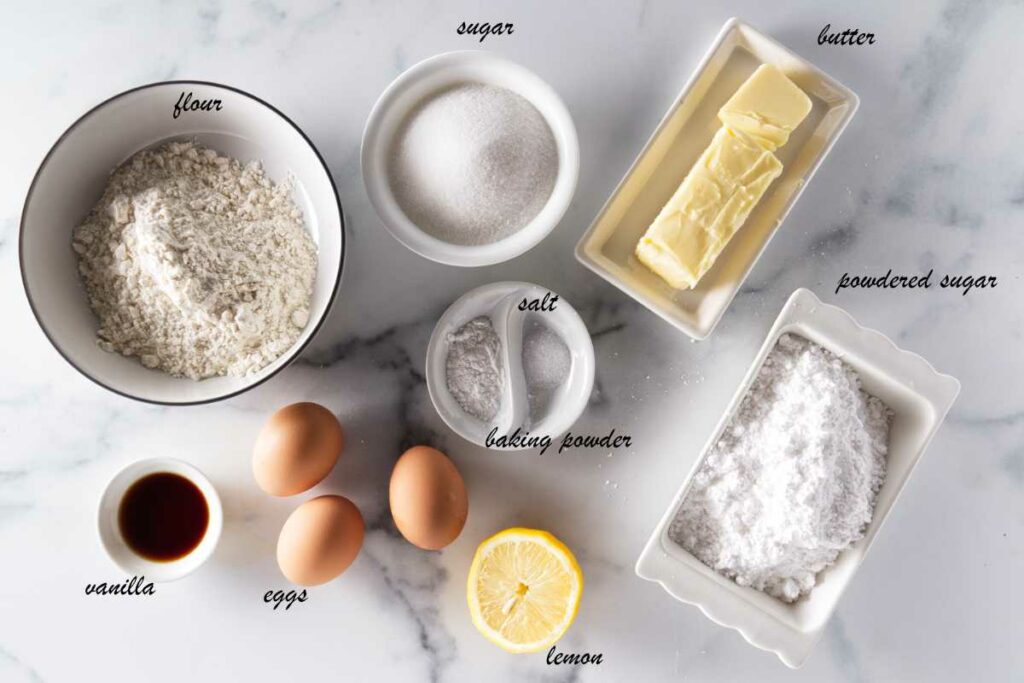
Lemon zest and fresh lemon juice: Both matter here. The zest brings most of the lemon flavor to the batter, while the juice sharpens the glaze. Fresh lemons make a noticeable difference.
Butter: Use unsalted butter that has been melted and cooled. Since madeleines have such a simple ingredient list, the butter flavor really comes through.
Eggs: Room-temperature eggs blend into the batter more evenly and help keep the crumb light.
Baking powder: Some traditional madeleine recipes skip it, but I like the extra lift it gives these.
Powdered sugar: This gives the glaze a smooth finish that settles nicely over the shell pattern.
Recipe Tips
Chill the batter. This is the step that helps create the classic madeleine hump. A cold batter hitting a hot oven gives the cakes their rise and tender texture.
Chill the pan too. After greasing and flouring the pan, I like to pop it in the freezer for a few minutes before filling it.
Do not spread the batter. Drop the batter into the center of each cavity and let it spread naturally in the oven.
Watch the bake closely. Madeleines go from perfect to dry pretty quickly. They are done when the edges are lightly golden and the centers spring back.
Turn them out right away. Leaving madeleines in the hot pan can dry them out.
Glaze them while warm, not hot. Warm madeleines help the glaze settle smoothly over the shell pattern without melting right off.
If you only have one pan, keep the remaining batter refrigerated between batches and re-grease the pan before baking again.
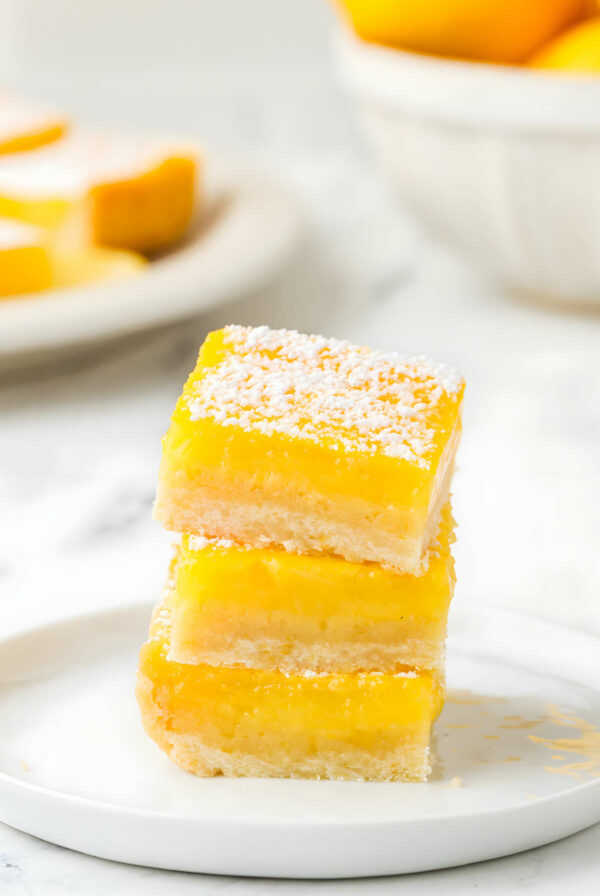
I like serving these with lemon bars and homemade lemon curd when I’m putting together a spring dessert tray or brunch spread.
Your Questions, Answered
Chilling the batter helps madeleines bake with their signature hump. The cold batter hits the hot oven, the edges set first, and the center rises. It also gives the flour time to hydrate, which improves the texture.
Cold batter, a properly preheated oven, and a chilled pan all help create the classic hump. It also helps to avoid spreading the batter in the molds.
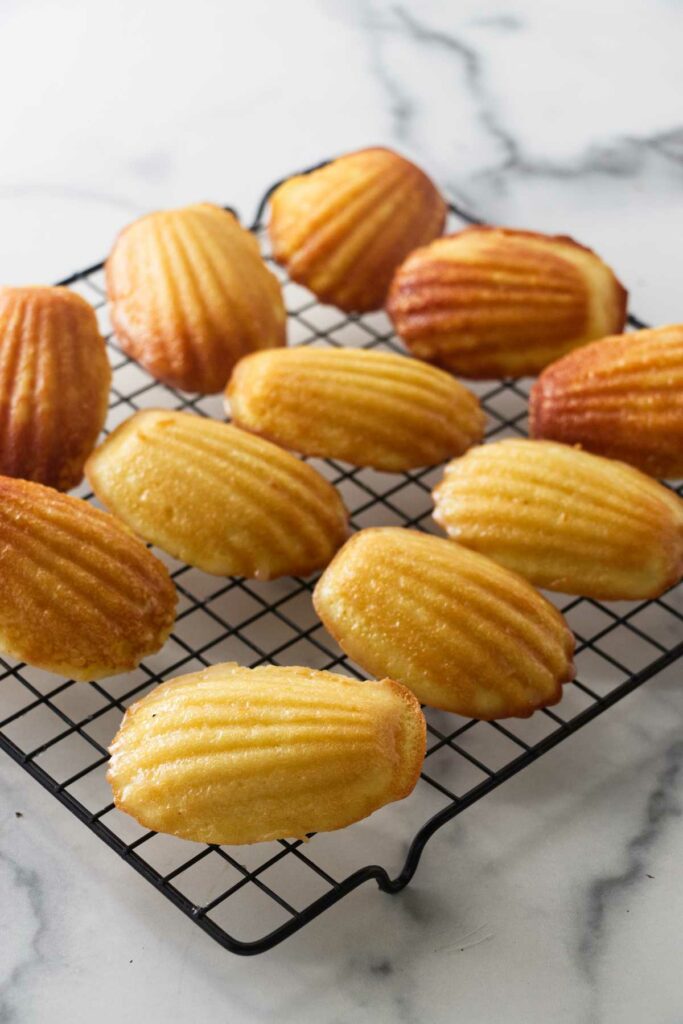
Madeleines are technically small sponge cakes, although many people serve them like cookies. They have a light, tender texture and are baked in a shell-shaped pan.
Yes. The batter can chill in the refrigerator overnight, which makes these easy to prep ahead for brunches or gatherings.
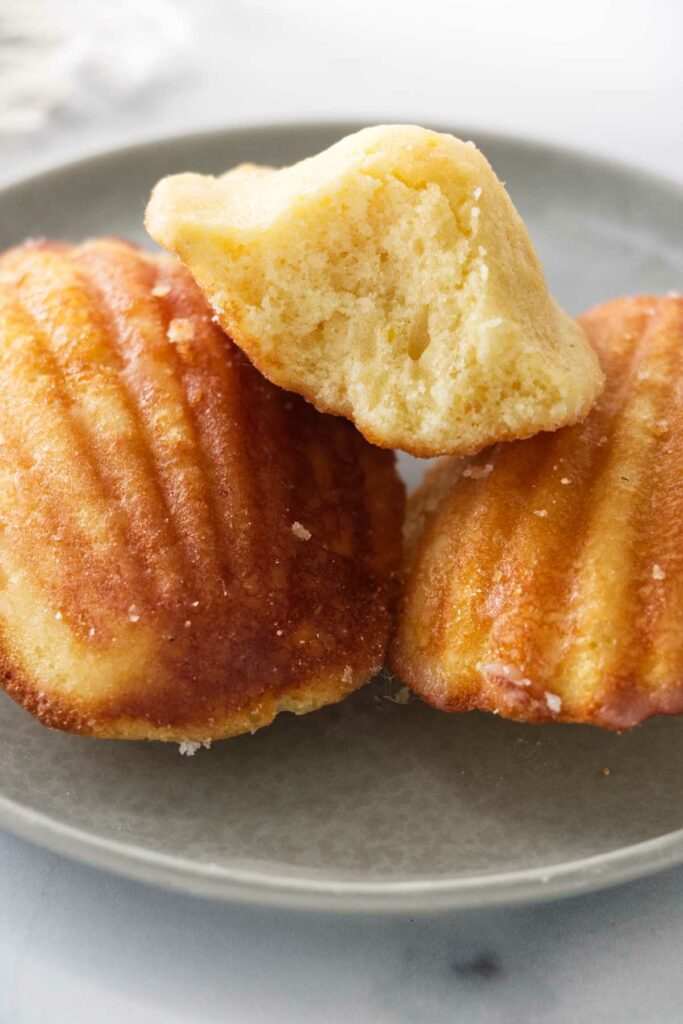
Lemon Glazed Madeleines
These lemon madeleines are one of those simple little recipes that feels more impressive than the amount of effort they require. The lemon glaze gives them a bright finish, the centers stay soft and buttery, and they fit right in on a brunch table, tea tray, or dessert platter.
If you like playing around with madeleine flavors, my lavender madeleines and almond madeleines are two more favorites to try.
Pin this now to find it later!
Pin It
Lemon Madeleines
If you make this recipe, please leave a star rating and comment.
Ingredients
- 1⅓ cup all-purpose flour, 160 grams
- ⅔ cup granulated sugar, 130 grams
- 1 teaspoon baking powder
- ¼ teaspoon salt
- zest from 1 lemon
- 3 large eggs, room temperature
- 2 teaspoon vanilla extract
- 2 tablespoons fresh lemon juice
- 10 tablespoons butter, melted and cooled to room temperature
For the Glaze:
- ¾ cup powdered sugar, sifted
- 2 tablespoons fresh lemon juice
- 1 tablespoon water
Instructions
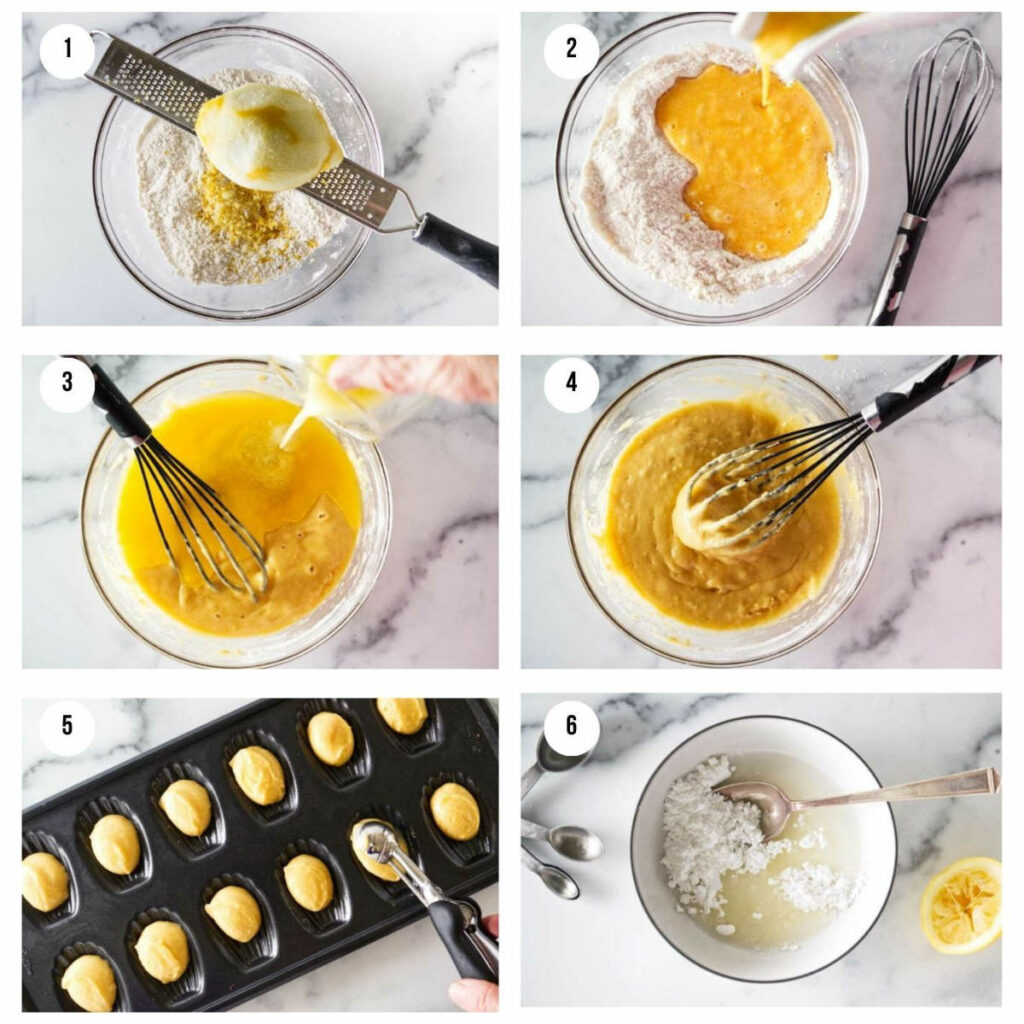
- In a medium-sized bowl, whisk together the flour, sugar, baking powder, salt, and lemon zest.
- Whisk the eggs, lemon juice, and vanilla together, then stir the egg mixture into the flour mixture.
- Pour the melted butter into the batter and whisk or fold until fully incorporated. The batter will look shiny and smooth.
- Cover the bowl with plastic wrap and refrigerate for at least hour to fully chill. This step will help the madeleines have a tall hump.
To Bake the Madeleines:
- Heat the oven to 375°F and grease and flour the madeleine pan. Alternatively, you can use a baking oil/flour spray, brushing into the crevices. Place the pan in the freezer for 10 minutes to chill.
- Using a tablespoon-sized cookie scoop, place a scoop of batter into each rounded cavity of the chilled pan.
- Transfer the pan to the center rack of the oven and bake for 7-8 minutes, or until the edges look golden and crisp and the cakes spring back when lightly touched. Remove from the oven and immediately flip them onto a kitchen towel, pattern side down, and cool for 10-15 minutes before glazing.
To Make the Glaze:
- While the madeleines are baking, stir the confectioners’ sugar, lemon juice, and water together until smooth.
- When the Madeleine cookies are cool enough to handle but still warm, dip the pattern side of each cookie in the glaze. Place on a wire cooling rack, pattern side up, until the glaze is dry.
Notes
Nutrition
Nutrition information is automatically calculated, so should only be used as an approximation.
 Like this recipe? Rate & comment below!