
This post may contain affiliate links. Please read our disclosure policy. As an Amazon Associate, I earn from qualifying purchases.

Dan Dan noodles are spicy, savory, and straight-up slurpable. The sauce is rich, nutty, and just the right amount of tingly. This recipe makes extra sauce, which means every noodle is properly coated.
It’s fast to make, easy to customize, and packed with bold, addictive flavor. Total comfort food, no takeout menu required.

Think of this recipe as Sichuan (Szechuan) street food gone weeknight-friendly. It’s built around chili crisp, sesame paste, crispy ground pork, and the kind of noodle bowl you’ll want to make on repeat.

Here’s Why This Dan Dan Noodle Recipe Works
Big flavor with minimal fuss: Chili crisp, sesame paste, soy sauce, and a splash of vinegar create a bold, balanced Dandan sauce.
Extra sauce on purpose: There’s more than enough to coat the noodles and spoon over the top, because the sauce is the best part.
Crispy pork + funky depth: Stir-frying ya cai (or kimchi) with garlic builds savory depth, and folding a little into the sauce spreads that punchy flavor through the bowl.
Texture from every angle: Chewy noodles, tender greens, crunchy peanuts, and fresh cucumber give contrast in every bite.
If you’re in the mood for another noodle night, my Beef Udon Noodle stir fry is even quicker to make.

For nights when a warm bowl of broth sounds better than saucy noodles, this chicken ramen recipe is an easy switch.
Ingredient Notes
Chinese sesame paste: Richer and more intense than tahini, with a roasted flavor. Look for it at Asian markets or sub with tahini if needed (just expect a slightly milder sesame sauce).
Chili crisp: This brings heat, crunch, and serious flavor to these Sichuan noodles. Lao Gan Ma is a classic, but any brand you like will work.
Ya cai: A fermented mustard green that adds funk and depth. If you can’t find it, finely chopped kimchi is a decent swap.
Sichuan peppercorn: This is where that classic málà tingle comes from, the numbing heat that makes Dan Dan noodles taste like Dan Dan noodles. It’s not strictly required, but even a small pinch brings the unmistakable Sichuan vibe that sets this dish apart.
Tian mian jiang: A sweet-salty fermented bean paste. Hoisin sauce is the closest substitute and works well here.
Chinkiang vinegar: A dark, malty Chinese black vinegar that balances the richness of the sauce. Rice vinegar can stand in, but the flavor won’t be quite as deep.
Chinese wheat noodles: Look for thin, springy wheat or egg noodles, fresh or dried. Alkaline noodles are ideal if you can find them. Spaghetti works in a pinch, but the texture is softer and less bouncy.
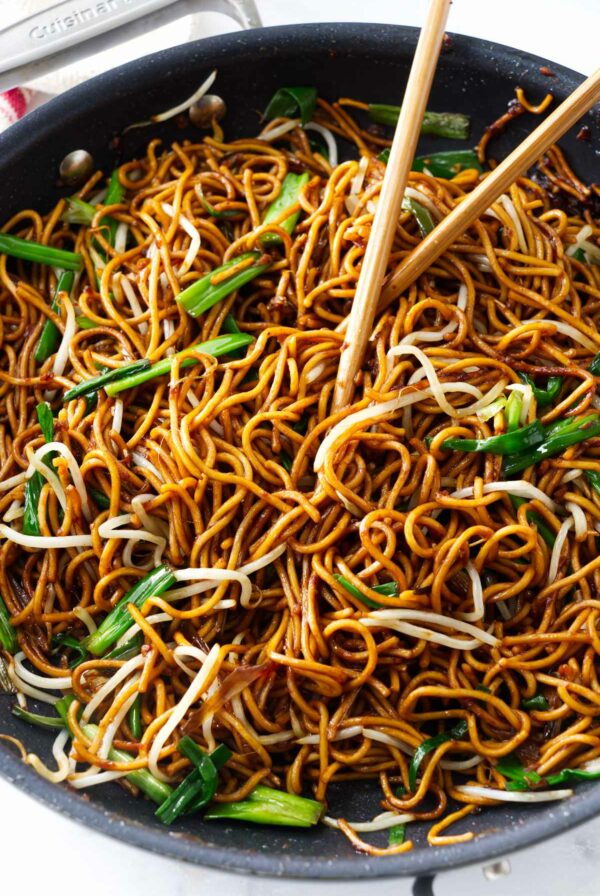
If you like noodle dishes but aren’t in the mood for spice, chicken chow mein is an easy alternative.

If you want another easy noodle dinner, my Pork Yakisoba is a great follow-up. It is quick, savory, and packed with that takeout-style stir-fry flavor.

If you’re in the mood for another bold noodle dinner, my garlic soy noodles are a good one to line up next.
Recipe Tips
Use fresh or frozen wheat noodles: Look for thin Chinese-style noodles that cook quickly and soak up sauce well.
Don’t skip the chili oil: This dish leans on chili crisp for both heat and flavor, so pick one with a balance you enjoy. Spicy, garlicky, or extra crunchy all work.
Toast your peanuts: Warm, freshly toasted peanuts bring way more flavor than raw.
Balance is key: Taste and adjust the sauce for saltiness, sweetness, and heat before tossing with noodles.
Serve immediately: These noodles are best hot and freshly mixed, so have everything ready before you boil.
Save that noodle water: You’ll use it to loosen the sauce and make it more slurpable.
Toss before topping: Mix the noodles with sauce first, then layer the pork and toppings. That way the sauce actually coats the noodles, not just the garnish.
Use what you’ve got: No ya cai? Finely chopped kimchi works great and adds its own funky edge.
Don’t fear the Sichuan pepper: Even a small amount gives that signature tingly finish. Worth trying if you’ve never used it.

This Is What Noodle Nights Are Made Of
Sichuan Dan Dan noodles are a spicy, savory noodle bowl with real attitude. Once you taste the contrast of creamy sauce, crispy pork, and tingly heat, you’ll see why this Sichuan classic is a favorite. Slurping is not optional.
If you like keeping weeknight dinners flexible, my Homemade Stir-Fry Sauce is a great one to have on hand for quick noodles, rice bowls, and whatever veggies are hanging out in your fridge.
Pin this now to find it later!
Pin It
Sichuan Dan Dan Noodles
If you make this recipe, please leave a star rating and comment.
Ingredients
Noodles and Veggie
- 16 ounces Chinese wheat noodles, or spaghetti
- 8 baby bok choy, halved lengthwise (or 2 bunches Chinese broccoli)
- salt, for the noodle water
Sauce
- ½ cup Chinese sesame paste, or tahini
- 5 tablespoons soy sauce
- 2 tablespoons toasted sesame oil
- 2 to 3 tablespoons chili crisp, plus more to serve
- 2 tablespoons honey
- 2 tablespoons Chinkiang black vinegar, or rice vinegar
- ½ to 1 teaspoon Sichuan peppercorn, ground, optional but very good
Pork Topping
- 2 tablespoons vegetable oil, divided
- ½ cup ya cai, finely chopped or sub with kimchi
- 2 to 3 garlic cloves, finely minced
- 12 ounces ground pork
- 1 tablespoons Shaoxing wine, or dry sherry
- 1 tablespoons soy sauce
- 4 teaspoons tian mian jiang, or hoisin sauce
- 1 teaspoon Sichuan peppercorn, optional
Toppings
- cucumber, sliced
- peanuts, roasted and chopped
- scallions, thinly sliced
Instructions
- Cook noodles: Bring a large pot of salted water to a boil. Drop the noodles into the boiling water and cook until just tender. Use tongs to lift the noodles straight out into a colander and keep the water boiling in the pot.

- Blanch the veggies: Now toss the bok choy into the same boiling water for 45–90 seconds until bright green and just tender. Scoop the bok choy out, drain, and set aside. Save ½ cup of the pasta water before draining it.

- Make the sauce: In a bowl whisk together the sesame paste, soy sauce, sesame oil, chili crisp, honey, black vinegar, and Sichuan pepper (if using).

- Loosen the sauce: Add 3 tablespoons hot noodle water to the sauce and whisk until smooth and pourable. Add more, a tablespoon at a time until it runs off a spoon like a creamy dressing. Taste and add extra sugar or vinegar if desired.

- Cook the ya cai: Heat the oil in a skillet over high. Add the ya cai (or kimchi) and stir-fry about 1 minute until fragrant, then add the garlic, stir 20–30 seconds. Scoop about 3 to 4 tablespoons into the sauce and leave the rest in the pan.

- Cook the pork: Add the pork and cook, breaking it up into tiny bits, until browned and no longer pink.

- Stir in the Shaoxing wine, soy sauce, tian mian jiang (or hoisin), and Sichuan peppercorn (if using). Cook 1–2 minutes until glossy. Keep warm on low heat.

- Assemble: Set aside ⅓ cup of the sauce. Divide the remaining sauce between bowls. Add the noodles and toss well to coat.
- Top each bowl with the pork mixture, bok choy, cucumber, peanuts, and scallions. Drizzle with the reserved sauce and add extra chili crisp if you like it spicy.

Notes
Nutrition
Nutrition information is automatically calculated, so should only be used as an approximation.
 Like this recipe? Rate & comment below!