

This post may contain affiliate links. Please read our disclosure policy. As an Amazon Associate, I earn from qualifying purchases.
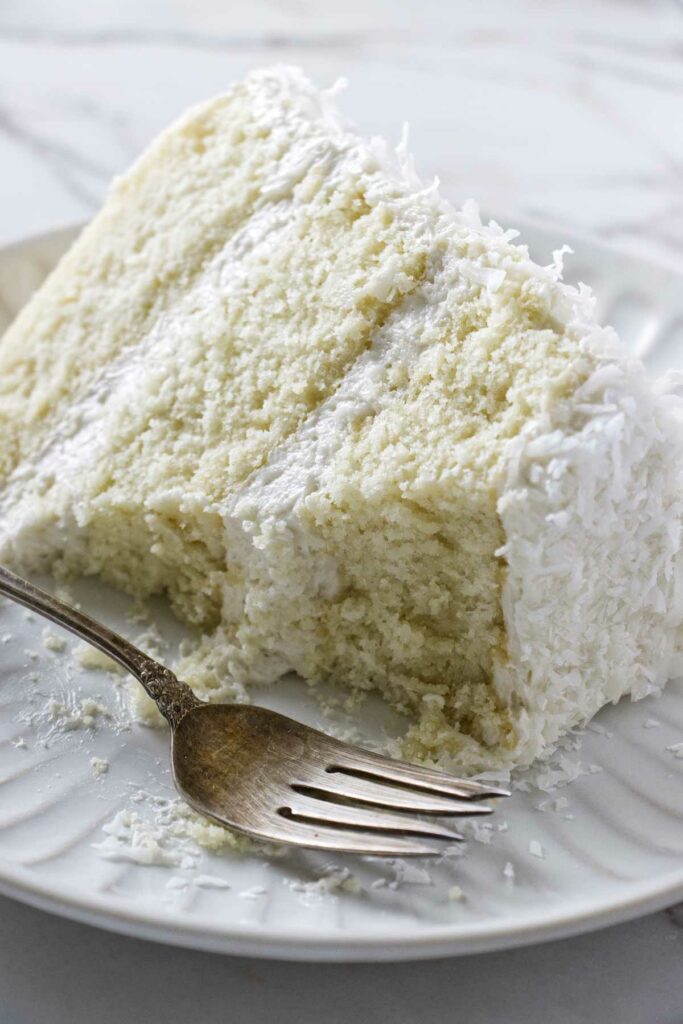
This three-layer coconut cake is built for real coconut flavor. The batter uses both coconut oil and coconut milk for a rich, tender crumb that stays soft without feeling heavy. It’s stacked with a smooth coconut buttercream that’s creamy, balanced, and easy to spread. No overly sweet frosting here, just a cake that delivers on what it promises.
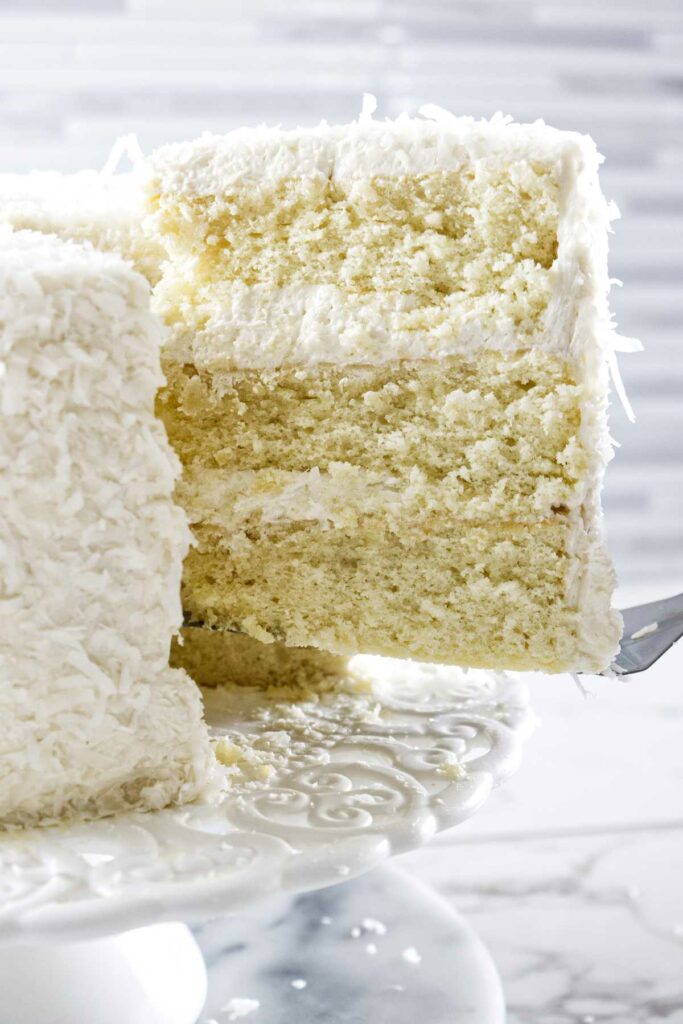
If you like this cake, check out our coconut cake roll.
How This Coconut Cake Came Together
I wanted this cake to have coconut flavor in every layer, not just a little shredded coconut scattered on top at the end. So I used coconut milk and coconut oil in the batter, coconut extract in both the cake and frosting, and shredded coconut on the outside for a more complete coconut flavor.
For the cake layers, I used the reverse creaming method to create a soft, even crumb that stays sturdy enough for stacking. Extra egg whites helped keep the texture light and fluffy instead of dense.
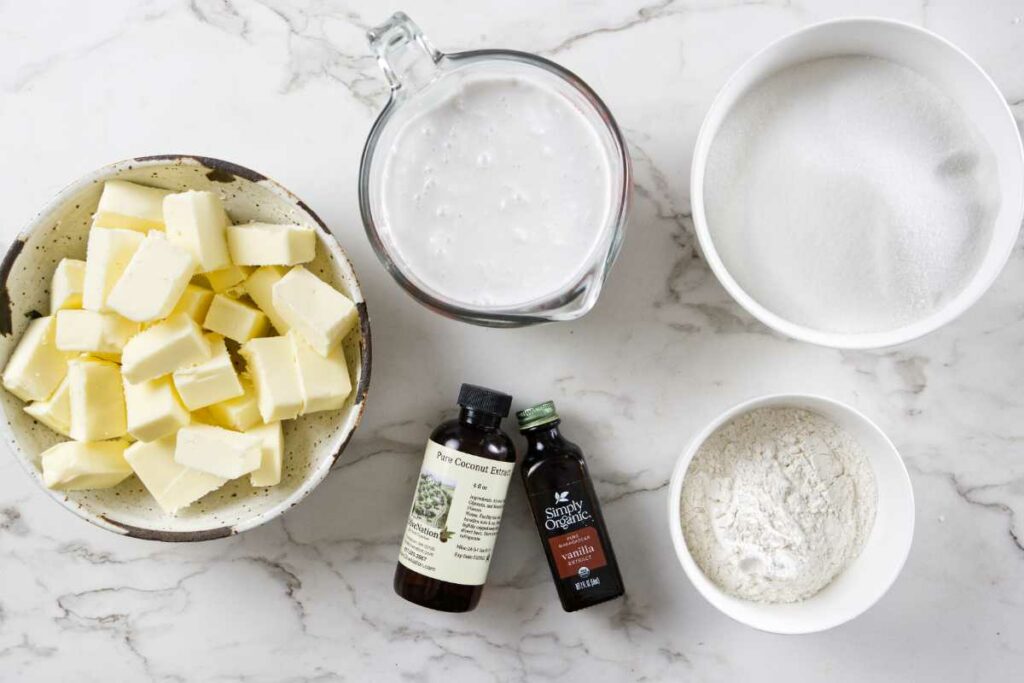
I also tested the frosting to make sure it was smooth and not overly sweet. This cake is finished with a coconut ermine frosting, which has a silky texture and a less sweet finish than traditional American buttercream.
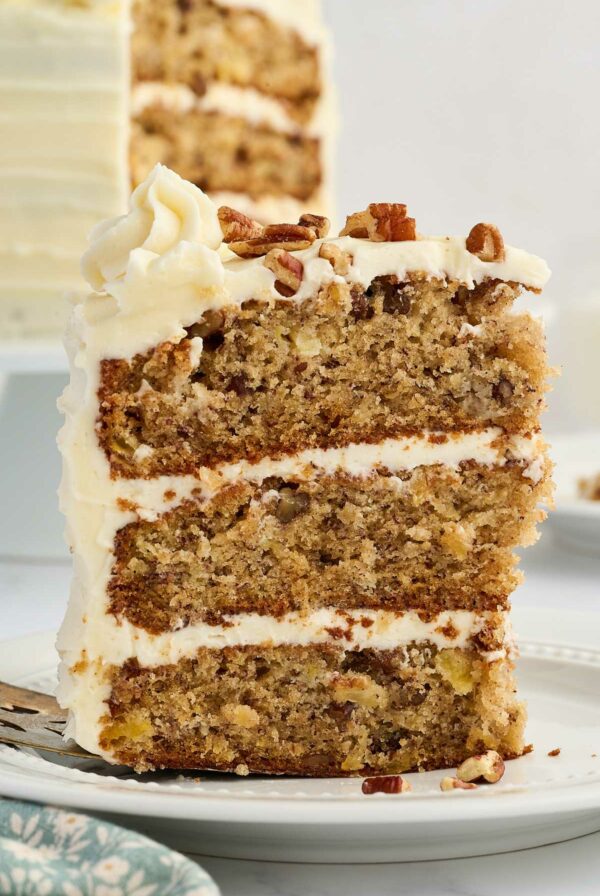
If you enjoy this coconut cake, my hummingbird cake is another classic with tropical flavor from pineapple and banana, plus a bit of crunch from pecans.
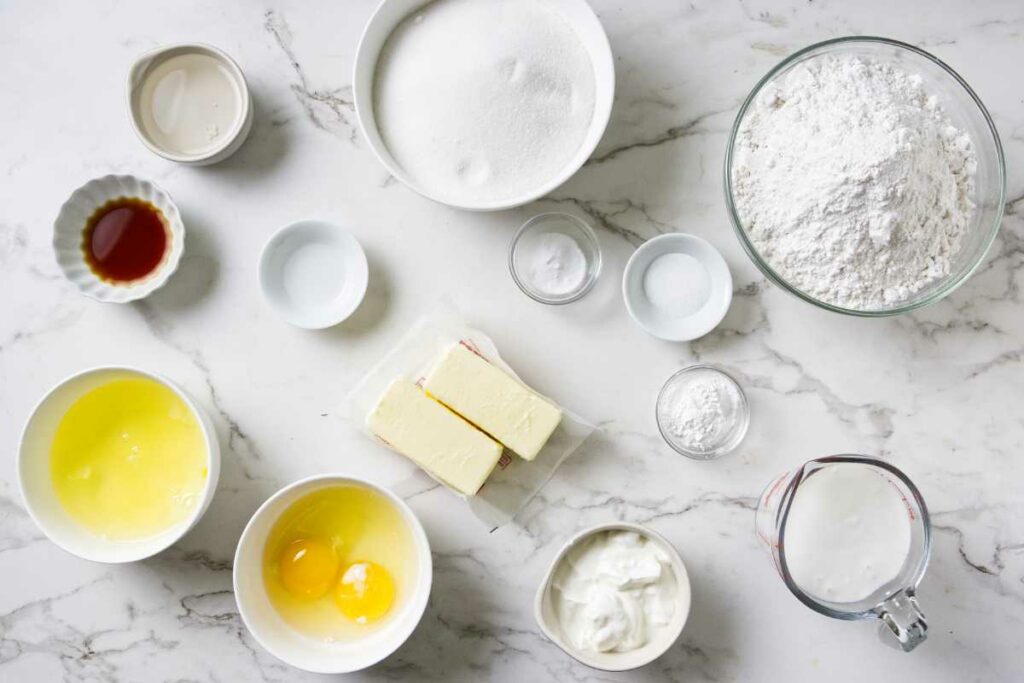
Key Ingredients and Why They Matter
Coconut milk: This is where a lot of the flavor comes from. Use canned coconut milk, not the carton version.
Coconut oil: Adds another layer of coconut flavor and helps keep the cake soft. It works with the butter instead of replacing it, so you still get a good structure.
Egg whites + whole eggs: The extra egg whites lighten the texture while the whole eggs add richness. That balance keeps the cake fluffy without feeling dry.
Cake flour: Gives the cake a finer, softer crumb than all-purpose flour. It also works well with the reverse creaming method to keep the layers tender but sturdy.
Sour cream: Adds moisture and keeps the cake from drying out. It also helps create a smooth, tender texture.
Coconut extract: A small amount of extract boosts the coconut flavor in both the cake and frosting without making it taste artificial.
Shredded coconut: Pressed onto the outside of the cake for texture and a final layer of coconut flavor.
Recipe Tips
Use canned coconut milk: Use full fat canned coconut milk, not the stuff in the carton that is for drinking.
Cool the frosting base completely: If the coconut cream mixture is even slightly warm, the butter will melt and the frosting won’t whip properly.
Measure flour correctly: Spoon and level or weigh it. Too much flour leads to a dry cake.
Scrape the bowl often: This batter builds structure gradually, so consistent mixing matters.
Chill layers if needed: Slightly chilled cake layers are easier to stack and frost cleanly.
Don’t overmix after the liquid is added: Once you start adding the coconut milk mixture, mix just until it’s fluffy and combined. Overmixing at this stage can tighten the crumb.
Use room temp ingredients: Butter, eggs, and sour cream should all be at room temperature so the batter emulsifies properly. Cold ingredients can make the batter look curdled and affect the texture.
Bake evenly: If your oven runs uneven, rotate the pans halfway through baking so the layers rise evenly.
Let the frosting whip long enough: When you add the cooled base to the butter and sugar, it may look broken at first. Keep whipping, it will come together into a smooth, fluffy frosting.
Toast the coconut (optional): If you want more depth, lightly toast the shredded coconut before pressing it onto the cake. It adds a subtle nutty flavor.
If you like coconut desserts, my coconut bundt cake and coconut cheesecake bars are both worth a look. They bring the same flavor in two completely different directions.
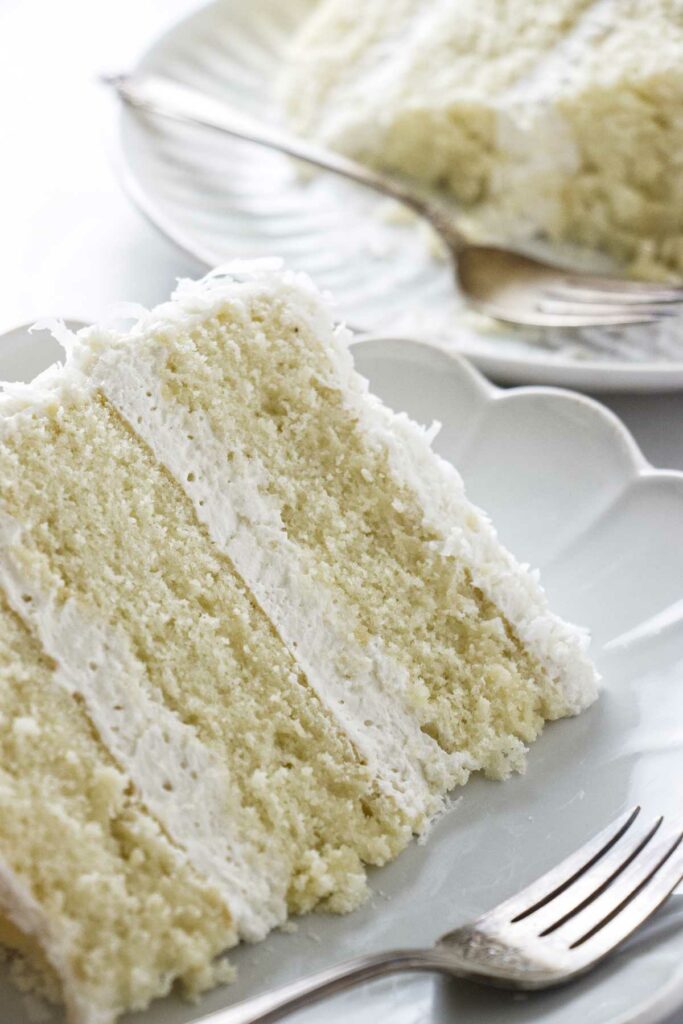
Coconut Layer Cake
This coconut layer cake keeps things classic but fixes all the usual problems like dry crumbs, overly sweet frosting, and weak coconut flavor. You get soft layers, a light whipped frosting, and a full coconut finish that actually tastes like coconut.
Pin this now to find it later!
Pin It
The Best Coconut Cake Recipe
If you make this recipe, please leave a star rating and comment.
Video
Ingredients
For the Coconut Cake:
- 4 cups cake flour, (480 grams)
- 2 ½ cups granulated sugar, (500 grams)
- 4 teaspoons baking powder
- 1 teaspoon baking soda
- 1 teaspoon salt
- 1 cup butter, softened (16 tablespoons; 224 grams)
- ¼ cup coconut oil, melted; (56 grams)
- 4 egg whites, (140 grams)
- 2 large eggs, (100 grams)
- ½ cup sour cream, (113 grams)
- 1 cup canned coconut milk, not coconut cream (240 grams)
- 1 tablespoon vanilla extract
- ½ teaspoon coconut extract
For the Frosting:
- ⅔ cup All-purpose flour, (80 grams)
- 2 cups canned coconut cream, (480 grams)
- 2 cups butter, (448 grams)
- 2 cups extra-fine sugar, (400 grams)
- 2 teaspoon vanilla extract
- 1 teaspoon coconut extract
- 1 ½ cups shredded coconut , for the garnish
Instructions
- Preheat the oven to 350°F. Prepare three 8”x2” round pans by lining them with parchment paper and then spray the paper with non-stick spray.
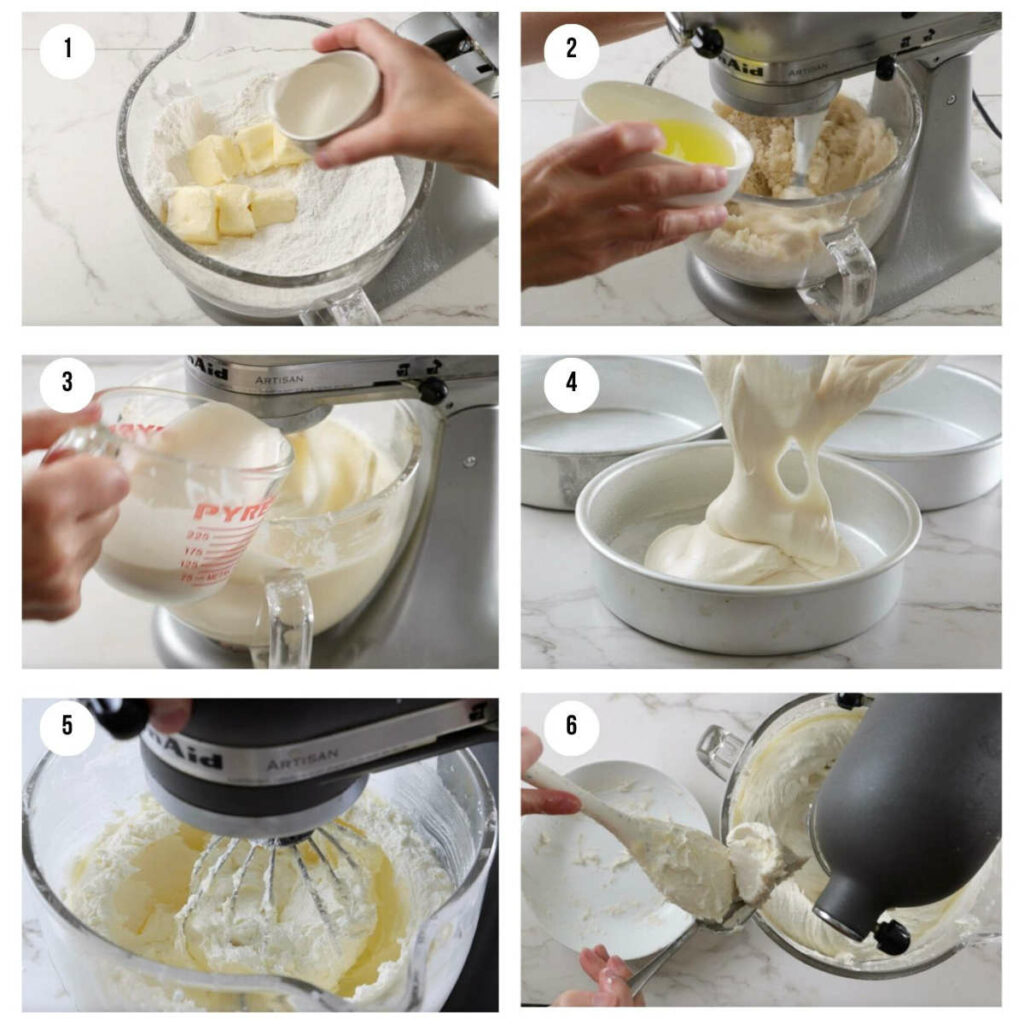
- Add the flour, sugar, baking powder, baking soda, and salt in a large mixing bowl. Mix on low speed to blend. Add the soft butter and coconut oil and mix until evenly crumbly and looks like damp sand.
- Add the egg whites one at a time, then add the whole eggs, beating well after each addition to begin building the structure of the cake. Scrape down the sides of the bowl with each egg addition. Beat in the sour cream.
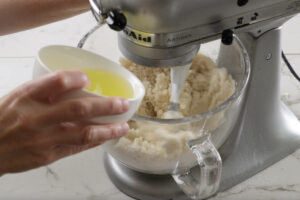
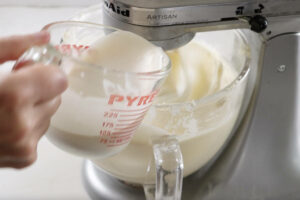
- In a small bowl, whisk the milk with the vanilla and coconut extract. Add this mix ⅓ at a time, to the batter. Beat 1 to 2 minutes after each addition, until fluffy. Scrape down the sides and bottom of the bowl.
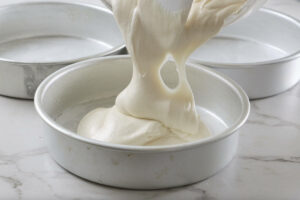
- Pour the batter into the prepared pans and bake for 26 to 32 minutes or until a toothpick inserted into the center comes out clean. Remove from the oven and cool completely on a wire rack.
For the Frosting:
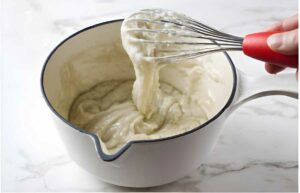
- In a small saucepan, whisk flour into the coconut cream and heat over medium heat, stirring constantly, until it thickens. This should be very thick, it will look like white school paste. Remove from heat and let it cool to room temperature. I put the pan into the freezer for a few minutes to get it really cold. It must be completely cool before you use it in the next step.
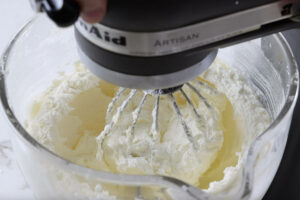
- While the mixture is cooling, cream the butter and sugar together until light and fluffy. Then add the completely cooled coconut cream/flour mixture a couple tablespoons at a time, and whip it until it looks like whipped cream. Beat in the vanilla and coconut extracts.
To assemble:
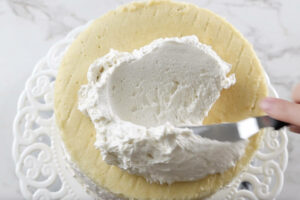
- When the cake is cool, place one layer on a plate and spread icing on it then sprinkle with some of the shredded coconut. Repeat with each of the cake layers. Spread the icing on the outside of the cake and over the top, then use the remaining shredded coconut to garnish/cover the cake completely. Refrigerate until ready to serve.
Notes
Nutrition
Nutrition information is automatically calculated, so should only be used as an approximation.
 Like this recipe? Rate & comment below!










This is the best coconut cake I have ever made and have eaten…Everyone loves it..Thank You for sharing it with us..
Thank you for that comment! I’m so glad you enjoyed it.
Can i add shredded coconut into the cake?
Yes, you can. I would recommend adding about 1 to 1-1/2 cups of shredded coconut.
Can I make cupcakes with this recipe? And how long do you esimate they would take in the oven. I want to make cupcakes for my 10 year old grandson. Thanks.
Yes, standard sized cupcakes will bake in 20 to 23 minutes. Thanks for the question.