

This post may contain affiliate links. Please read our disclosure policy. As an Amazon Associate, I earn from qualifying purchases.
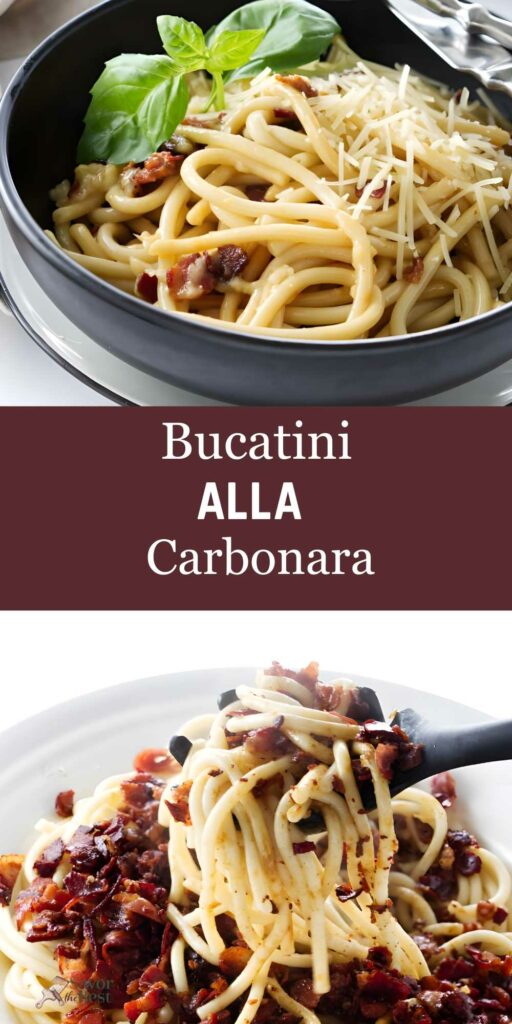
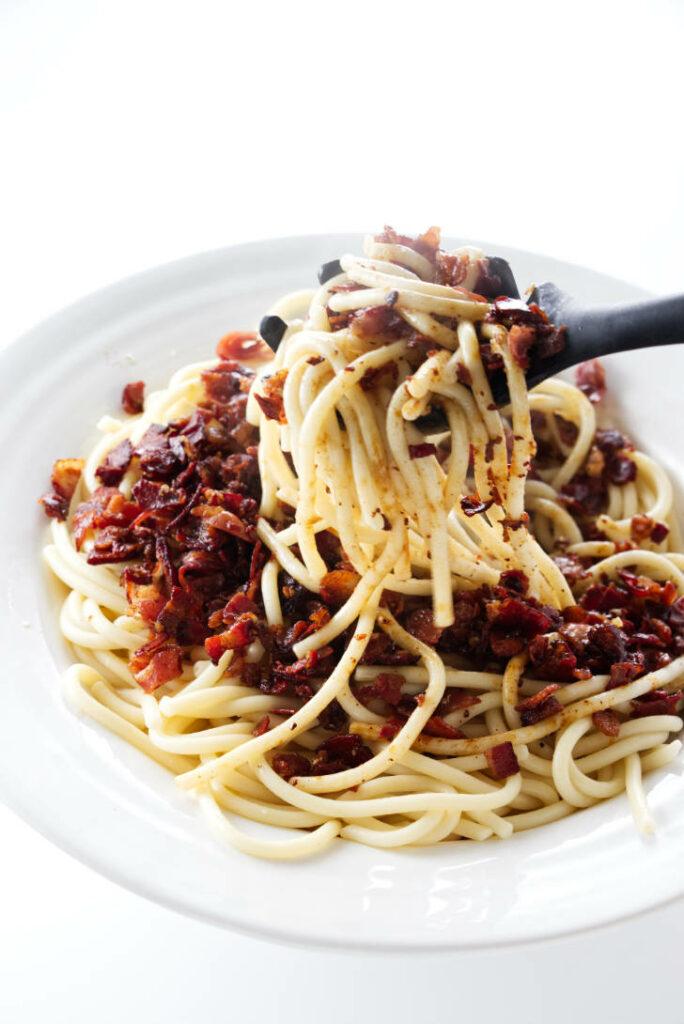
Bucatini carbonara is all about getting a few simple ingredients to work together. Hot pasta, eggs, Pecorino Romano, and rendered guanciale create a silky sauce that clings to the noodles without a drop of cream. Plenty of black pepper cuts through the richness, and those crisp bits of guanciale make their way into every forkful.
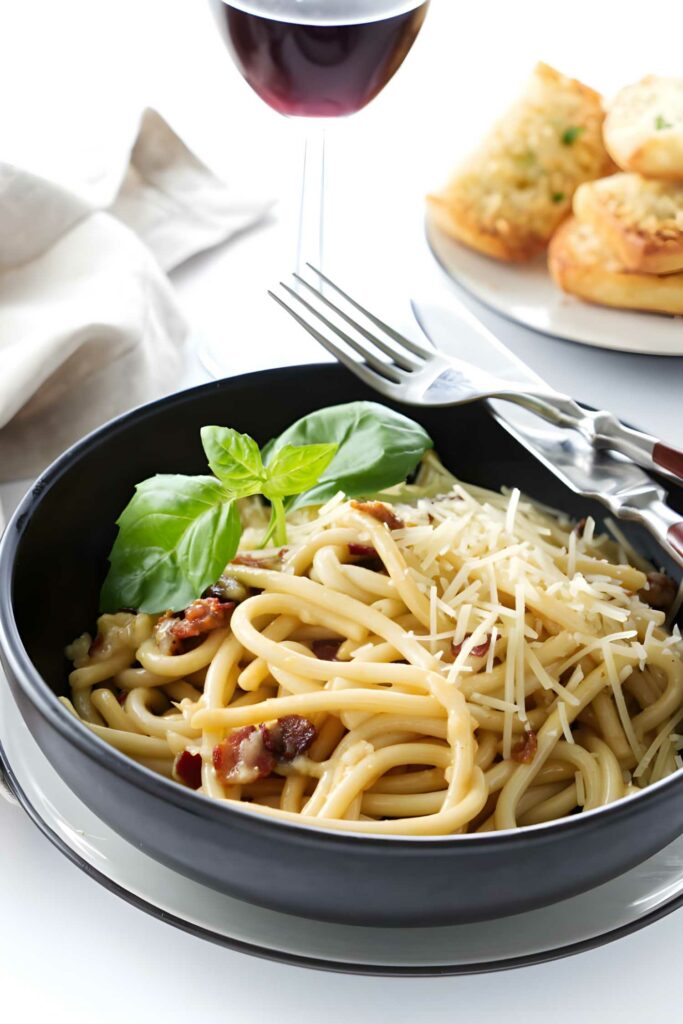
For another Italian classic, try my Bolognese sauce. A rich, slow-simmered favorite that’s as comforting as carbonara.
Here’s Why This Bucatini Carbonara Recipe Works
No cream: Eggs, Pecorino, and hot pasta water create the creamy sauce, so there’s no need to add cream.
Extra yolks: A combination of whole eggs and extra yolks gives the sauce a richer texture and helps it cling to the bucatini.
A warm bowl: Tossing everything together in a warmed bowl gives the eggs enough gentle heat to thicken the sauce without scrambling them.
Pepper power: A generous grind of black pepper balances the richness and keeps it lively.
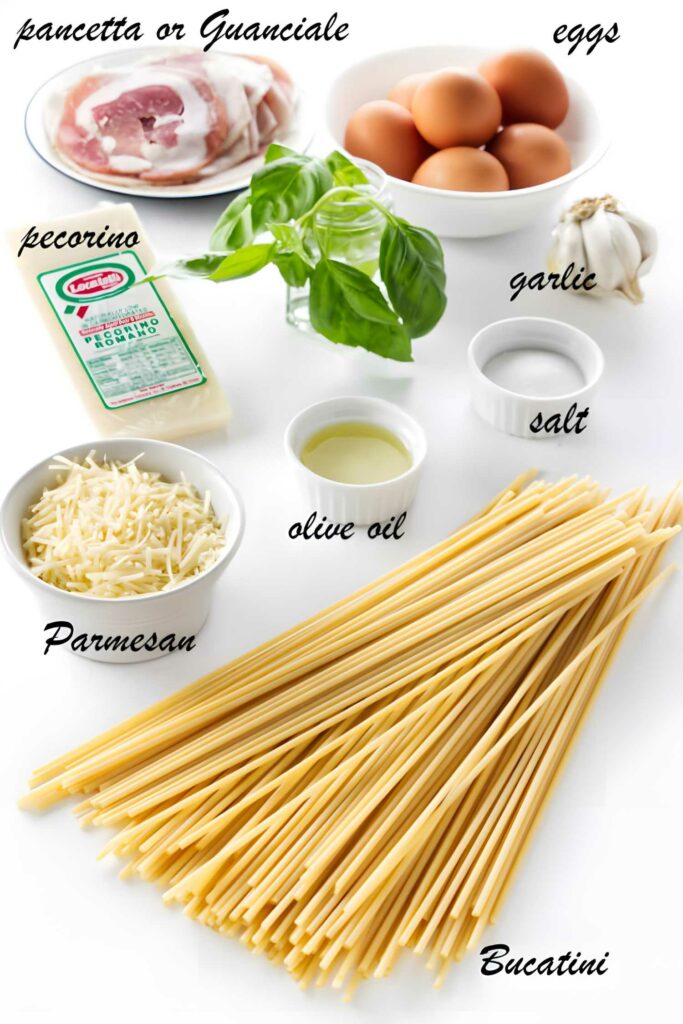
Carbonara Ingredients
Bucatini: The thick, hollow strands hold onto the egg and cheese sauce nicely. Spaghetti is a good substitute if you can’t find bucatini.
Guanciale: This is cured pork cheek (or jowl) and the traditional choice for carbonara. It has plenty of fat, which renders as it cooks and gives the sauce a lot of its flavor. Pancetta is the closest substitute, but bacon will work if that’s what you can find.
Eggs and egg yolks: I use a combination of whole eggs and extra yolks. The yolks give the sauce a richer texture without adding cream.
Pecorino Romano and Parmigiano-Reggiano: Pecorino Romano is the traditional cheese for carbonara. I use it in the sauce, then add a little Parmigiano-Reggiano at the end. You can use Pecorino for both if you want to keep it more traditional.
Black pepper: Carbonara needs a generous amount. Freshly ground pepper has much more flavor than the pre-ground stuff, so this is a good time to pull out the pepper mill.
Garlic: This one isn’t traditional, which is why I list it as optional. I like a little garlic in mine, but leave it out if you want a more traditional Roman-style carbonara.
For another pasta night idea, my pasta with black truffle sauce or my wild mushroom pasta both have rich, earthy flavor that feels special without being fussy.
Recipe Tips
Gentle with the garlic: Keep it soft and fragrant; browned garlic turns bitter fast.
Save pasta water: A spoonful or two loosens the sauce so it coats every strand.
Grate your own cheese: Pre-grated won’t melt smoothly. Fresh Pecorino is key.
Extra yolk: Stir in an additional yolk for a richer, silkier finish.
Temper the eggs: Whisk in a little hot pasta water before adding them to the pasta. This helps prevent scrambling.
Toss off the heat: Combine the pasta, guanciale, and egg mixture in a warm bowl or off the burner so the sauce stays silky, not scrambled.
Freshly cracked pepper: Grind it coarse just before serving for the most aroma and bite.
Serve immediately: Carbonara doesn’t wait. Plate it hot for the glossiest texture and sere it with a Caprese salad and crusty bread.
Carbonara Questions Answered
Traditional carbonara gets its creamy texture from eggs, Pecorino Romano, and a little hot pasta water. As they’re tossed with the hot pasta, they come together into a smooth sauce that coats the noodles. Cream isn’t necessary and can make the sauce heavier.
Spaghetti is the traditional choice, but I like bucatini because the thicker, hollow strands hold onto the sauce well. Rigatoni is another good option, especially if you prefer a short pasta.
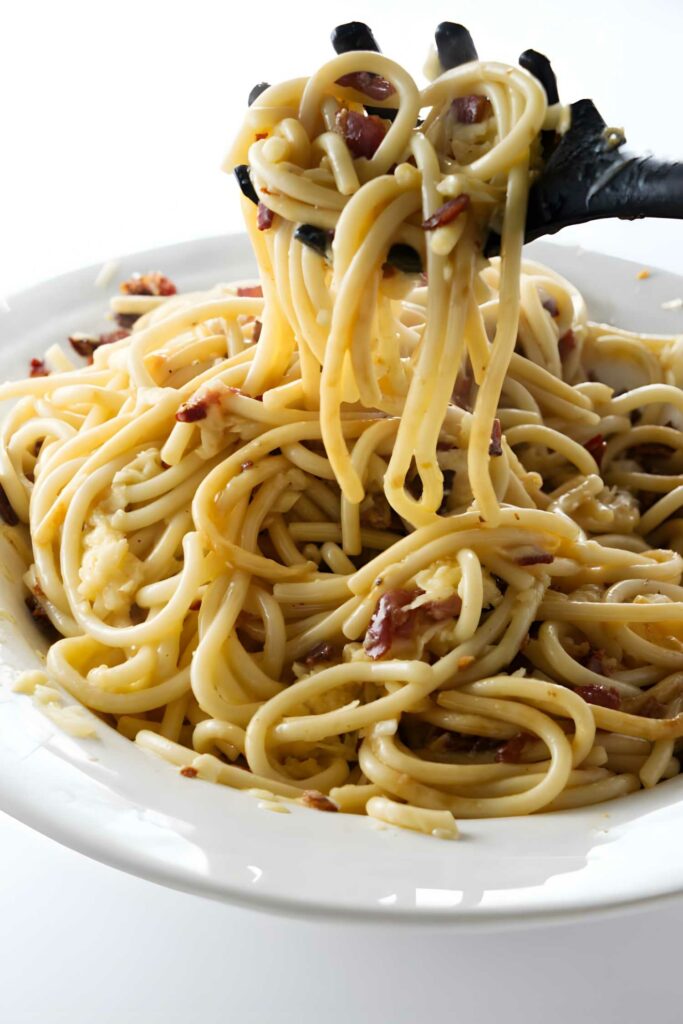
Keep the egg mixture away from direct heat. I toss it with the hot bucatini in a warmed bowl, adding a little reserved pasta water as needed. The heat from the pasta is enough to thicken the eggs into a creamy sauce without turning them into scrambled eggs.
Carbonara uses eggs that are gently heated by the hot pasta and pasta water rather than cooked over direct heat. If undercooked eggs are a concern, use pasteurized eggs for this recipe.
Bucatini Alla Carbonara
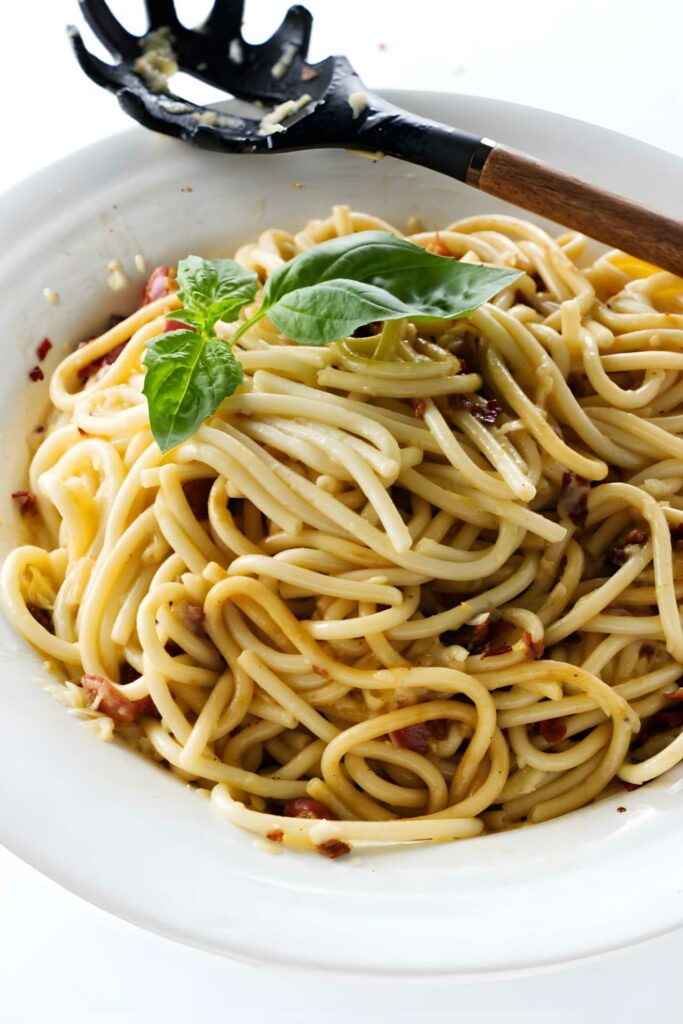
Carbonara moves fast once the pasta is drained, so have the egg mixture and guanciale ready before the bucatini comes out of the pot. Toss everything together while the pasta is piping hot, adjust the sauce with a splash of pasta water, and get it to the table right away.
For another Italian pasta dish to try, my penne arrabbiata brings a fiery tomato sauce that’s as bold as it is simple.
Pin this now to find it later!
Pin It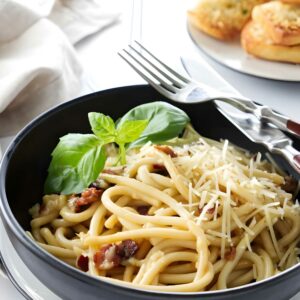
Bucatini alla Carbonara
If you make this recipe, please leave a star rating and comment.
Video
Ingredients
- 1 tablespoon olive oil
- 2 garlic cloves, minced, optional
- 10 ounces guanciale, bacon or pancetta, diced
- 3 large eggs
- 3 egg yolks
- 1 cup freshly grated pecorino
- ground black pepper
- ¼ teaspoon salt
- 1 pound dry bucatini
- ½ cup grated Parmigiano-Reggiano cheese, or Pecorino Romano Cheese
Instructions
- Warm the serving bowl: Preheat the oven to 200°F. Place a large ovenproof serving bowl or casserole dish inside to heat. You’ll use this warmed bowl to toss the pasta and sauce.
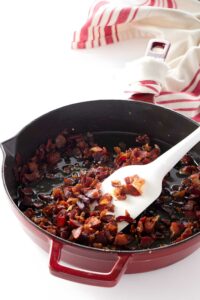
- Cook the guanciale: Heat the olive oil in a sauté pan over medium-high heat. Add the guanciale (or pancetta/bacon) and cook until browned and crisp, about 8–10 minutes. Add the garlic and cook just until fragrant, do not let it brown. Remove from heat and set aside.
- Make the egg mixture: In a medium bowl, whisk the whole eggs and egg yolks. Stir in the Pecorino, a generous amount of black pepper, and ¼ teaspoon salt. Set aside.
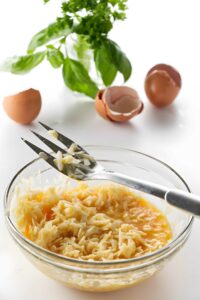
- Cook the pasta: Bring a large pot of salted water to a boil. Add the bucatini and cook until al dente according to package directions. Before draining, reserve ½ cup of the pasta water. Drain well.
- Toss it all together: Transfer the hot pasta to the warmed serving bowl. Add the guanciale and toss well. Off the heat, pour in the egg and cheese mixture, tossing quickly with two forks or tongs until the pasta is glossy and coated. Add small splashes of the reserved pasta water as needed to loosen the sauce.
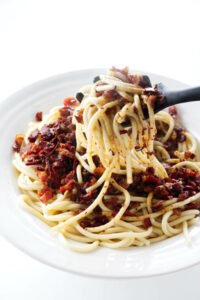
- Sprinkle with Parmigiano-Reggiano and more black pepper. Serve immediately.
Notes
Nutrition
Nutrition information is automatically calculated, so should only be used as an approximation.
 Like this recipe? Rate & comment below!
This recipe was originally published on November 21, 2014.











We use pasteurized eggs all the time just to be safe. Perfect for this dish! I haven’t made this in years — and it’s such a good dish. Yours looks terrific — thanks.
Thanks, John….Happy Thanksgiving!
I know I’d be happy with a tummy full of this pasta!
Hi, Maureen…yes, it is creamy, tasty and tummy filling! Thanks for your comment. 🙂
This was always one of my son’s favorite meals but I never think to make it anymore. Thanks for the reminder – I’m stocking up on eggs and bacon because he’ll be home from college for Thanksgiving! Lovely photos 🙂
Thank you, Anne. This is a quick recipe to put together as by the time the pasta is cooked the rest of the plan is ready to go. Easy, peasy….Happy Thanksgiving to you and your family!