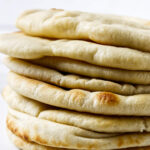
Homemade Pita Bread
Soft homemade pita bread made with bread flour or all-purpose flour, instant yeast, warm water, olive oil, sugar, and salt. Bake the pitas in a hot oven to create pockets, or cook them in a skillet for thicker, chewier flatbreads.
Servings: 8 pitas
Ingredients
- 3 ½ cups bread flour or all-purpose flour, 420 grams
- 2 ¼ teaspoons instant yeast 7 grams
- 1 teaspoon granulated sugar
- 1 ½ teaspoons salt 9 grams
- 1 ¼ cups warm water 295 grams
- 2 tablespoons olive oil 28 grams
Instructions
Make the dough
- In the bowl of a stand mixer fitted with the dough hook, combine the flour, yeast, sugar, and salt.
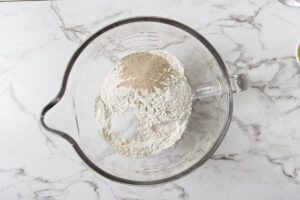
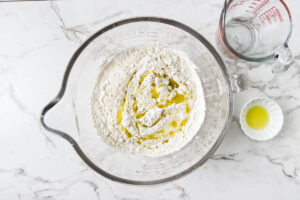
- Add the warm water and olive oil. Mix on low speed until a shaggy dough forms, then knead for 6 to 8 minutes, until the dough is smooth and elastic. It should feel soft and slightly tacky. If it sticks heavily to your hands, add flour 1 tablespoon at a time.
First rise
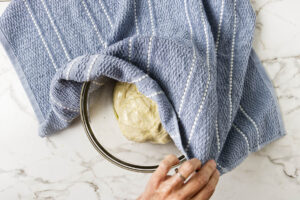
- Transfer the dough to a lightly oiled bowl and turn it once to coat. Cover and let rise in a warm place for 45 to 60 minutes, or until doubled in size. Toward the end of the rising time, preheat the oven to 500°F.
Divide and rest
- Turn the dough onto a lightly floured surface and divide it into 8 equal portions.
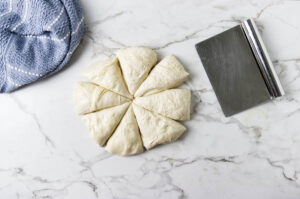
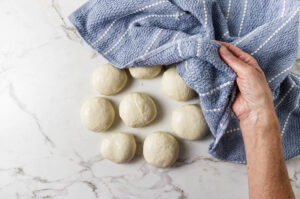
- Shape each portion of dough into a smooth ball. Cover with a towel and let rest for 15 to 20 minutes. This resting period relaxes the gluten, making the dough easier to roll.
Shape the pitas
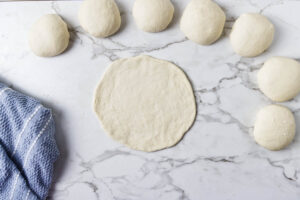
- Roll or gently stretch each dough ball into a circle about 7 inches in diameter and ⅛ inch thick. If the dough springs back while shaping, let it rest for 5 minutes before continuing.
Bake
- Place the shaped pitas on a baking sheet. For the best chance of forming a pocket, lightly mist the tops with water just before baking. Bake for 2 ½ to 3 ½ minutes, or until the pitas puff and are lightly golden. Remove them before they become crisp.
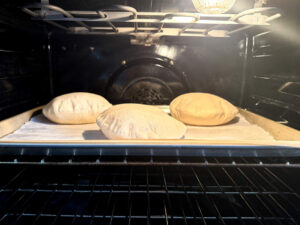
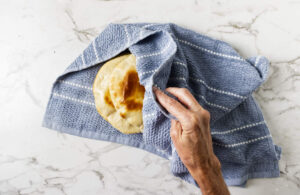
- Transfer the baked pitas to a clean kitchen towel and keep them covered while they cool. The puffed pitas will naturally collapse, leaving a soft pocket that can be split open for sandwiches or folded around your favorite fillings.
Notes
Use bread flour: Bread flour creates the best chewy texture, but all-purpose flour also works well.
Use warm water: Water between 105°F and 110°F helps activate the yeast and gives the dough a good start. Water that is too hot can damage the yeast, while cooler water will slow the rise.
Keep the dough soft: Resist the urge to add too much flour. A slightly soft, tacky dough produces the most tender pita.
Let the dough relax: If the dough shrinks or springs back while rolling, let it rest for 5 minutes before continuing.
Cover after baking: Stack the cooked pitas under a clean kitchen towel to trap the steam and keep them soft and flexible.
Skillet Option: Heat a lightly oiled skillet over medium-high heat. Cook the pita for 1 ½ to 2 minutes on each side until bubbles begin to form and the underside develops golden brown spots. The skillet method produces a slightly thicker, chewier pita that may not form a full pocket.
Want a pita pocket? Lightly mist the shaped pitas with water before baking. The added moisture encourages them to form a pocket that collapses as the bread cools and can be sliced open for filling.
Nutrition
Serving: 1pita | Calories: 235kcal | Carbohydrates: 42g | Protein: 7g | Fat: 4g | Saturated Fat: 1g | Sodium: 440mg | Fiber: 2g | Sugar: 1g
